


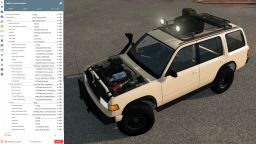

BeamNG.drive Summary
Get From the Official Digital Markets
All trademarks belong to their
respective owners.
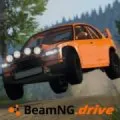
I started BeamNG.drive thinking it would be a crash simulator first and a driving game second. That was partly true, but also too simple. Yes, the crashes are the first thing everyone notices. Cars fold, twist, bend, scrape, bounce, and collapse in ways that look almost uncomfortable because the game does not treat damage like a cosmetic effect. But the longer I played, the more I realized BeamNG.drive is really about consequence. A bad corner matters. A rough landing matters. A small bump can change how a vehicle handles. The game makes driving feel physical because every part of the car seems connected to the road, the terrain, and the player’s choices.
The Soft-Body Physics Are the Whole Identity
BeamNG.drive stands apart because its physics system is not just a visual trick. Steam describes the game as using a soft-body physics engine that simulates every vehicle component in real time, creating true-to-life behavior. That is exactly what makes it feel different from most driving games. The vehicle is not a rigid object wearing a damage texture. It feels like a structure under stress.
The official BeamNG physics page explains the idea through deformable objects built with node-beam structures rather than the rigid-body approach used by many games. I felt that difference immediately. When a car hits a curb badly, lands off-center, or takes a heavy impact, the result is not just visual drama. The vehicle may pull to one side, lose parts, deform around the wheels, or become difficult to control. That makes even silly experiments feel grounded in believable cause and effect.
Driving Feels Better Because It Is Not Always Clean
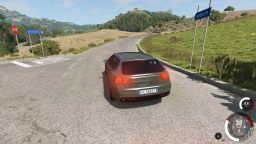
What I like most about BeamNG.drive is that driving rarely feels sterile. Many racing games make cars feel polished, responsive, and heroic. BeamNG.drive makes them feel mechanical, vulnerable, and sometimes stubborn. A heavy vehicle carries momentum differently from a light one. A damaged suspension changes the whole mood of a drive. A fast corner can feel risky not because of an artificial timer, but because the car genuinely feels like it might not survive my confidence.
That imperfection is the game’s strength. I started paying attention to braking distance, road surface, weight transfer, and approach angle in a way I usually do not in more arcade-style driving games. Even when I was not racing, I was learning the vehicle. BeamNG.drive makes driving itself interesting before any formal objective appears.
-
Weight and momentum make vehicles feel physically distinct;
-
Damage can change handling instead of only changing appearance;
-
Road surfaces and terrain influence how safe a route feels;
-
Small mistakes can create believable mechanical problems;
The Crashes Are Spectacular, but Not Empty
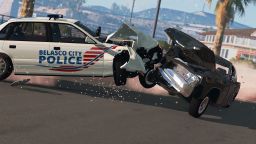
It is impossible to talk about BeamNG.drive without talking about crashes. They are dramatic, detailed, and often strangely fascinating. A vehicle can crumple from the front, twist along the frame, lose panels, break wheels, or become barely recognizable after a hard impact. The reason it remains interesting is that the destruction follows physical logic.
I never felt like the game was simply playing a canned animation. Impacts vary depending on speed, angle, object, terrain, and vehicle structure. That makes every crash feel specific. A rollover down a hill is different from a wall impact, a side collision, or a failed jump. The game turns accidents into physics events, which is why players can spend hours testing scenarios without needing a traditional campaign.
The Sandbox Freedom Is Where the Game Becomes Addictive
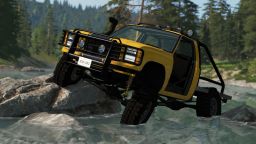
BeamNG.drive works beautifully as a sandbox because it gives players permission to create their own situations. I can drive normally, set up a stunt, push a car down a mountain, test a truck on rough terrain, stage a traffic scenario, try a police chase, experiment with trailers, or simply explore a map until something interesting happens.
The freedom is important because BeamNG.drive is not only about winning. It is about asking questions. What happens if I take this corner too fast? Can this vehicle handle that slope? How much damage can this truck take before it stops moving? Will a tiny car survive a terrible jump? The game answers those questions with physics rather than scripted spectacle.
Scenarios Give Structure Without Taking Away Freedom
Although BeamNG.drive is famous as a sandbox, I appreciated having structured scenarios too. They give the game clearer goals when I want something more directed. Time trials, delivery challenges, chase setups, obstacle courses, and driving tasks can turn the physics system into a test rather than a toy box.
These scenarios work because the driving model makes simple objectives feel meaningful. A delivery route is not just about reaching a marker. It becomes about keeping the vehicle stable, avoiding damage, controlling speed, and choosing a safe line. The physics turn basic tasks into small driving stories.
-
Time trials reward clean driving and route knowledge;
-
Delivery-style tasks make damage avoidance important;
-
Chase scenarios highlight vehicle control under pressure;
-
Obstacle routes show how much terrain affects handling;
The Vehicles Feel Like Machines, Not Skins
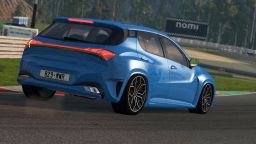
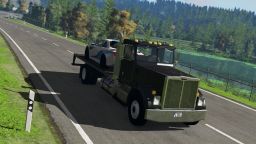
One of BeamNG.drive’s best qualities is that vehicles feel meaningfully different. Cars, trucks, off-roaders, buses, vans, and specialized vehicles are not just different bodies over the same handling model. They have different weight, suspension behavior, stability, power delivery, and damage response. That gives the vehicle roster real texture.
I enjoyed switching vehicles because each one changed what the game asked from me. A small car invited reckless city driving. A heavy truck made me respect momentum. An off-road vehicle encouraged exploration and recovery. A sports car made every mistake feel expensive. This variety gives the game depth even before mods enter the picture.
Maps Make Exploration Feel Like Testing Grounds
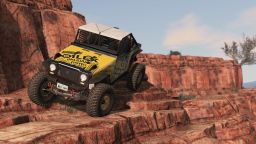
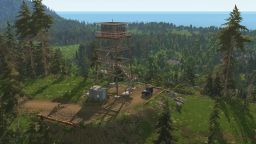
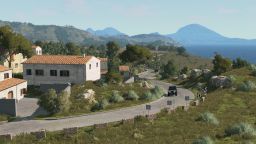
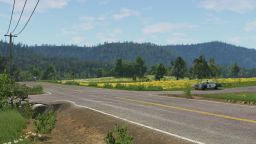
The maps in BeamNG.drive feel less like decorative environments and more like laboratories. Roads, cliffs, highways, dirt paths, towns, bridges, industrial areas, tunnels, beaches, mountains, and open spaces all become opportunities to test vehicles. I rarely looked at a road as only a road. I looked at it as a place where a car might behave differently.
That mindset changes exploration. A steep hill becomes a challenge. A tight urban street becomes a handling test. A long highway becomes a top-speed experiment. A dirt path becomes a suspension check. The environments are valuable because they give the physics system room to speak.
The Visual Style Prioritizes Physical Believability
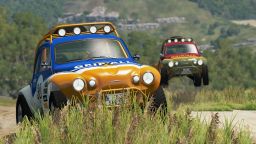
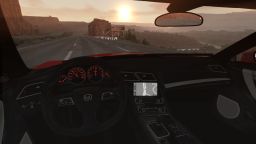
BeamNG.drive is not only impressive because vehicles deform. It is impressive because the deformation makes the world feel more believable. The visual drama comes from physical interaction: tires gripping, frames bending, parts scraping, dust rising, suspension compressing, and cars reacting to uneven ground. The game’s aesthetics are functional, not just decorative.
I like that the visuals are clearest when motion and damage are involved. A still screenshot may not always communicate what makes the game special. BeamNG.drive is best understood in movement, especially when a vehicle is right on the edge of control. That is when the simulation feels alive.
-
Vehicle deformation gives impacts strong visual consequence;
-
Suspension movement makes terrain feel physically present;
-
Part damage adds detail to crashes and rough driving;
-
The game looks most impressive when systems interact in motion;
Mods Help Turn BeamNG.drive Into a Long-Term Platform
BeamNG.drive has a strong modding culture, and that gives it much more long-term value. Vehicles, maps, scenarios, parts, tools, and community experiments can expand the game far beyond its official content. For a sandbox simulator, that matters enormously because players often want new toys after mastering the basics.
I like mods most when they support the spirit of the game rather than only adding novelty. A well-made vehicle mod can become another physics object to study. A map can create new testing conditions. A scenario can turn the sandbox into a focused challenge. Community content helps BeamNG.drive feel less like a fixed release and more like an evolving driving laboratory.
It Is Surprisingly Educational Without Feeling Like Homework
BeamNG.drive taught me more about driving behavior than I expected. Not in a formal classroom way, but through repeated cause and effect. I started understanding how speed, vehicle weight, center of gravity, tire grip, and suspension stress can influence control. The game makes those ideas visible because mistakes have immediate physical results.
This educational quality is one of the reasons BeamNG.drive feels different from pure entertainment driving games. It does not lecture the player. It lets them experiment. A failed turn, a rollover, or a damaged wheel becomes feedback. The player learns because the simulation responds honestly enough to make patterns noticeable.
The Game Can Feel Rough Around the Edges
BeamNG.drive is powerful, but it is not always smooth in a conventional game-design sense. Some players may open it expecting a polished racing campaign and feel unsure what to do. The sandbox nature is the point, but it also means the player needs curiosity. Without self-directed goals, the game can feel loose.
Performance can also depend on hardware, especially when physics-heavy crashes, traffic, multiple vehicles, or complex maps are involved. That is understandable given the simulation depth, but it is still part of the experience. BeamNG.drive asks more from both the player and the machine than a simpler arcade racer.
Where BeamNG.drive Feels Most Effective
BeamNG.drive is strongest when I stop treating it like a normal racing game and start treating it like an interactive physics playground. Its best moments come from experimentation: a careful off-road climb, a failed jump, a surprisingly successful rescue, a realistic crash test, a police chase that goes wrong, or a damaged car limping back to the road.
The game’s appeal is not only speed. It is consequence. Every vehicle feels like an object with weight and structure. Every terrain change matters. Every mistake produces a physical response. That makes BeamNG.drive one of the most distinctive driving experiences available, especially for players who enjoy systems, simulation, and sandbox freedom.
Where BeamNG.drive Feels Less Strong
The game may feel less satisfying for players who want a traditional campaign, licensed car fantasy, polished racing progression, or easy arcade handling. BeamNG.drive is more interested in simulation than glamour. That makes it brilliant for some players and too open-ended for others.
I also think the learning curve can be deceptive. It is easy to start driving, but harder to drive well. Keyboard and gamepad controls can work, yet the simulation becomes much more expressive with careful input. Players who expect instant mastery may need patience before the game fully clicks.