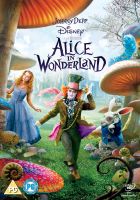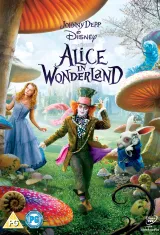
I returned to Alice in Wonderland expecting a familiar fantasy story, but Tim Burton’s version does not really behave like a traditional retelling. It feels more like a dream trying to remember an old dream. The film takes the recognizable pieces of Lewis Carroll’s world — Alice, the White Rabbit, the Mad Hatter, the Red Queen, the Cheshire Cat, and the strange rules of Wonderland — and reshapes them into a darker, larger, more adventure-driven fantasy. I do not think every choice works equally well, but I found the movie interesting because it refuses to be gentle and storybook-soft. It is colorful, odd, uneven, theatrical, and sometimes emotionally distant, yet it has a visual personality that is hard to ignore.
The World Looks Like a Fairytale After a Fever
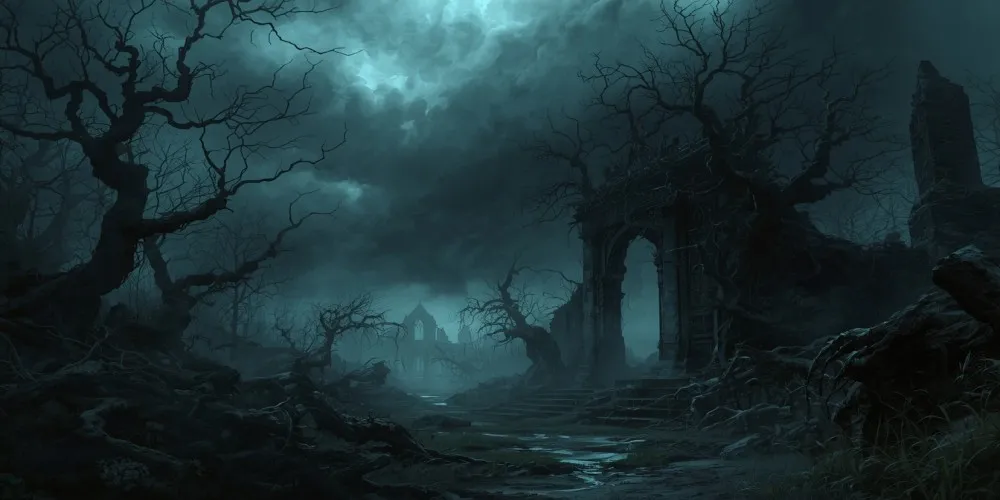
The strongest part of Alice in Wonderland for me is the visual atmosphere. Wonderland, or Underland as the film frames it, does not look like a cozy children’s fantasy space. It feels warped, overgrown, slightly rotten, and too beautiful in a suspicious way. Giant mushrooms, twisted trees, strange creatures, cracked landscapes, and exaggerated palace spaces create a world that always seems one step away from collapsing into nonsense.
I liked that the movie does not chase realism. Tim Burton’s style fits this material because Wonderland should feel artificial, theatrical, and unstable. The backgrounds, costumes, creature designs, and digital environments often look like illustrations that have been stretched into motion. Some effects have aged better than others, but the overall visual identity remains strong because it was never trying to look ordinary.
Mia Wasikowska’s Alice Feels More Reserved Than Expected
Mia Wasikowska plays Alice as thoughtful, hesitant, and quietly resistant rather than loud or overly whimsical. At first, I found that restraint a little surprising. In a world this visually extreme, Alice can sometimes feel almost too calm. Yet that also gives the film a useful contrast. She is not trying to out-weird Wonderland. She is trying to understand why everyone else seems to know her story before she does.
What I liked most about this version of Alice is that her journey is tied to identity. She is not simply a child wandering through a dream. She is a young woman being pushed toward a life that feels wrong, then entering a fantasy world where she must decide whether she can trust her own choices. That gives the film a more coming-of-age shape, even when the plot becomes very busy.
Johnny Depp’s Mad Hatter Is Both Charming and Overdesigned
Johnny Depp’s Mad Hatter is impossible to ignore. The orange hair, pale face, bright eyes, elaborate costume, and shifting emotional energy make him one of the film’s most memorable figures. I enjoyed the performance most when it leaned into sadness rather than pure eccentricity. There is something wounded under the character’s theatrical behavior, and that makes him more interesting than a simple comic oddball.
At the same time, the Hatter sometimes feels almost too designed. Every detail announces itself. The makeup, voice changes, gestures, and emotional swings can become a lot at once. For some viewers, that is the point. For me, the character works best in smaller moments, when the performance slows down and lets the Hatter’s loyalty, fear, and loneliness come through.
-
The costume gives the Hatter instant visual impact;
-
Depp’s performance adds sadness beneath the character’s oddness;
-
The character works best when the film gives him quieter emotional beats;
-
Some scenes feel slightly overloaded by makeup, accent shifts, and movement;
The Red Queen Steals the Movie With Petty Royal Fury
Helena Bonham Carter’s Red Queen is easily one of my favorite parts of the film. She is ridiculous, insecure, spoiled, cruel, funny, and strangely pathetic all at once. Her oversized head is a blunt visual joke, but the performance gives it personality. The Red Queen is not frightening because she is calm and strategic. She is dangerous because her emotions rule the room.
I enjoyed how the movie makes her power feel childish in the worst possible way. She wants love, obedience, flattery, and control, but she does not know how to earn any of them honestly. That makes her scenes entertaining because every compliment around her sounds fake, every servant looks nervous, and every royal command feels like it could come from wounded pride rather than wisdom.
Anne Hathaway’s White Queen Is Weird in a Different Way
Anne Hathaway’s White Queen is not the calm, pure opposite of the Red Queen that I expected. She is graceful, pale, gentle, and theatrical, but there is something deliberately strange about her movements and voice. I liked that choice because it prevents the character from becoming too plain. In Wonderland, even goodness should feel a little peculiar.
The White Queen’s scenes have a floating, mannered quality. She behaves as if she is constantly performing kindness, which makes her more interesting than a simple heroic ruler. I would have liked the film to explore her more deeply, but even with limited space, Hathaway gives the character a soft, eccentric presence that fits Burton’s version of the world.
The Story Works Better as a Quest Than as Pure Nonsense
One major difference in this Alice in Wonderland is that the film gives Alice a clearer adventure structure. There are prophecies, factions, a fallen kingdom, a tyrannical ruler, and a heroic role she is expected to fill. That makes the film easier to follow as a mainstream fantasy adventure, but it also changes the spirit of the original material.
I had mixed feelings about that. On one hand, the quest structure gives the movie momentum. On the other hand, Wonderland is most exciting when it feels irrational and unpredictable. Whenever the film becomes too focused on destiny and battle lines, it loses some of the playful confusion that makes Alice stories special. The movie is at its best when it remembers that logic should wobble here.
The Creature Designs Give Wonderland Its Texture
The supporting creatures help make the world feel fuller. The White Rabbit, the Cheshire Cat, the Dormouse, Absolem, Bayard, and Tweedledee and Tweedledum all add different flavors of strangeness. Some are funny, some are mysterious, and some are more functional to the plot than emotionally rich, but together they create the feeling of a world already in motion before Alice arrives.
I especially liked the Cheshire Cat because he captures the slippery charm that this kind of story needs. He feels amused by danger, detached from panic, and impossible to fully understand. Characters like that remind me why Wonderland works best when no one behaves like they belong in a normal fantasy film.
-
The Cheshire Cat adds mystery and sly humor;
-
The White Rabbit gives the story its classic sense of pursuit;
-
Absolem brings a slower, more cryptic energy;
-
Tweedledee and Tweedledum add physical comedy and visual oddity;
The Aesthetic Is More Gothic Carnival Than Children’s Book
Tim Burton’s version of Alice in Wonderland has a strong gothic-carnival feeling. The costumes are ornate, the colors are rich but slightly sickly, and the world feels both magical and damaged. I liked this because it gives the movie a distinct personality. It does not look like a clean fantasy theme park. It looks like a dream that has been left outside too long.
The production design is especially effective in royal spaces. The Red Queen’s court feels absurd and oppressive, while the White Queen’s world feels elegant but oddly sterile. That contrast helps the film visually separate power, fear, and performance. Even when the script becomes simple, the design keeps adding extra information.
The Movie Is Best When It Lets Alice Feel Out of Place
The emotional center of the film is Alice’s discomfort with the life expected of her. Before Wonderland, she is surrounded by rules, manners, marriage pressure, and social expectations. In Wonderland, she is surrounded by nonsense, danger, and prophecy. Neither world is fully comfortable, and that tension gives her journey meaning.
I liked the idea that Wonderland does not simply free Alice. It challenges her in a different way. She escapes one set of expectations only to find another group of characters insisting that she must be someone from their memory. That makes her arc more interesting: she has to reject not only society’s script, but also the fantasy world’s script until she chooses for herself.
The Performances Are Bigger Than the Story Around Them
Alice in Wonderland is full of performances that feel larger than the plot. Helena Bonham Carter, Johnny Depp, Anne Hathaway, and the voice cast all bring distinct energies, and sometimes they are more memorable than the actual story mechanics. I found myself remembering gestures, faces, voices, and costumes more than specific plot beats.
That is not entirely a flaw. This kind of fantasy often survives through images and characters rather than tight plotting. Still, I sometimes wished the story gave the actors more emotionally surprising material. The cast is strong enough to create a world full of personality, but the script occasionally pushes them into familiar adventure roles.
The Nostalgia Is Present, But Not Always Comforting
This is not the version of Alice in Wonderland I would choose for pure comfort. It is too strange, too digital, too darkly decorative, and too adventure-focused for that. But I think that is also why it remains interesting. It does not only ask viewers to remember a childhood story. It asks what that story might look like if memory distorted it.
The film’s nostalgia works best when it uses familiar icons in unfamiliar ways. Alice is older. The Hatter is sadder. The Queen is more grotesque. Wonderland feels less like a playful dream and more like a place with political wounds. I do not love every change, but I respect that the movie tries to make the familiar feel unstable.
Pros
- Distinctive Tim Burton visual style gives Wonderland a dark fantasy identity
- Helena Bonham Carter’s Red Queen is funny, theatrical, and highly memorable
- Johnny Depp’s Mad Hatter has strong visual impact and moments of real sadness
- Mia Wasikowska’s Alice gives the story a restrained coming-of-age center
- Costumes, creature designs, and palace spaces make the world visually rich
Cons
- The quest structure sometimes makes Wonderland feel too conventional
- Some digital effects have aged unevenly
- The story can feel less interesting than the costumes and characters
- The Mad Hatter’s design and performance may feel overloaded in some scenes
- The film loses some of the original story’s lighter nonsense and playful confusion