
Gacha Neon Summary
Get From the Official Digital Markets
All trademarks belong to their
respective owners.
Gacha Neon feels like a brighter, louder, more experimental cousin of the familiar Gacha character-creation formula. When I opened it, I did not expect a traditional game with a strict path or a dramatic campaign. I approached it as a creative studio, and that is exactly where it works best. It gives me a collection of visual tools, character parts, poses, colors, accessories, and scene options, then lets me shape my own cast in whatever direction I want.
What makes Gacha Neon stand out to me is its stronger sense of style. The name fits the experience because the game feels more vivid and expressive than a basic dress-up editor. It leans into bright colors, bold combinations, energetic outfits, and character designs that can quickly move from cute to dramatic. I enjoyed it most when I stopped looking for a fixed objective and started treating every character slot like a blank page waiting for personality.
A Brighter Visual Mood With More Attitude
The first thing I noticed about Gacha Neon was the visual energy. The game keeps the anime-inspired proportions that make Gacha games instantly recognizable, but it adds a stronger decorative edge. Hair colors, clothing details, accessories, and expression choices can feel more intense, which gives the characters a sharper identity.
I like how easily the game supports bold designs. I can create soft pastel characters, but I can also build someone who looks mysterious, futuristic, magical, royal, rebellious, or stage-ready. The aesthetic does not lock me into one mood. It gives me enough room to experiment with contrast, which is important in a character creator built around personal imagination.
The bright style also helps characters stand out in scenes. Even small changes in color, eye shape, pose, or accessory placement can make a design feel different. That visual flexibility is one of the reasons I found myself spending more time on tiny details than I originally planned.
The Main Characters Come From My Own Imagination
Gacha Neon does not hand me a single main character and ask me to follow their journey. Instead, the main characters are the ones I create. That gives the game a personal quality because every design starts as a choice. I decide who looks shy, confident, stylish, magical, dramatic, calm, cheerful, or distant.
This is the part of the game I enjoy most. A character’s personality begins forming while I choose their face, hair, outfit, and colors. A soft expression with gentle clothing creates one kind of story. Sharp eyes, darker colors, and layered accessories create another. The game does not need written dialogue to suggest character traits. The visuals do a lot of the storytelling.
I also like that Gacha Neon works well for building groups. I can design friends, rivals, siblings, fantasy teams, school casts, or performance groups. Once several characters share a theme but still look distinct, the game starts to feel like a small visual universe that I built myself.
Customization Is the Center of the Experience
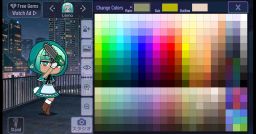
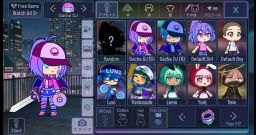
Customization is not a side feature in Gacha Neon. It is the main reason to play. The game gives me many adjustable parts, including hairstyles, clothing, faces, accessories, poses, and colors. That variety makes it easy to start with one idea and slowly refine it into something more specific.
I appreciate how quickly I can test different looks. I can change a hairstyle, switch an outfit, adjust a color palette, and immediately see whether the character feels right. The process is simple, but it has that satisfying creative rhythm where one small change leads to another. Before long, I am not just choosing items. I am designing a personality.
The range of customization also helps the game avoid becoming repetitive too quickly. Even when I create multiple characters with similar themes, I can give each one a different silhouette, expression, or color balance. That makes the creative process feel flexible rather than mechanical.
Scene Creation Turns Designs Into Small Stories
Character creation becomes much more interesting when I start placing my designs into scenes. Gacha Neon lets me arrange characters with different poses, expressions, and backgrounds, which gives every creation more context. A single character standing alone can look nice, but several characters arranged together can suggest an entire story.
I enjoy treating the scene tools like a simple comic-panel setup. One character can look surprised, another can appear confident, and another can stand aside with a quiet expression. Without writing much, I can already imagine what is happening between them. That is where Gacha Neon becomes more than a styling app. It becomes a storytelling toy.
The background choices help set the mood. A school setting, fantasy scene, room interior, or dramatic backdrop can completely change how a character feels. The same design might look innocent in one place and mysterious in another. That flexibility makes scene building one of the most rewarding parts of the game.
A Relaxed Creative Space Without Competitive Pressure
One of the reasons I find Gacha Neon easy to enjoy is that it does not rush me. There is no pressure to win a match, complete a difficult level, or react perfectly. I can spend as much time as I want adjusting colors, comparing outfits, or rebuilding a character from the beginning.
This relaxed structure makes the game useful when I want something creative rather than intense. It feels closer to decorating, sketching ideas, or planning a story than playing a traditional challenge-based game. I can open it for a few minutes and make a quick design, or I can stay longer and carefully tune every detail.
The low-pressure format also makes it approachable. New players can start creating almost immediately, while more patient players can dig into the details. That balance is important because Gacha Neon is not about difficulty. It is about expression.
The Neon Identity Works Best With Bold Ideas
Gacha Neon is especially fun when I lean into its louder style. The game seems designed for characters with strong visual identities. Bright hair, dramatic outfits, glowing-looking palettes, layered accessories, and expressive faces all fit naturally here. I found that the more confident my design choices became, the more the game’s personality opened up.
That does not mean every character has to look extreme. Softer designs still work well, especially when balanced with careful colors and gentle expressions. But the game’s best energy appears when I use it to create something memorable. It rewards contrast, theme, and visual confidence.
This makes it appealing for players who like edits, roleplay, thumbnails, social content, and original character design. A good Gacha Neon character can look ready for a short story, a fan scene, or a dramatic profile image. The game gives me the pieces, and the final mood depends on how boldly I combine them.
Menus Are Useful, Though They Can Feel Crowded
The interface is mostly easy to understand, especially if I already know the Gacha format. Categories are arranged around character parts, and that makes the creation process fairly direct. I can move from hair to clothing to face details without needing a long tutorial.
Still, the number of options can make the menus feel crowded. When I want one specific item, accessory, or expression, I sometimes have to scroll and compare longer than expected. This is not a major problem, but it does slow the creative flow when I am searching for a very precise look.
Even with that issue, I would rather have a generous selection than a limited one. The busy menus are a trade-off for stronger creative freedom. Once I learn where my favorite items are, the process becomes smoother and more enjoyable.
Best for Players Who Like Designing Their Own Worlds
Gacha Neon works best for players who enjoy inventing characters rather than following a strict game path. The experience becomes richer when I bring my own ideas into it. I can create school groups, fantasy casts, idol teams, magical characters, family scenes, dramatic rivals, or completely random designs just for fun.
The game gives me enough structure to create quickly, but not so much structure that it limits my imagination. That is a big part of its appeal. It does not tell me exactly what to make. It simply gives me tools and lets me decide what kind of visual world I want to build.
I also see why it works well for younger creative communities and social sharing. Characters are easy to recognize, screenshots are simple to use, and the style is expressive enough to support short visual stories. Gacha Neon is not about deep mechanics. It is about making creativity feel immediate, colorful, and personal.