Get From the Official Digital Markets
All trademarks belong to their
respective owners.
Inside Out 2 Summary
Inside Out 2 Photo Gallery
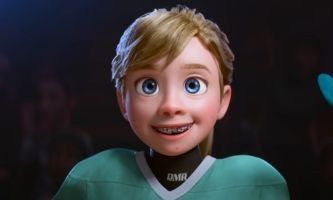
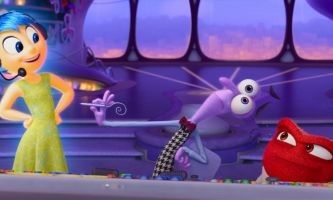
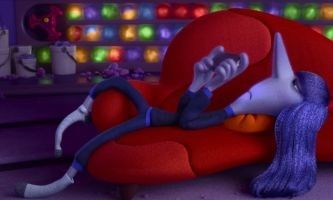
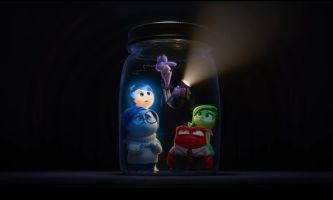
Inside Out 2 feels like stepping back into Riley’s mind at the exact moment someone has rearranged the furniture, changed the lighting, and added a few emotional roommates who definitely did not ask for permission. I returned to this world expecting the familiar charm of Joy, Sadness, Anger, Fear, and Disgust, but the sequel quickly proves that growing up is not just a bigger version of childhood. It is messier, louder, more self-conscious, and full of feelings that do not politely wait their turn.
What I enjoyed most is how naturally the movie expands its original idea. The first film explored sadness as something necessary and valuable. Inside Out 2 moves into a new stage of emotional life: adolescence, social pressure, self-image, and the exhausting desire to become someone who will be accepted. Riley is no longer only reacting to the world around her. She is starting to edit herself for it, and that gives the story a sharper emotional edge.
Riley’s Mind Gets a Teenage Renovation
The movie begins with the comforting familiarity of Headquarters, but that comfort does not last long. Riley’s mind is changing, and the film visualizes puberty as a disruptive construction project. I liked this image because it feels funny and accurate at the same time. Growing up often feels like someone has started rebuilding your personality while you are still living inside it.
The visual world remains colorful, clever, and easy to understand, but Inside Out 2 makes it feel more crowded than before. New buttons, alarms, systems, and emotional processes appear, creating the sense that Riley’s inner life is becoming harder to manage. The clean childhood control room gives way to a place filled with future worries, social calculations, and sudden uncertainty.
This shift works because the movie does not simply add new emotions for comedy. Their arrival changes the entire rhythm of Riley’s mind. The old team still matters, but they no longer understand every situation. That tension gives the sequel its own identity instead of making it feel like a repeated version of the first story.
Anxiety Becomes the Scene-Stealer
Anxiety is the most memorable new emotion in the film. She enters with speed, nervous energy, and a plan for every possible disaster. I found her funny immediately, but the movie is smart enough not to make her only a joke. She believes she is helping Riley. That makes her more interesting, because her problem is not cruelty. Her problem is control.
The film captures how anxiety can begin as preparation and slowly become domination. At first, Anxiety wants Riley to avoid embarrassment, impress the right people, and protect her future. Those goals sound reasonable. But when Anxiety takes over, every choice becomes a test, every mistake becomes catastrophic, and every relationship becomes something to manage.
Her animation is excellent. She moves like a thought that cannot sit still. Her wide eyes, quick gestures, and urgent voice make her feel physically restless. I liked that the movie lets me laugh at her while also recognizing how exhausting she would be inside someone’s head.
Joy Learns That Positivity Has Limits
Joy remains central, but she feels different in this sequel. She is still bright, loyal, and determined to protect Riley, yet she is less certain than before. I appreciated that development because it keeps her from becoming static. Joy already learned that sadness matters, but now she has to learn something more complicated: Riley cannot build a healthy identity by preserving only the flattering parts of herself.
This gives Joy’s role a more mature emotional weight. She wants Riley to believe she is good, kind, talented, and worthy. That desire is loving, but it becomes incomplete when Riley starts experiencing jealousy, insecurity, ambition, fear, and social confusion. Joy has to face the fact that a person is not made whole by deleting every uncomfortable memory.
Some of the film’s strongest moments come from Joy’s panic when optimism stops working. She is used to solving problems by pushing toward brightness, but adolescence requires a wider emotional vocabulary. Watching her realize that Riley’s sense of self needs room for imperfection made her arc feel meaningful.
The New Emotions Make Adolescence Feel Real
Envy, Embarrassment, and Ennui add more than novelty. Each one represents a very specific teenage discomfort. Envy captures the ache of comparison. Embarrassment shows the desire to disappear when attention becomes too much. Ennui brings that detached pose of not caring, even when caring is obvious underneath.
I especially liked Embarrassment. His size contrasts perfectly with his personality. He is huge, yet he wants to hide inside his hoodie. That visual gag is simple, but it says a lot about the feeling itself. Embarrassment can take up the whole room while making someone wish they were invisible.
Ennui is also a clever addition because she represents a social mask rather than a loud emotional storm. Her bored voice and lazy posture capture the teenage habit of pretending everything is unimpressive. The movie uses her lightly, but she gives the new emotional team a distinct flavor.
Hockey Camp Turns Small Stakes Into Big Feelings
The outside story is built around Riley attending hockey camp, and I think it works because the stakes are personal rather than world-sized. Riley wants to make a strong impression, connect with older players, and prove she belongs. For an adult, that may sound small. For a teenager, it can feel enormous.
The camp setting gives Riley’s inner conflict a clear shape. She is not just playing hockey. She is deciding what kind of person she thinks she must become to be valued. That makes every social choice feel important. Should she stay loyal to her old friends? Should she chase approval from someone cooler? Should she pretend to like things she does not really care about?
I liked how the hockey scenes mirror her mental state. When Riley plays freely, the game feels natural. When she is driven by pressure, her movements become more desperate. The sport becomes a visual way to show how anxiety changes performance, not just mood.
Friendship Feels More Complicated Than Before
Inside Out 2 handles friendship with real sensitivity. Riley is not trying to hurt her old friends, but she is also afraid of being left behind socially. That tension feels painfully believable. The movie understands that growing up often means wanting new approval without fully realizing what it costs.
I liked that Riley’s mistakes are treated with compassion. She can be selfish, awkward, and insecure, but the film does not turn her into a villain. It shows how social fear can make a good person act unlike themselves. That is one of the sequel’s most honest ideas.
The emotional discomfort comes from small choices rather than huge betrayals. A changed tone of voice, a moment of distance, a decision to follow someone else’s lead, or a nervous attempt to seem cooler can sting because those things happen in real life. The film captures that subtle pain well.
The Animation Makes Abstract Feelings Easy to Grasp
Pixar’s visual imagination remains one of the movie’s biggest strengths. Inside Out 2 turns beliefs, memories, projections, secrets, and self-image into physical concepts that are easy to follow. I enjoy how the film makes the invisible mechanics of growing up feel tangible without becoming dry or overly explanatory.
The character animation is full of personality. Joy moves with bright urgency. Sadness remains soft and heavy. Anger snaps with compact force. Anxiety vibrates with nervous purpose. Ennui almost melts into the furniture. These physical details make the emotions instantly readable.
The movie is also packed with background creativity. Riley’s mind feels like a workplace, a theme park, a storage facility, and a dream machine all at once. Some ideas appear briefly, but even quick visual jokes help the world feel inventive and alive.
The Message Lands Because It Respects Messy Feelings
The strongest theme in Inside Out 2 is that identity cannot be built from only positive memories. Riley wants to be good, successful, liked, and secure, but the film shows that a real self must include contradiction. A person can be kind and jealous, confident and scared, ambitious and loyal, awkward and lovable.
I found this message powerful because it does not suggest that difficult emotions should disappear. Anxiety is not treated as something to erase forever. She has a role, but she cannot be allowed to run the entire system. That distinction feels emotionally wise.
The film’s best emotional moments come from accepting complexity. Riley does not need a perfect self-image. She needs a truthful one. That idea makes the movie feel useful for children, teenagers, and adults who still struggle with the pressure to be one clean, impressive version of themselves.
Sound, Voice Acting, and Music Keep the Inner World Alive
The voice performances carry much of the movie’s charm. The returning emotions still feel familiar, while the new ones bring fresh rhythms into Headquarters. Anxiety’s voice performance is especially strong because it balances comedy, panic, and sincerity. She is funny because she is intense, but she is moving because she genuinely believes she is protecting Riley.
The sound design gives the mind-world texture. Alarms, controls, memory systems, emotional reactions, and sudden mental shifts all make Headquarters feel active. These details help the inner world feel like a place with rules, not just a colorful metaphor.
The music supports the emotional movement without overpowering it. It can be playful during mental-world comedy, tense during anxious spirals, and gentle when Riley’s vulnerability comes forward. I liked that the score lets the biggest emotional moments breathe instead of forcing them to feel bigger than they are.