Get From the Official Digital Markets
All trademarks belong to their
respective owners.
Hoopers Summary
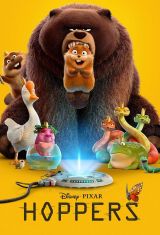
Hoppers sounds like the kind of Pixar idea that could only exist after someone asked a wonderfully strange question: what if humans could finally talk to animals, but the method involved uploading consciousness into lifelike robotic creatures? That is already a better starting point than many family movies get. Instead of another chosen-one fantasy or a standard talking-animal comedy, Hoppers builds its story around Mabel, a young animal lover who uses experimental technology to enter the animal world from the inside. Not as a tourist. Not as a scientist with binoculars. As a robotic beaver. Cinema is healing.
The Product List Says Hoopers, but the Movie Is Hoppers
Your product list names the entry Hoopers, but the linked JustWatch page points to Hoppers, the Disney and Pixar movie. That matters because the correct public-facing title is Hoppers, not Hoopers. I would treat “Hoopers” here as the internal product-list spelling, while the article itself should target Hoppers for SEO accuracy, search intent, and user recognition.
That correction is useful because Hoppers is a 2026 Pixar title with a clear official footprint. Disney’s movie page lists Hoppers as a PG-rated Adventure, Animation, Comedy film with a 1h 45min runtime and March 6, 2026 release date. So the safest content strategy is to mention Hoopers only as the list entry and use Hoppers as the movie title throughout the review.
-
The uploaded list entry is Hoopers, but the external movie title is Hoppers;
-
The JustWatch link in the list also points to Hoppers;
-
For SEO and accuracy, the article should target Hoppers;
-
The movie is positioned as a Pixar animated adventure comedy;
The Premise Is Weird in the Best Pixar Way
Disney+ explains the core idea clearly: scientists have invented a way for human minds to “hop” into lifelike robotic animals and communicate with real animals, and Mabel immediately uses that chance to immerse herself in the animal world. That is the kind of high-concept setup Pixar usually handles well because it mixes emotional curiosity with a simple visual hook.
I like the premise because it is playful and slightly unsettling at the same time. A human consciousness inside a robotic beaver is funny, but it also opens real story questions. What does it mean to understand animals from their own level? Can humans protect nature without controlling it? Is communication enough, or does Mabel also need humility? The movie gets a silly doorway into a thoughtful theme.
Mabel Makes Sense as the Human Lead
Hoppers centers on Mabel, an animal lover whose curiosity gives the story its emotional push. Disney+ describes her as someone who seizes the opportunity to use the technology and embarks on the adventure of a lifetime. That makes her more than a passive visitor. She actively chooses to enter the animal world because she wants to understand it.
I enjoy protagonists who are curious before they are heroic. Mabel does not need to begin as a perfect savior of nature. It is more interesting if she starts with good intentions, makes mistakes, and slowly realizes that listening is more complicated than simply gaining access. The technology lets her enter the conversation, but it does not automatically make her wise.
-
Mabel’s animal-loving personality gives the story emotional direction;
-
Her decision to use the technology pushes the plot forward;
-
The movie can explore curiosity, empathy, and unintended consequences through her;
-
She works best when she is allowed to learn, not simply rescue everyone immediately;
The Robotic Beaver Is a Perfect Visual Gag
The robotic beaver form is one of Hoppers’ smartest hooks. A beaver is already funny enough as an animated character because it suggests teeth, engineering, water, wood, dams, and a very serious relationship with sticks. Making it robotic adds another layer. Mabel is not only crossing into animal society. She is doing it through a synthetic body that may not fit perfectly anywhere.
I like that tension. The robotic beaver can be adorable, awkward, expressive, and suspicious all at once. It gives Pixar room for physical comedy: clumsy movement, tail problems, beaver instincts, social misunderstandings, and moments where Mabel remembers she is not exactly built for this life. It is hard to take yourself too seriously when your dramatic mission involves becoming a mechanical woodland engineer.
The Animal Communication Angle Gives the Movie Its Heart
The official Disney+ description frames Hoppers around understanding and communicating with real animals through robotic bodies. That is a strong emotional foundation because animal stories often depend on the gap between human assumptions and animal reality. Hoppers turns that gap into the central conflict.
I like that the movie does not simply say, “Animals talk now.” It uses technology as the bridge. That makes the premise feel more specific than a traditional talking-animal comedy. Mabel is entering a world that already existed without her. The animals have their own priorities, fears, politics, jokes, grudges, and survival problems. The best version of Hoppers understands that communication should change the human, not just help the human solve the plot faster.
-
The technology gives humans access to animal perspectives;
-
The story can explore the difference between observing nature and participating in it;
-
Animal society gives the comedy a strong worldbuilding base;
-
The emotional message depends on listening, not only inventing;
Pixar’s Animation Style Fits This Concept Naturally
Hoppers benefits from being animated because the premise needs expressive animals, believable robotics, and a natural world that can shift between comedy and wonder. Disney’s official movie page lists it under Adventure, Animation, and Comedy, which is exactly the genre blend the concept suggests.
I think Pixar is especially suited to this kind of idea because the studio has long been good at giving personality to non-human characters and objects. A robotic beaver body needs to read emotionally without becoming too human. Forest animals need to feel funny without becoming generic mascots. The animation has to sell the joke and the sincerity at the same time.
The Cast Gives the Animal World Personality
Public listings identify Hoppers as starring voice performers including Piper Curda, Bobby Moynihan, Jon Hamm, Kathy Najimy, and Dave Franco. That mix suggests the movie is aiming for a broad comic ensemble rather than a quiet one-character journey. For a story about animal society, that is useful. The world needs many voices, many personalities, and many ways to misunderstand Mabel.
I like animated casts that bring different comic textures. A sincere lead, a chaotic animal ally, a smooth antagonist, a grumpy elder, and a strange side character can make the world feel bigger. Pixar movies often depend on supporting characters who steal a scene without derailing the emotional arc. Hoppers has the kind of premise where side characters can become instant favorites.
-
Piper Curda anchors the story around Mabel’s point of view;
-
Bobby Moynihan brings a natural fit for animated comedy energy;
-
Jon Hamm’s voice presence suits polished authority or comic villainy;
-
The broader ensemble helps animal society feel lively and unpredictable;
King George Sounds Like the Kind of Pixar Character Kids Remember
Coverage around the movie describes King George as a beaver leader in the woodland community, with Bobby Moynihan connected to the role. That kind of character is important because Mabel needs a guide inside the animal world. A beaver society cannot only be background texture; it needs leadership, rules, relationships, and someone who represents what is at stake.
I like the idea of a beaver leader because it fits the movie’s construction theme. Beavers are natural builders, which makes them perfect for a story about habitats, communities, and disruption. If King George is funny, anxious, proud, or stubborn, he can become more than a guide. He can become the emotional face of the world Mabel is trying to understand.
The Eco Theme Is Clear Without Needing to Be Heavy
Hoppers appears to use its animal-communication premise to explore environmental concerns, including the relationship between human development and animal habitats. Decider’s summary describes Mabel as an environmental activist trying to protect a forest glade connected to her late grandmother from a highway project. That gives the story a concrete emotional and ecological conflict.
I like environmental stories when they avoid turning into lectures with brighter colors. Hoppers has a better route: make the audience care about a place, then show what could be lost. If the animal community is funny, specific, and emotionally real, the environmental message becomes natural. Viewers are not just told that habitat matters. They spend time inside one.
-
The forest setting gives the stakes a visible place;
-
Mabel’s personal connection can make the environmental theme more emotional;
-
Animal characters help viewers understand habitat loss through personality and community;
-
The comedy can keep the message from feeling too heavy-handed;
The Comedy Works Because the Concept Is Already Awkward
Hoppers does not need to force comedy too hard. A human inside a robotic animal body is already a comic engine. Mabel can misunderstand social cues, move awkwardly, say the wrong thing, or accidentally disrupt animal routines. The animal world can also misunderstand her, especially if she looks like one thing, sounds like another, and behaves like a third.
I like comedy based on mismatch. Mabel is human but not physically human. She wants to help but may not fully understand. The animals may accept, reject, test, or exploit her. Every scene has the potential for identity confusion and physical awkwardness. That is much stronger than relying only on random jokes.
Tom Lizard Became a Marketing Gift
Reuters reported that Hoppers’ marketing leaned into the viral success of Tom, a googly-eyed lizard character that gained attention from a short end-credits clip in Pixar’s Elio and became a social media meme before the film’s release. That kind of accidental character momentum can be powerful for an original animated movie because audiences often need a simple reason to notice something new.
I think Tom Lizard sounds like exactly the kind of side character animation fans latch onto. Sometimes a movie’s emotional lead carries the story, while a bizarre supporting creature carries the internet. If the film uses Tom well, he can be more than a meme machine. He can add texture to the animal world and give the comedy a sharper edge.
-
Tom Lizard gave the movie an unusually strong viral marketing angle;
-
A strange side character can help an original animated film stand out;
-
The challenge is making the character funny in the movie, not only online;
-
Pixar’s best comic side characters usually support the story rather than distract from it;
The Movie Arrived at an Interesting Moment for Pixar
Hoppers is notable because it is an original Pixar movie in a market where sequels and familiar brands often dominate family animation. Reuters described the film as an original animated release trying to turn viral attention into box-office success. That context matters because Hoppers is not leaning on decades of franchise recognition in the same way as Toy Story or Inside Out.
I like that risk. Original animation needs clear hooks, and Hoppers has one. The robotic animal concept is easy to pitch, easy to visualize, and flexible enough for emotional storytelling. Even before judging every scene, I respect that the movie is trying to sell a new world rather than simply reopening an old toy box.
The Streaming Release Makes It Easy to Recommend
JustWatch US currently lists Hoppers as streaming on Disney Plus, with rental and purchase options through Amazon Video, Apple TV Store, and Fandango At Home. Disney+ also states that Hoppers is available to watch on Disney+ after first releasing in theaters on Friday, March 6, 2026.
I think Hoppers fits streaming especially well. It has family-movie pacing, bright animation, animal comedy, and a concept that can appeal to kids and adults together. It also seems like the kind of movie that may get repeat plays at home, especially if children attach themselves to the robotic beaver, Tom Lizard, or whichever animal side character becomes the household favorite.
-
Disney Plus streaming makes the movie easy to access for many viewers;
-
Rental and purchase options add flexibility outside subscription viewing;
-
The family adventure format suits home rewatching;
-
Streaming availability can still vary by country, so local JustWatch checks are useful;
The PG Rating Fits the Family Adventure Tone
Disney’s official movie page lists Hoppers with a PG rating and a 1h 45min runtime. That feels right for a Pixar adventure comedy with animal peril, environmental stakes, and identity-swap humor. It is not positioned as a toddler-only cartoon, but it is clearly built for family audiences.
I like family films that can be playful without becoming empty. A PG rating gives Hoppers room for mild tension, emotional stakes, and jokes that land for older viewers too. The runtime also suggests enough space for worldbuilding without becoming a marathon. A robotic beaver adventure should not require intermission and a hydration plan.
The Strongest Idea Is Perspective
Hoppers is at its most interesting when it treats animal communication as a perspective shift. Mabel does not just hear animals talk. She physically enters their world through a different body. That matters. Perspective is not only information. It is vulnerability, limitation, and adaptation.
I like stories where the hero must become smaller, stranger, or less comfortable to understand someone else. The robotic beaver form forces Mabel out of the human center. She has to move differently, listen differently, and maybe accept that human solutions are not always the best solutions. That is a strong emotional lesson for a family movie.
-
The body-swap technology makes empathy physical, not abstract;
-
Mabel must learn animal problems from inside their world;
-
The story can challenge human-centered thinking without becoming too serious;
-
The best message is likely about listening before fixing;
The Villain Conflict Needs More Than “Development Bad”
Stories about protecting nature can become too simple if every human development project is painted with one brush. Hoppers is stronger if it gives the conflict personality and specificity. Decider’s summary points to a highway project threatening a forest glade, with Jon Hamm voicing Mayor Jerry. That gives the movie a clear antagonist structure, but the writing still needs nuance.
I do not need the movie to turn into urban planning court. But I do want a conflict that feels more interesting than “trees good, mayor bad.” The best Pixar stories let opposing forces have motives, even when they are wrong. If Mayor Jerry is funny, charming, selfish, and believable, the movie’s conflict becomes stronger.
Hoppers Has a Nice Mix of Science Fiction and Woodland Comedy
The idea of uploading consciousness into robotic animals gives Hoppers a science-fiction hook, while the forest setting gives it a cozy animal-adventure mood. That combination feels fresh. It is not purely futuristic and not purely rustic. It puts advanced technology into mud, trees, dams, and animal politics.
I enjoy that contrast. A sleek lab invention meeting chaotic wildlife is automatically funny. The humans may think they have built a clean solution, but nature rarely cooperates like a presentation slide. The whole movie can mine comedy from technology entering a world that has its own rules.
-
The consciousness-transfer technology gives the story a sci-fi foundation;
-
The forest setting keeps the movie earthy and playful;
-
Robotic animals create visual comedy and identity tension;
-
The premise combines invention, empathy, and ecological adventure;
The Movie’s Biggest Risk Is Familiar Pixar Emotion
Hoppers has a fresh concept, but it still lives inside a familiar Pixar emotional lane: a character enters a hidden world, learns empathy, faces a personal wound, and discovers a bigger responsibility. That formula can work beautifully, but it can also feel predictable if the movie does not add enough surprise.
I do not mind familiar emotional architecture when the details are strong. Pixar often succeeds because the premise gives an old feeling a new shape. Hoppers has enough weirdness to do that. The key is whether Mabel, the animals, and the forest conflict feel specific rather than assembled from family-movie parts.
The Animal Society Needs Rules
For Hoppers to fully work, the animal world needs internal logic. What do the animals know about humans? Do they trust beavers? How do different species interact? Is there a council, a hierarchy, a survival code, a food-chain problem everyone politely ignores? The more specific the rules, the funnier and richer the world becomes.
I like animated worlds that feel as if they continue beyond the hero’s visit. If Mabel enters a society with its own conflicts, customs, and grudges, the movie becomes more immersive. If the animals exist only to react to her, the world becomes thinner. Pixar usually understands this, so the concept has good potential.
-
Animal society should feel like it existed before Mabel arrived;
-
Species differences can create comedy and conflict;
-
Rules make the world more believable and more rewatchable;
-
The best supporting characters should have goals beyond helping the human protagonist;
The Emotional Link to Mabel’s Grandmother Adds Weight
Decider’s summary notes that the threatened forest glade was once owned by Mabel’s late grandmother. That personal connection is important because environmental stories are stronger when the place matters emotionally. Mabel is not protecting an abstract patch of green on a map. She is protecting a place tied to memory and identity.
I like that because it gives the story a human heart alongside the animal comedy. Mabel’s mission can be about nature, grief, family, and inheritance at the same time. She may begin by wanting to save a place because it matters to her, then grow by understanding why it matters to others too.
The Best Audience Is Families Who Like Clever Animal Adventures
Hoppers is easiest to recommend to families, Pixar fans, animal lovers, animation viewers, and anyone who enjoys high-concept comedies with emotional messages. It has the right ingredients for broad appeal: a clear premise, a young protagonist, a cute-but-strange animal body, a forest community, a threat to nature, and plenty of room for jokes.
It may be less ideal for viewers who dislike message-driven family films or prefer Pixar’s more abstract emotional stories. Hoppers looks more like an adventure comedy with an eco-friendly core than a quiet internal drama. That is not a weakness. It just defines the flavor.
-
Animal lovers are the natural audience;
-
Families looking for a bright adventure comedy should find it accessible;
-
Pixar fans may appreciate the original concept and expressive character design;
-
Viewers who want darker or more complex animation may find it lighter than expected;
Where Hoppers Feels Most Effective
Hoppers feels most effective when it lets its strange premise become emotional. Mabel hopping into a robotic beaver is funny, but the bigger idea is empathy. She wants to understand animals, and the technology gives her the chance to do that in the most literal way possible.
The movie also works when it treats the forest as a community rather than scenery. If the animals feel like neighbors, leaders, weirdos, cowards, helpers, and troublemakers, then protecting their world matters. The best version of Hoppers is not just about saving trees. It is about finally hearing the lives inside them.
Where Hoppers Feels Less Strong
Hoppers feels less strong when its message becomes too obvious. The environmental theme is valuable, but the movie needs humor, character conflict, and surprise to avoid feeling like a classroom poster with better animation. The premise is strong enough to carry a message, but it should not become only a message.
The second risk is side-character overload. A forest full of animals can be delightful, but too many comic creatures can crowd the emotional center. Mabel, King George, Tom Lizard, and the main conflict need enough space to breathe. Even a robotic beaver needs narrative oxygen.