Get From the Official Digital Markets
All trademarks belong to their
respective owners.
Despicable Мe 4 Summary
Despicable Мe 4 Photo Gallery
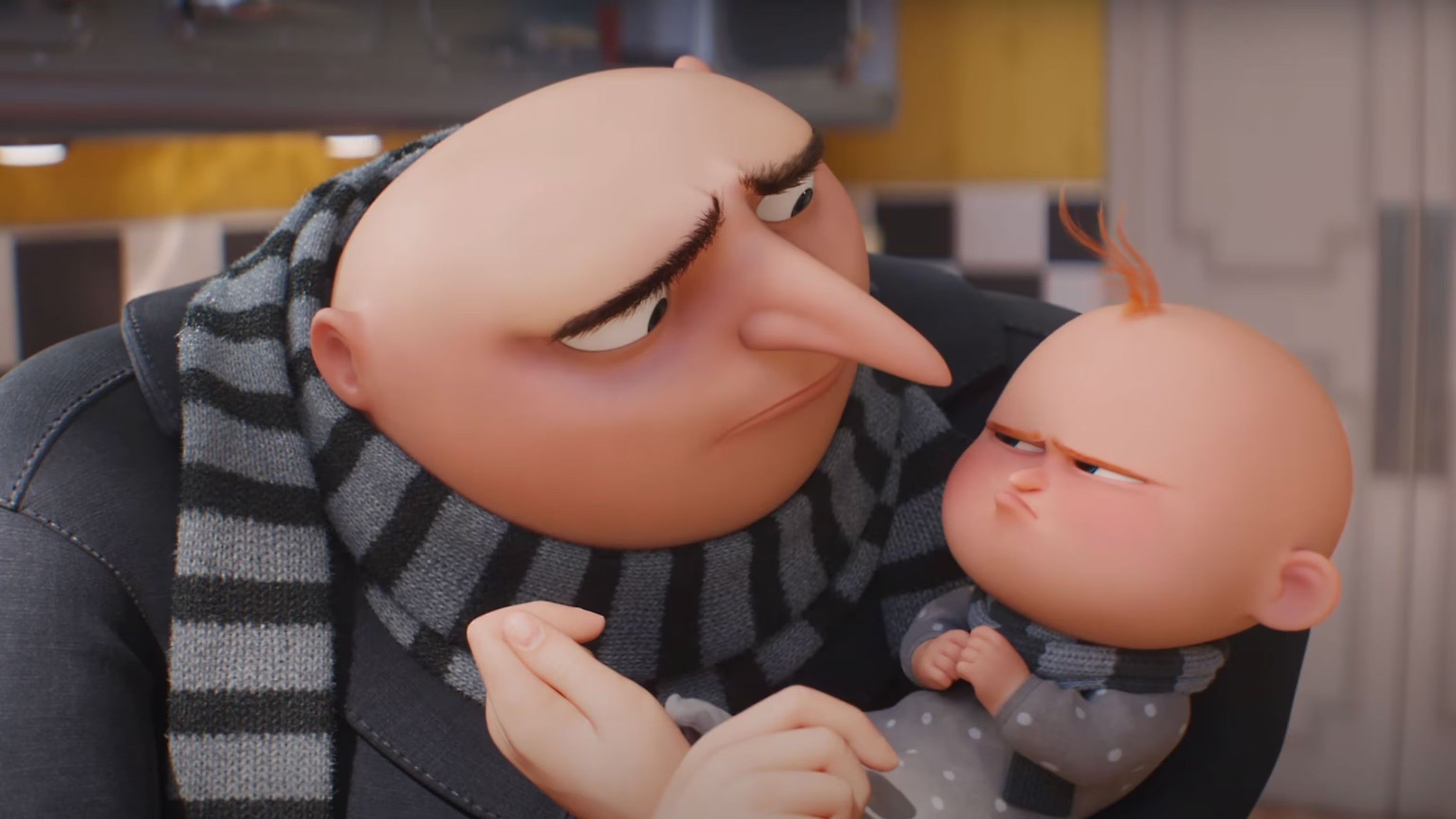
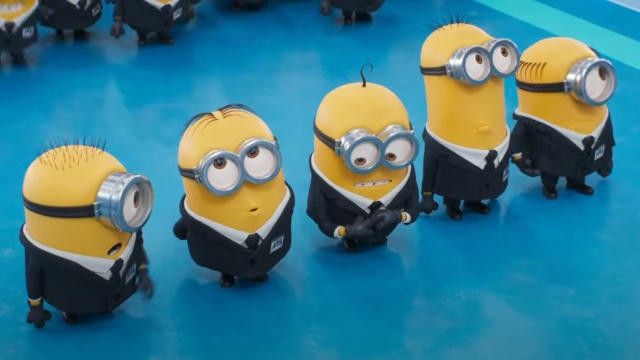
Despicable Me 4 knows exactly what kind of movie it wants to be: bright, loud, fast, silly, and built around the idea that Gru’s life is funniest when he is trying very hard to look in control while everything around him falls apart. The fourth main Despicable Me film does not arrive with the freshness of the original, but it has the confidence of a franchise that understands its audience. There are Minions causing nonsense, a family trying to adapt to a new identity, a baby who seems personally committed to humiliating his father, and a supervillain conflict that gives the story just enough danger to keep the jokes moving.
Gru Is Still Funniest When His Villain Past Meets Dad Life
Gru remains the best emotional anchor in this franchise because he is still caught between two versions of himself. He used to be a dramatic villain with a flair for gadgets, threats, and theatrical entrances. Now he is a husband, father, Anti-Villain League agent, and increasingly exhausted parent. That contrast keeps working because Steve Carell’s vocal performance still makes Gru sound both dangerous and ridiculous.
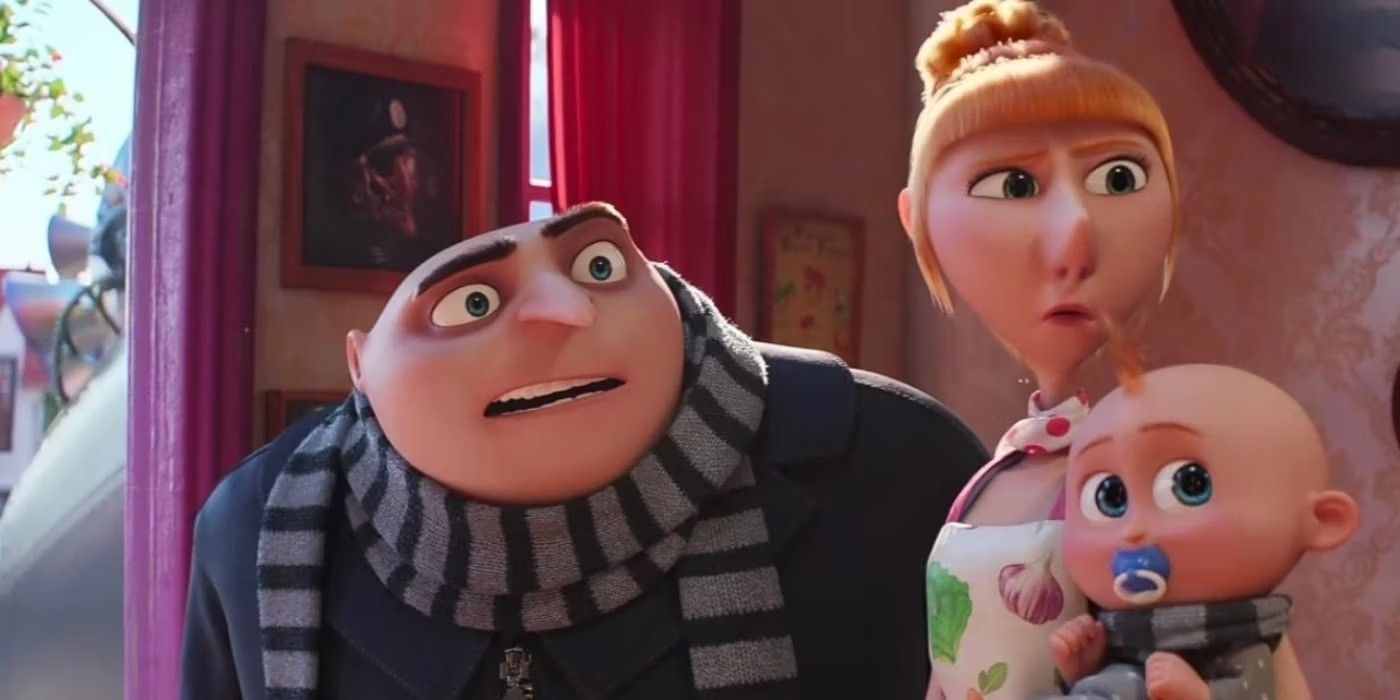
Despicable Me 4 uses that tension again by pushing Gru into a family-protection story. Box Office Mojo summarizes the setup around Gru, Lucy, Margo, Edith, and Agnes welcoming Gru Jr., who is determined to torment his dad, while Gru also faces Maxime Le Mal and Valentina, forcing the family to go on the run.
-
Gru’s old villain habits still create funny contrast with family life;
-
His relationship with Gru Jr. gives the movie a new domestic comedy engine;
-
The Anti-Villain League angle keeps his spy-action side alive;
-
Steve Carell’s performance remains central to the character’s charm;
Gru Jr. Gives the Family Dynamic a Fresh Source of Trouble
Gru Jr. is one of the movie’s smartest additions because he creates a problem Gru cannot solve with gadgets, planning, or old villain confidence. A baby who refuses to cooperate is a very different kind of enemy from a supervillain. Gru can outsmart criminals, but he cannot easily outsmart parenthood.
I like how Gru Jr. brings the comedy back into the home. The franchise has grown bigger with every installment, but Despicable Me works best when the emotional joke is simple: Gru wants to be respected, loved, and in charge, while children and Minions keep proving that control is mostly an illusion. Gru Jr. is small, but he creates exactly that kind of chaos.
Lucy, Margo, Edith, and Agnes Keep the Movie From Becoming Only a Minion Show
The family side matters because the Minions can easily take over any scene they enter. Lucy, Margo, Edith, and Agnes help keep the movie connected to the heart of the original Despicable Me story: Gru becoming part of a family. Kristen Wiig’s Lucy still brings warmth and comic energy, while the girls give the movie different kinds of emotional texture.
The challenge is that Despicable Me 4 has a lot of characters to serve. The family-on-the-run setup gives everyone a reason to be involved, but not every character gets the same amount of attention. Agnes often brings sweetness, Margo brings awkward growing-up energy, and Edith brings mischief, but the film’s pace sometimes moves too quickly to let those smaller arcs breathe.
-
Lucy keeps Gru’s family life lively and less one-sided;
-
Margo, Edith, and Agnes preserve the emotional roots of the franchise;
-
The family-on-the-run premise gives the characters a shared problem;
-
Some individual family moments feel shorter than they could have been;
Maxime Le Mal Is a Big, Silly Villain in the Franchise Tradition
Maxime Le Mal fits the Despicable Me universe because he is ridiculous in a way that feels intentional. Will Ferrell voices him, and the character’s exaggerated arrogance gives Gru a loud external threat. He is not meant to be subtle or terrifying. He is meant to be theatrical, weird, and visually memorable.
I think Maxime works best as a comic mirror to Gru’s old world. He represents the kind of villainy Gru has moved beyond, but not in a serious dramatic way. The conflict is more about spectacle, personality, and cartoon danger than emotional depth. That is enough for this franchise, although it also means Maxime is not as memorable as the family material.
Valentina Adds Style, but the Villain Plot Stays Light
Valentina gives the villain side more flair, and Sofía Vergara’s performance adds confidence and glamour to the character. She helps make Maxime’s side of the story feel bigger and more stylish, especially when the movie leans into villain-world absurdity.
Still, the villain plot is not the deepest part of Despicable Me 4. The movie is more interested in momentum than complexity. Maxime and Valentina provide pursuit, danger, and comic pressure, but the emotional center remains with Gru’s family. That balance is fine for a fast family comedy, though viewers wanting a more focused antagonist arc may find it thin.
-
Maxime Le Mal gives Gru a loud and theatrical new rival;
-
Valentina adds confidence and stylish villain energy;
-
The villain plot supports action and comedy more than emotional depth;
-
The family story remains more engaging than the antagonist material;
The Minions Still Understand Their Job
The Minions remain pure chaos machines. They do not need complex motivation because their purpose is physical comedy, strange noises, bad decisions, and background escalation. Pierre Coffin’s Minion performances are still a defining part of the franchise’s sound and energy, and Despicable Me 4 continues to use them as quick bursts of nonsense.
I understand why the Minions remain so popular. They work almost like silent-era cartoon characters with nonsense-language sound effects. A scene can become funny simply because they enter it with the wrong tool, the wrong idea, and absolute confidence. They are not subtle, but subtlety has never been their job.
The Mega Minions Are a Fun Gimmick, Even If They Feel Like a Side Sketch
The Mega Minions are one of the film’s most marketable ideas: Minions with superhero-style powers. This gives the movie a new visual toy to play with, and the gag works because Minions are already irresponsible without superpowers. Giving them abilities immediately creates obvious comic danger.
At the same time, the Mega Minions can feel slightly separated from the family story. They are funny, but they sometimes play more like a sketch running beside the main plot. That is not unusual for this franchise. Despicable Me often gives the Minions their own comedy lane, and the audience usually accepts that because the lane is loud and full of visual jokes.
-
The Minions still deliver quick physical comedy and nonsense-language humor;
-
Mega Minions give the movie a new superhero parody angle;
-
Their scenes are visually playful and easy for younger viewers to enjoy;
-
Some Minion material feels more like side comedy than main story progression;
The Animation Is Polished, Colorful, and Built for Speed
Illumination’s animation style is clean, bright, and extremely readable. Despicable Me 4 moves quickly, and the visuals support that pace. Character expressions are broad, action is easy to follow, and jokes often land through movement rather than dialogue. The movie knows that family audiences need visual clarity, especially when scenes are full of gadgets, Minions, children, and villain chaos.
The design is not trying to be painterly or delicate. It is trying to be immediate. That works for the franchise. Gru’s sharp silhouette, the Minions’ yellow simplicity, the villain designs, and the exaggerated family-action staging all fit a world where everything should be recognizable in half a second.
The Comedy Is Fast, Broad, and Mostly Reliable
Despicable Me 4 is a broad comedy, and it rarely slows down for subtle jokes. The humor comes from slapstick, awkward parenting, Minion accidents, villain exaggeration, spy gadgets, and the constant mismatch between Gru’s seriousness and the nonsense around him. That approach is predictable, but it is also reliable.
I think the movie is funniest when it lets small family frustrations become big cartoon moments. Gru dealing with Gru Jr. is funnier than another large action beat because it connects to something human. A parent being defeated by a baby has a cleaner joke than a villain chase, even if both are animated with energy.
-
Slapstick humor keeps the pace energetic for younger viewers;
-
Gru’s serious attitude makes silly situations funnier;
-
Family comedy lands better than some of the larger action jokes;
-
The fast joke rhythm leaves little room for quieter character moments;
The Story Is Simple, but That Is Not a Surprise
Despicable Me 4 is not built around a complicated plot. The family gets a new baby, Gru faces a new enemy, the family is forced into a new situation, and the Minions create chaos along the way. IMDb lists Chris Renaud and Patrick Delage as directors, with Steve Carell, Kristen Wiig, Pierre Coffin, and Will Ferrell among the cast, which points clearly to a franchise entry built around familiar voices and established appeal.
I do not mind the simplicity because Despicable Me has always worked best as character comedy rather than plot machinery. The problem is that the movie sometimes feels like it is juggling too many small ideas at once. Gru Jr., Maxime, Valentina, the girls, Lucy, witness-protection-style family changes, Minion experiments, and Mega Minions all compete for space.
The Pacing Is Both a Strength and a Weakness
The movie almost never feels slow. That is good for children and casual family viewing. There is always a joke, a chase, a visual gag, or a character shift nearby. The runtime also helps; Box Office Mojo lists Despicable Me 4 at 94 minutes, which keeps the experience compact.
But speed has a cost. Some emotional ideas arrive, make their point, and leave quickly. Gru’s relationship with Gru Jr. could have supported a more focused story. Margo’s adjustment could have had more space. Lucy could have carried a stronger subplot. The movie chooses momentum over depth almost every time.
-
The 94-minute runtime keeps the movie easy for family viewing;
-
Fast pacing prevents the story from dragging;
-
Multiple subplots create variety but reduce focus;
-
Some character beats feel rushed because the movie keeps moving;
The Voice Cast Keeps the Franchise Personality Intact
The cast is a major part of why Despicable Me 4 feels familiar. Steve Carell, Kristen Wiig, Pierre Coffin, Will Ferrell, Sofía Vergara, Joey King, Miranda Cosgrove, Stephen Colbert, and others give the movie a strong comedy lineup. IMDb lists Steve Carell, Kristen Wiig, Pierre Coffin, and Will Ferrell among the featured cast.
Carell remains the essential piece. Gru’s accent, irritation, tenderness, and theatrical confidence still make the character feel unique. Wiig gives Lucy warmth and oddball energy. Coffin’s Minion performances keep the franchise’s most recognizable sound alive. Ferrell and Vergara bring the villain side enough performance energy to keep it from feeling flat.
The Family Message Is Familiar but Pleasant
Despicable Me 4 returns to a theme the franchise has used before: family changes people, usually for the better, but not always in calm or convenient ways. Gru’s life has become messier because he loves people now. He cannot simply act like a lone genius villain. He has responsibilities, children, a partner, and now a baby who seems very committed to testing his patience.
I like that the movie keeps Gru’s softness under the comedy. He may complain, panic, and scheme, but the emotional joke only works because he cares. The franchise’s core transformation still matters: the former villain became a father, and fatherhood remains more unpredictable than any evil plan he ever made.
-
The family theme keeps Gru emotionally likable;
-
Gru Jr. adds a new version of parental frustration;
-
The girls remind viewers how much Gru has changed since the first movie;
-
The message is familiar but still warm enough for family audiences;
The Franchise Fatigue Is Real, but Manageable
Despicable Me 4 is the fourth main film and part of a larger universe that also includes Minions spin-offs. That history gives the movie built-in affection, but it also creates fatigue. Some jokes feel familiar because the franchise has been using similar comic tools for years.
The movie manages this by adding Gru Jr., Maxime, Valentina, and Mega Minions, but the overall formula remains recognizable. For many families, that is exactly the appeal. They want more Gru, more Minions, and more bright chaos. For viewers who want a major reinvention, Despicable Me 4 may feel too safe.
The Box Office Shows the Brand Still Has Serious Power
Despicable Me 4 was a major commercial success. Box Office Mojo lists the film’s worldwide box office at roughly $969 million, with more than $360 million domestic and more than $608 million international. That kind of performance shows how strong the Illumination franchise remains with global family audiences.
This success makes sense. The movie is easy to market, easy to understand, and connected to characters many families already know. It may not be the freshest entry, but it delivers exactly the kind of familiar entertainment that can perform well across age groups and countries.
-
The franchise remains highly recognizable worldwide;
-
Gru and the Minions are still strong family-audience draws;
-
The box office performance shows broad global appeal;
-
Commercial strength does not fully erase creative familiarity;
The Streaming Availability Makes It Easy to Revisit
For UK viewers, JustWatch currently lists Despicable Me 4 as streaming on Netflix, Netflix Kids, and Netflix Standard with Ads. It also shows buy or rental options on Apple TV Store, Rakuten TV, Amazon Video, and Sky Store. That makes the film easy to place into a family movie night without hunting across too many services.
I think Despicable Me 4 works well at home because it is light, bright, and easy to rewatch casually. It does not demand perfect attention. Children can enjoy the Minion chaos, adults can follow Gru’s family stress, and everyone can move through the story without needing a recap of complicated mythology.
The Movie Is Best for Viewers Who Already Like This World
Despicable Me 4 is not trying to win over people who dislike Minions or broad Illumination comedy. It is made for families who already enjoy the franchise’s tone. That means slapstick, quick jokes, silly voices, colorful villains, and family warmth under cartoon chaos.
For that audience, the movie does its job. It may not be the strongest Despicable Me story, but it is comfortable franchise entertainment. It gives Gru a new parenting problem, gives the Minions new ways to be foolish, and gives children a fast, friendly movie with enough energy to hold attention.
Where Despicable Me 4 Feels Most Effective
Despicable Me 4 feels most effective when it focuses on Gru as a father rather than Gru as an action hero. His scenes with Gru Jr. give the movie its freshest comic angle because they turn parental helplessness into cartoon conflict. Gru’s old confidence becomes funny when a baby refuses to respect it.
The movie also works whenever it trusts visual comedy. The Minions, gadgets, villain designs, and exaggerated animation all support quick laughs. Despicable Me has always been a franchise where a character’s face, timing, or movement can be funnier than a line of dialogue, and the fourth film still understands that.
Where Despicable Me 4 Feels Less Strong
The biggest weakness is focus. There are enough subplots for a larger movie, but the runtime keeps everything moving quickly. That means some characters and ideas feel underdeveloped. Gru Jr. is funny enough to carry more of the film, while Maxime and Valentina sometimes feel more like colorful pressure than fully satisfying villains.
The second weakness is familiarity. Despicable Me 4 is polished and enjoyable, but it rarely surprises. Viewers who have seen the earlier films will recognize the rhythm: family chaos, villain threat, Minion detours, slapstick action, and a warm ending. That formula still works, but it no longer feels new.