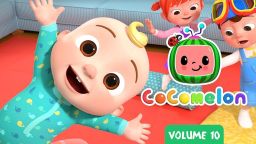
Cocomelon Summary
Get From the Official Digital Markets
All trademarks belong to their
respective owners.
Cocomelon is the kind of children’s show that feels less like a traditional cartoon and more like a daily rhythm. Its world is bright, musical, repetitive, soft-edged, and built around the small routines that matter to preschoolers: waking up, brushing teeth, eating vegetables, playing with friends, going to school, sharing toys, learning letters, and naming feelings. I do not think Cocomelon is designed to impress adults with complex storytelling. Its real purpose is different. It wants to hold a very young child’s attention through songs, simple visual cues, familiar family moments, and lessons that repeat until they become comforting. That makes it easy to understand why the brand became so enormous, even if its style can feel overwhelming from an adult perspective.
JJ Gives the Show a Simple Preschool Anchor
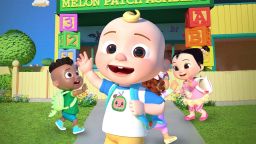
JJ is the center of Cocomelon because he gives young viewers someone easy to follow. He is small, expressive, curious, and surrounded by family, classmates, teachers, animals, toys, and everyday situations. The show does not need him to be complicated. For its audience, his function is to be recognizable. He reacts, learns, sings, tries again, and moves through experiences that many toddlers and preschoolers can understand.
That simplicity is part of the appeal. A preschool viewer does not need a layered character arc to connect with JJ. They need clear emotions, repeated names, gentle situations, and songs that explain what is happening. JustWatch summarizes the series around JJ and his pals singing and dancing through fun adventures while learning about letters, numbers, and more. That description captures the show’s core identity: small lessons wrapped in music.
The Nursery Rhyme Format Is the Real Engine
Cocomelon works because songs are easier for young children to remember than ordinary dialogue. A lesson about brushing teeth, cleaning up, sharing, or trying food becomes more memorable when it has melody, repetition, and movement. The show uses nursery rhymes and original kids’ songs as its main storytelling language, which makes each episode or video feel familiar even when the topic changes.
I like how the songs turn basic routines into little rituals. A child may not respond to a long explanation about why bedtime matters, but a repeated bedtime song can make the idea feel predictable. That is one reason Cocomelon fits so naturally into family routines. It can become background structure for daily moments, not only entertainment on a screen.
-
Songs make simple lessons easier for preschoolers to remember;
-
Repetition helps children recognize patterns and routines;
-
Movement and dance support active imitation;
-
Familiar melodies make new situations feel less intimidating;
The Visual Style Is Bright, Soft, and Extremely Direct
Cocomelon’s animation style is instantly recognizable: rounded characters, big eyes, clean spaces, bright colors, and smooth movements. It does not chase cinematic complexity. Instead, it focuses on clarity. Young viewers can immediately identify JJ, his family, the classroom, the playground, animals, toys, food, vehicles, and simple emotional reactions.
This visual directness is important for the age group. The screen rarely asks children to decode complicated imagery. Everything is large, colorful, and emotionally obvious. From an adult point of view, the style may feel overly polished or repetitive, but for toddlers, that clarity can be the whole point. Cocomelon speaks in big shapes and big expressions because its audience is still learning how to read the world.
The Everyday Topics Are More Important Than the Plot
Cocomelon rarely depends on dramatic storylines. Instead, it takes everyday situations and turns them into songs. A trip to the playground, a family meal, a school activity, bath time, bedtime, doctor visits, manners, counting, colors, animals, and friendship can all become musical lessons. The show is more interested in repetition than surprise.
I think that is why some adults find it monotonous while children find it comforting. Adults often want novelty. Preschoolers often want familiarity. A song about eating peas or washing hands may feel basic to an adult, but to a child, it can turn a normal task into something more predictable and less frustrating. The show’s value depends heavily on understanding that difference.
The Learning Goals Are Basic, but Age-Appropriate
Cocomelon is not trying to be a complete preschool curriculum. Its lessons are simple: numbers, letters, colors, shapes, hygiene, sharing, routines, animals, food, friendship, and emotional basics. JustWatch’s synopsis specifically mentions learning letters, numbers, and more. That “and more” is broad, but accurate. The show mostly teaches through repetition, modeling, and song.
I would not treat Cocomelon as a replacement for reading, play, conversation, outdoor activity, or direct parent-child interaction. It works better as a light support tool. A song can introduce a concept. A parent can then make it meaningful in real life. If a child hears a clean-up song and then cleans toys with an adult, the screen content becomes more useful than passive viewing alone.
-
Letters and numbers appear in simple, musical formats;
-
Daily routines are shown in predictable steps;
-
Social ideas like sharing and kindness are repeated often;
-
The show works best when adults connect songs to real-life activities;
The Family Dynamic Is Gentle and Reassuring
Cocomelon presents family life as warm, safe, and emotionally simple. Parents are patient, siblings are friendly, and problems usually resolve through songs, encouragement, and small lessons. This is not realistic in a documentary sense, but it is reassuring for very young viewers. The world feels stable.
I like that the show gives children a soft model of family routines. Eating, sleeping, brushing teeth, getting dressed, visiting places, and playing together all become shared experiences. The family environment is idealized, but that idealization helps create a calm preschool fantasy where adults are available and problems can be solved gently.
The Classroom and Friends Expand JJ’s World
Cocomelon is not only about home. JJ’s friends, classmates, and teacher help move the show into school-like settings. This is useful because many preschoolers are preparing for daycare, preschool, group play, or early classroom routines. Seeing characters sing, share, learn, and participate together can make those environments feel less unfamiliar.
The newer CoComelon Lane material also expands this idea by giving JJ and friends more direct milestone-based stories. The official trailer description for CoComelon Lane says the show explores JJ and his best friends as they experience big moments as little kids, such as a first swim lesson or first haircut. That direction makes sense because the brand is strongest when it turns small childhood milestones into clear, friendly narratives.
The Music Can Be Comforting or Exhausting Depending on the Viewer
Cocomelon’s music is both its greatest strength and its biggest limitation. For young children, the songs can be soothing, memorable, and easy to imitate. For adults, the same melodies can become repetitive very quickly. The show is not built around adult patience. It is built around preschool attention patterns.
I think the best way to use Cocomelon is intentionally. A few songs tied to a routine can be helpful. Endless autoplay can become tiring for the household and possibly overstimulating for the child. The content itself is gentle, but the constant rhythm, color, movement, and repetition can still feel intense when watched for too long.
-
Short song sessions can support routines like bedtime or clean-up time;
-
Repeated melodies help children remember simple concepts;
-
Adults may find the music repetitive after long viewing sessions;
-
The show is better as a tool than as unlimited background noise;
The YouTube Identity Explains Its Global Reach
Cocomelon’s success is closely tied to YouTube. The official Cocomelon YouTube channel has become one of the most recognizable children’s channels online, with nursery rhyme compilations, songs, and recurring characters. Search results show the official channel as “Cocomelon - Nursery Rhymes,” with recent uploads and large view counts on individual videos.
This matters because Cocomelon was shaped for repeat digital viewing. The songs are short, clear, and easy to replay. The thumbnails are bright. The topics are searchable. A parent looking for a bath song, bedtime song, vegetable song, or counting song can find something quickly. Cocomelon feels like a streaming-era nursery rhyme library as much as a show.
The Netflix Version Makes It Feel More Like a Series
On streaming platforms, Cocomelon becomes easier to treat as a series rather than a group of standalone songs. JustWatch currently lists Cocomelon as streaming in the UK on Netflix, Netflix Kids, Netflix Standard with Ads, and Sky Go, with purchase options on Amazon Video. That availability helps the brand reach families who prefer controlled streaming environments over open YouTube browsing.
I understand the appeal of watching it through a platform like Netflix Kids. It can feel easier for parents to manage than random video recommendations. The show’s structure still works as song-based content, but the streaming presentation makes it feel more organized and less like an endless playlist.
The Brand Is Bigger Than One Show
Cocomelon is now a full preschool entertainment brand, not just a single series. It includes the main nursery rhyme content, CoComelon Lane, specials, YouTube videos, streaming episodes, toys, merchandise, and spin-off style experiences. Parents.com recently highlighted CoComelon videos involving imagination, Sanrio friends, and recycling-themed content, which shows how the brand continues to expand across themes and collaborations.
I think that expansion is both understandable and risky. On one hand, it gives families more variety inside a familiar world. On the other hand, the brand can become so present that it feels unavoidable. Cocomelon works best when it stays connected to simple preschool needs rather than becoming only a content machine.
-
The main Cocomelon format focuses on nursery rhymes and routines;
-
CoComelon Lane adds more milestone-based preschool stories;
-
Special videos and collaborations keep the brand active;
-
The larger brand works best when it remains useful for young children’s daily life;
The Show’s Strength Is Emotional Predictability
Cocomelon’s world is not surprising, and that is part of its design. Children know that songs will repeat, problems will be small, adults will help, and the mood will stay friendly. That predictability can be comforting for preschool viewers who are still learning routines, rules, and social expectations.
I see Cocomelon less as a story-driven cartoon and more as a musical routine companion. It does not ask children to follow complicated plot turns. It gives them familiar cues: sing, move, count, name, share, try, smile. That may feel too simple for older kids, but for its target audience, simplicity is a feature.
The Adult Criticism Is Easy to Understand
It is also easy to see why Cocomelon receives criticism. The pacing, bright colors, constant music, smooth animation, and repetitive hooks can feel engineered for attention. Time Magazine reported on Cocomelon’s massive success and noted discussion around its data-informed production approach, viewer feedback, and concerns some experts have raised about educational value and possible hyperstimulation.
I think those concerns are worth taking seriously without turning Cocomelon into a villain. The show can be useful in moderation. The problem is not necessarily one song about brushing teeth. The problem is endless viewing without adult context, physical play, conversation, rest, or variety. Like many preschool media products, it depends on how it is used.
The Best Use Is Parent-Guided Viewing
Cocomelon becomes more valuable when an adult participates. A parent can sing along, point to colors, count objects, repeat words, act out movements, or connect a song to a real routine. That turns passive viewing into shared activity. The screen becomes a prompt rather than the whole experience.
I would use Cocomelon in short, purposeful ways: a song before brushing teeth, a clean-up song before putting toys away, a counting song during play, or a bedtime song as part of winding down. That kind of use makes the content feel practical. It supports a moment instead of taking over the day.
-
Sing-alongs can turn viewing into interaction;
-
Parents can connect songs to real routines immediately;
-
Short sessions reduce the risk of overstimulation;
-
Adult context makes simple lessons more meaningful;
The Show Is Not for Every Child or Every Family
Cocomelon’s tone is very specific. Some children may find it calming and engaging. Others may become too absorbed, upset when it ends, or uninterested because the style feels too young. Families also differ in how much music-based screen time they want. There is no single answer that fits everyone.
I think parents should watch how their own child responds. If the songs help with routines and the child transitions away smoothly, Cocomelon can be a useful tool. If it creates battles, overstimulation, or constant requests for more, it may need stricter limits or replacement with slower media, books, music without video, or active play.
The Cultural Impact Is Hard to Ignore
Cocomelon has become one of the defining preschool media brands of the streaming era. Its songs, characters, and visual style are instantly recognizable to many families. The official YouTube presence, Netflix availability, spin-offs, and merchandise all show how far it has moved beyond a normal kids’ show.
That scale is impressive, but it also changes how I judge it. Cocomelon is not trying to be a Pixar film, a literary children’s series, or a quiet educational program. It is built as repeatable preschool music content for the digital age. Measured by that goal, it is extremely effective.
Where Cocomelon Feels Most Effective
Cocomelon is strongest when it supports small daily routines. A song about cleaning up, bedtime, vegetables, school, sharing, or counting can help a young child understand a familiar moment. The show’s bright visuals and repetition make those ideas easy to absorb, especially when a parent connects them to real life.
It also works well as a first media experience for children who enjoy music and movement. The songs are simple, the emotions are clear, and the world feels safe. For its target audience, that safety is important. Cocomelon does not need dramatic conflict to hold attention. It uses rhythm and familiarity instead.
Where Cocomelon Feels Less Strong
Cocomelon is less strong when used as endless background viewing. The same qualities that make it engaging can become exhausting: bright colors, constant music, quick repetition, and highly polished preschool stimulation. Adults may find it repetitive, and some children may have difficulty transitioning away from it after long sessions.
The educational value is also limited if the show is watched passively. Letters, numbers, routines, and manners can appear in songs, but children still need real conversation, physical play, books, social interaction, and hands-on learning. Cocomelon can support those things, but it should not replace them.