Get From the Official Digital Markets
All trademarks belong to their
respective owners.
Barbie Summary
Barbie Photo Gallery
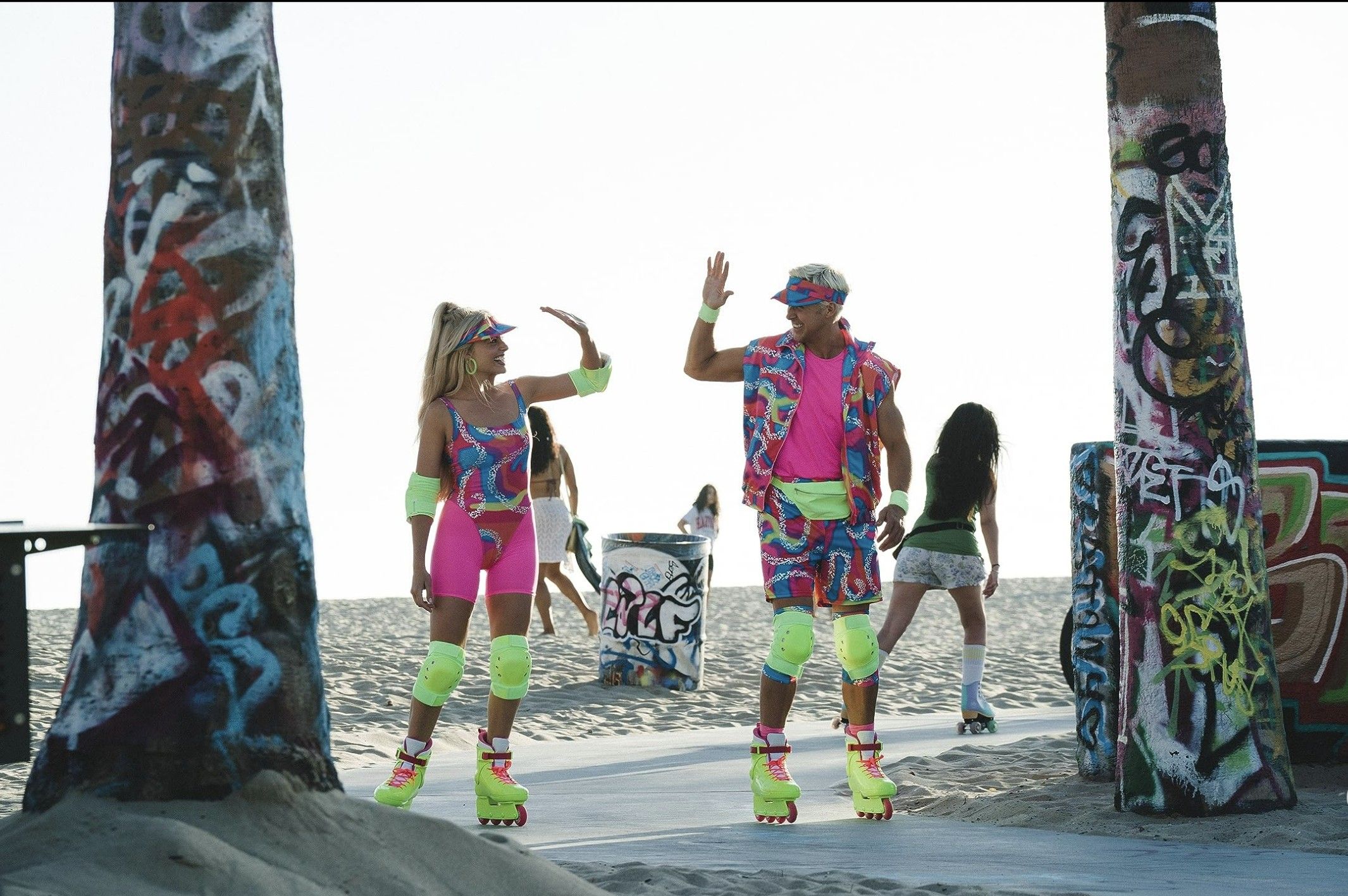
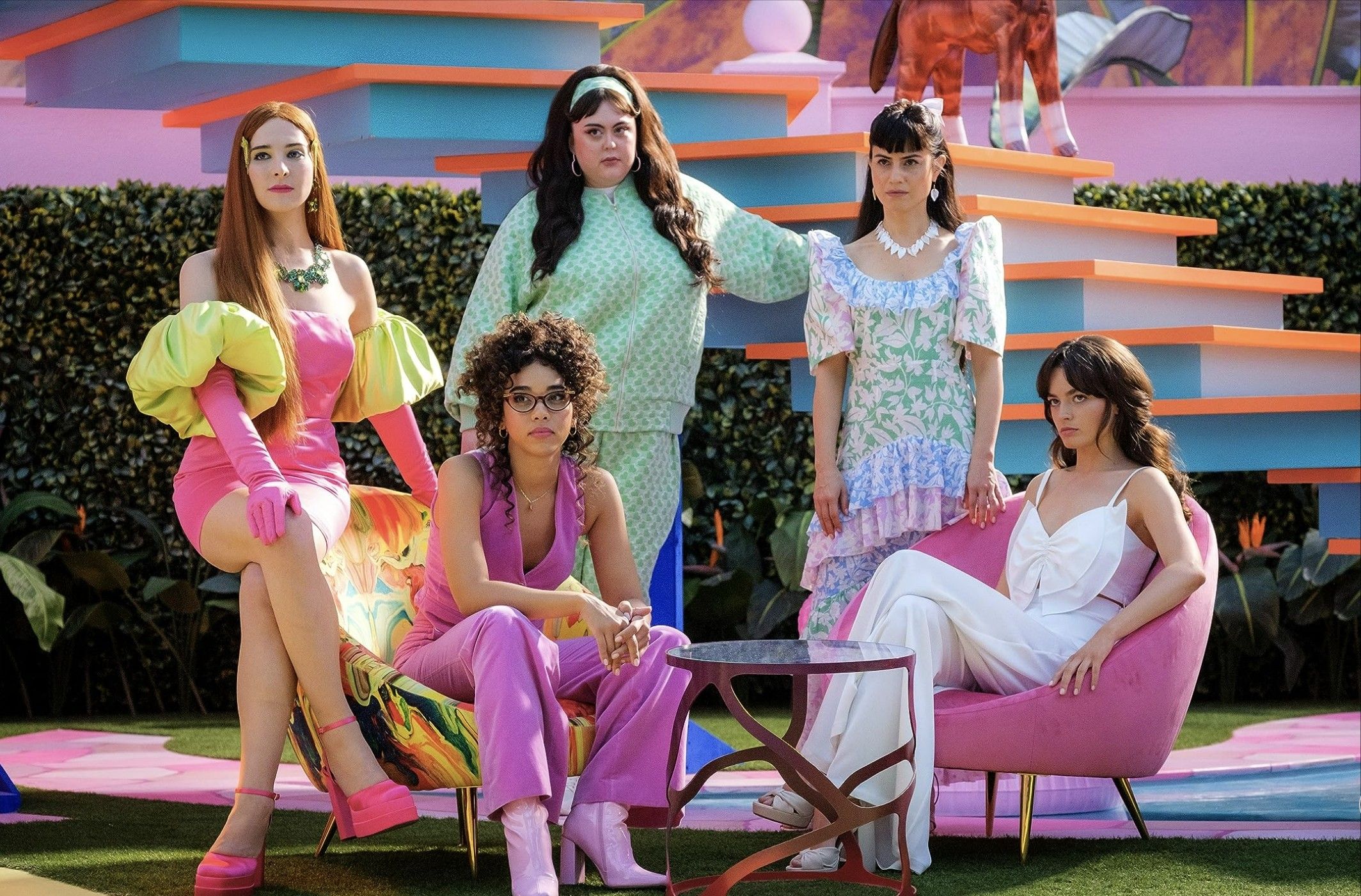
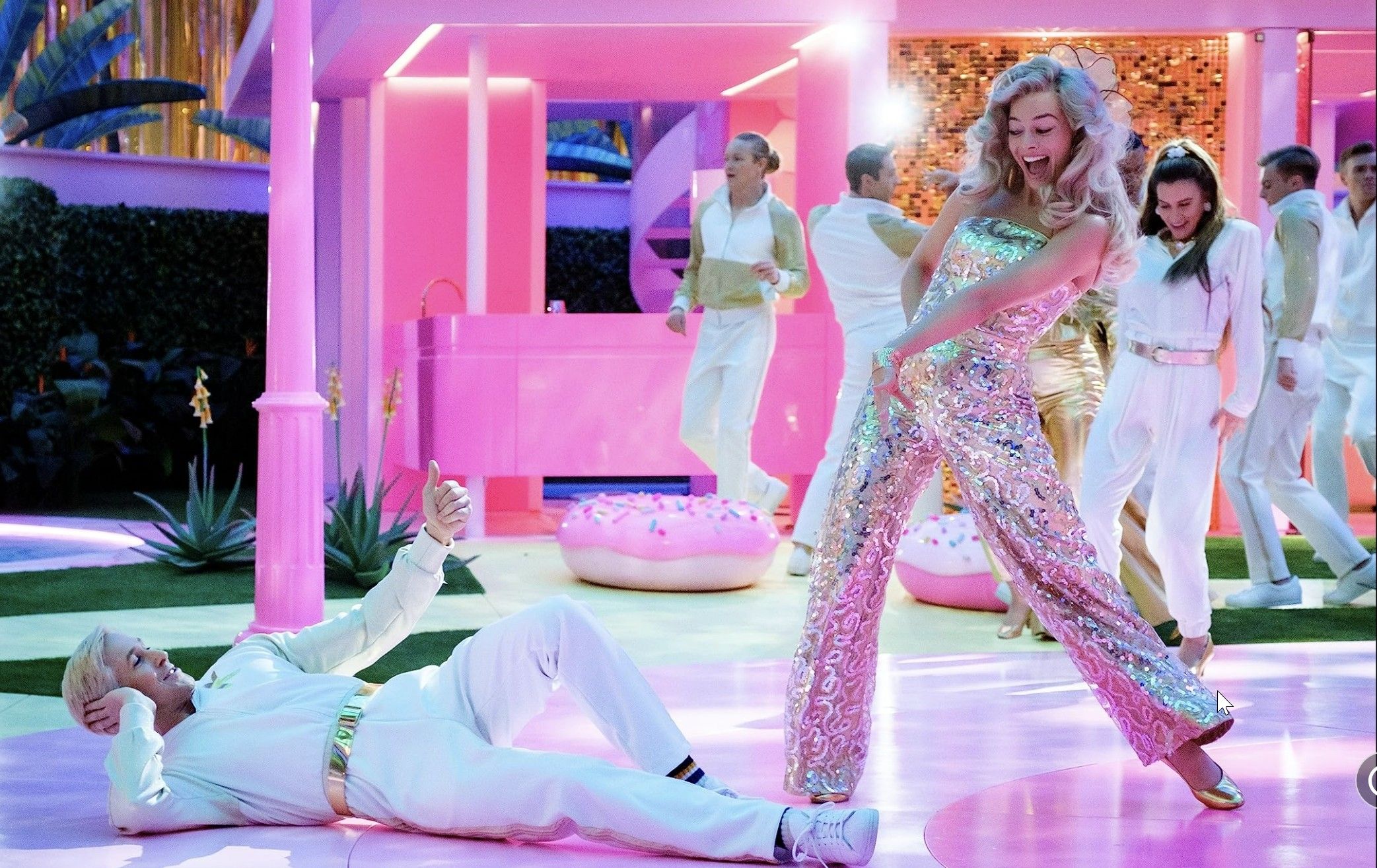
I went into Barbie expecting a bright, funny, extremely pink movie with a clever marketing engine behind it. What surprised me was how much emotional and satirical weight Greta Gerwig managed to hide inside all that plastic perfection. Barbie is not only a movie about a famous doll stepping into the real world. It is a movie about performance, identity, gender expectations, consumer fantasy, childhood memory, and the strange ache of realizing that being perfect is not the same as being alive. I liked it because it never chooses only one mode. It is silly, theatrical, self-aware, musical, sentimental, corporate, anti-corporate, sincere, artificial, and oddly personal all at once. That should be too much, but somehow the overload becomes the point.
Barbieland Looks Fake in Exactly the Right Way
The visual design of Barbieland is one of the movie’s greatest pleasures. Everything looks deliberately artificial: the houses have no real walls, the cars glide through toy-like streets, the beaches look arranged rather than natural, and the colors are so bright they almost feel edible. I loved that the movie does not try to make Barbie’s world realistic. Realism would have flattened the joke. Barbieland needs to look like a child’s playset brought to life with absolute confidence.
That artificiality also gives the movie its first layer of satire. In Barbieland, everything appears perfect because everything has been designed to appear perfect. Nobody has to think too deeply about construction, labor, mess, aging, anxiety, or ordinary inconvenience. The world is beautiful because it is incomplete, and that is what makes Barbie’s first moments of discomfort feel so funny and so unsettling.
Margot Robbie Makes Barbie More Than an Icon
Margot Robbie’s performance is the reason the movie’s emotional logic works. She plays Barbie with radiant confidence at first, but the performance becomes more interesting when cracks begin to appear. Her Barbie is not cynical. She believes in the world she has been given. That innocence makes her confusion feel genuine when she starts experiencing thoughts and feelings that do not fit the design of her life.
I found Robbie especially strong in the quieter moments, when Barbie is trying to understand sadness, embarrassment, fear, and imperfection for the first time. The character could have been a simple joke about beauty and branding, but Robbie gives her a strange tenderness. She makes Barbie feel like someone discovering that personhood is heavier, messier, and more meaningful than being admired.
Ryan Gosling’s Ken Nearly Runs Away With the Movie
Ryan Gosling’s Ken is ridiculous in the best possible way. He is needy, dramatic, insecure, loyal, competitive, and completely lost whenever Barbie is not paying attention to him. I laughed at how seriously the movie treats his emotional confusion, because Ken’s crisis is both absurd and recognizable. He has built his whole identity around being seen by someone else.
Gosling commits fully to the joke without making Ken feel empty. His performance is broad, but underneath the comedy is a real anxiety about purpose. Ken enters the real world and misreads it with spectacular confidence, then brings that confusion back to Barbieland. The result is one of the film’s funniest and sharpest character arcs.
-
Ken’s insecurity gives the comedy a strong emotional motor;
-
Gosling’s physical performance makes even small gestures funny;
-
The musical moments turn Ken’s identity crisis into spectacle;
-
His relationship with Barbie is funny because it is painfully unbalanced;
The Satire Works Because It Is Both Obvious and Strange
Barbie is not subtle, but I do not think it needs to be. The movie is dealing with a globally recognizable toy brand, gendered marketing, patriarchy, corporate storytelling, nostalgia, and beauty standards. A whisper would not fit the material. Gerwig’s satire is loud, colorful, and sometimes intentionally blunt, which makes sense inside a world where everything is already exaggerated.
What I liked is that the movie does not simply mock Barbie. It understands why Barbie mattered to people, why she frustrated people, and why she could mean different things at the same time. The film can joke about consumer culture while still respecting the emotional relationship many viewers have with toys, childhood, imagination, and self-invention.
America Ferrera Gives the Real World Its Human Weight
America Ferrera’s Gloria brings the movie closer to ordinary adult disappointment. Her character matters because she sees Barbie not as an abstract cultural symbol, but as something connected to memory, motherhood, insecurity, and the impossible expectations placed on women. Without Gloria, the movie might have stayed too comfortably inside its clever concept.
I liked how Ferrera grounds the story. Her performance is warm, tired, frustrated, and direct. When the movie turns toward its more emotional arguments, she gives those ideas a human voice. Some of the dialogue is intentionally speech-like, but Ferrera delivers it with enough feeling to keep it from becoming purely theoretical.
The Music Turns the Movie Into a Pop Spectacle
Music is a major part of why Barbie feels so rewatchable. The film uses pop songs, dance numbers, and theatrical staging to make emotional ideas feel playful. Mark Ronson and Andrew Wyatt are credited for the music, and the soundtrack became part of the movie’s cultural identity rather than a background accessory.
I especially enjoyed how the musical energy changes depending on the character. Barbie’s world gets glossy collective movement, while Ken’s material becomes dramatic, insecure, and hilariously overcommitted. The songs help the movie avoid becoming only a dialogue-heavy satire. They turn identity crises into performance, which fits a film about dolls, roles, and the pressure to be seen.
-
The dance sequences make Barbieland feel theatrical and alive;
-
The soundtrack supports the film’s playful pop identity;
-
Ken’s musical material adds comic depth to his insecurity;
-
The music helps balance satire with entertainment value;
Will Ferrell’s Mattel CEO Is More Cartoon Than Villain
Will Ferrell’s Mattel CEO is one of the film’s strangest comic choices. He is not written like a realistic corporate executive. He is more like a mascot for corporate confusion: well-meaning in his own mind, deeply ridiculous, and surrounded by a boardroom that feels like another kind of toy box. I found that funny, though not always as sharp as the Barbieland material.
The corporate scenes work best when they acknowledge the contradiction at the center of the movie. Barbie is a Warner Bros. release based on a Mattel product, but it is also making jokes about brand control and commercial fantasy. That tension is impossible to ignore, so the film turns it into part of the comedy. It does not fully escape the contradiction, but it does have fun with it.
The Supporting Barbies and Kens Make the World Feel Larger
One smart choice is that Barbie is not only about one Barbie and one Ken. Barbieland is filled with different Barbies and Kens, played by a large ensemble that includes actors such as Issa Rae, Kate McKinnon, Simu Liu, Kingsley Ben-Adir, Ncuti Gatwa, Hari Nef, Emma Mackey, Alexandra Shipp, and others. That variety helps the world feel like a full system rather than a single joke.
Kate McKinnon’s Weird Barbie was one of my favorite supporting figures because she represents the toys that were loved too hard. Her design is funny, but the idea underneath is touching. A damaged doll becomes wiser than the perfect ones because she has already experienced change. That is a very Gerwig idea: the broken thing may understand life better than the polished thing.
The Real World Is Intentionally Less Magical
When Barbie enters the real world, the movie changes texture. The colors feel less controlled, the social rules are harsher, and Barbie’s confidence no longer protects her. I liked that contrast because it makes her crisis more than a joke about fish-out-of-water confusion. She is not only surprised by the real world. She is hurt by it.
Ken’s experience of the real world is completely different, and that contrast gives the movie one of its sharpest comic structures. Barbie encounters objectification and vulnerability. Ken encounters a distorted idea of male power and mistakes it for self-worth. Their separate misunderstandings reshape Barbieland in opposite ways, which gives the second half its satirical engine.
-
Barbie’s real-world scenes introduce discomfort and self-awareness;
-
Ken’s real-world scenes create the film’s funniest misunderstanding;
-
The contrast makes Barbieland feel more fragile when they return;
-
The human world gives the fantasy setting emotional consequences;
The Humor Is Fast, Meta, and Sometimes Messy
I liked Barbie’s humor most when it moved quickly between visual jokes, deadpan narration, absurd worldbuilding, and character-specific comedy. Helen Mirren’s narration is especially useful because it gives the movie a storybook voice that can also poke fun at what is happening. The film is very aware of itself, but usually not in a lazy way.
There are moments where the comedy becomes almost too busy. The film has so many ideas that some jokes race past before they fully land. Still, I would rather watch a movie with too much comic energy than one that treats such a strange premise carefully and timidly. Barbie feels alive because it keeps throwing new shapes at the screen.
The Feminist Ideas Are Clear, Not Hidden
Barbie speaks very openly about gender expectations, beauty standards, emotional labor, and the contradictions women are expected to manage. Some viewers may find the messaging too direct, but I think the directness fits the movie’s theatrical style. Barbieland itself is not subtle, so the film’s arguments do not need to hide in subtext.
What I appreciated is that the movie gives both Barbie and Ken identity problems, even if they are not the same problem. Barbie has to move beyond being an idea projected onto others. Ken has to move beyond being defined by Barbie’s attention. The movie’s best emotional insight is that liberation cannot only mean reversing who gets control. It has to mean becoming a person outside the role assigned to you.
The Aesthetic Is a Major Part of the Storytelling
The production design is not just decorative. Barbieland’s pink dreamhouses, plastic props, beach sets, costumes, and staged routines all communicate how the world functions. The visual style tells the viewer that these characters live inside a reality built from play, branding, and fantasy. That makes every break in the pattern feel important.
I loved the practical toy-like details: the empty cups, unreal showers, impossible architecture, and exaggerated costumes. These choices make the world funny, but they also give it rules. Barbieland feels fake, yet internally consistent. That is why it becomes strangely moving when Barbie begins wanting something real.
-
The pink palette gives the movie instant identity;
-
The toy-like sets make Barbieland feel physically playful;
-
Costumes communicate each character’s role and self-image;
-
The artificial design makes emotional imperfection stand out more clearly;
Where Barbie Feels Most Effective
Barbie works best when it lets absurdity and sincerity exist in the same scene. A dance number can be ridiculous and revealing. A joke about dolls can become a joke about adulthood. A plastic world can become the setting for a real emotional awakening. That tonal mixture is the movie’s biggest achievement.
I also think the film succeeds because Margot Robbie and Ryan Gosling understand the assignment completely. Robbie gives Barbie wonder, fear, and warmth. Gosling turns Ken into a comic disaster with a bruised heart. Their performances keep the movie from becoming only an essay dressed in pink.
Where Barbie Feels Less Strong
The movie’s biggest weakness is that it occasionally explains itself too much. Some speeches are effective, but some viewers may feel the film pauses to underline points it has already made visually. I understood why those moments were there, but I sometimes wished the movie trusted its images and performances a little more.
The real-world corporate material also feels less consistently sharp than the Barbieland sections. Will Ferrell is funny, but those scenes sometimes operate on broader cartoon logic than the more emotionally precise parts of the movie. Still, even the uneven pieces contribute to the film’s strange, overstuffed personality.