Scratch Summary
Get From the Official Digital Markets
All trademarks belong to their
respective owners.
Scratch feels like a creative playground where programming stops looking like a complicated technical skill and starts feeling like a form of storytelling. I approached it expecting a simple educational tool for beginners, but what impressed me most was how much freedom it provides. Instead of only teaching code concepts through explanations, Scratch allows me to build animations, games, interactive stories, and experiments by turning ideas into something visible.
What makes Scratch special is the way it removes the intimidating parts of traditional programming. I do not need to memorize complicated syntax or worry about small typing mistakes. Instead, I can focus on logic, creativity, and problem-solving. The platform transforms programming into a visual activity where every block becomes a building piece for a larger idea.
I like that Scratch encourages experimentation. I can create something simple in a few minutes, then gradually add more details, mechanics, characters, sounds, and interactions. The process feels similar to building with digital blocks, where every new idea can become part of a bigger project.
A Creative World Built Around Imagination
The biggest strength of Scratch is its focus on creativity. The platform does not tell me that there is only one correct way to create something. Instead, it encourages exploration and personal expression.
I enjoy how different projects can look completely different even when they use similar tools. One person may create a platform game, another may build an animated story, while someone else may design an interactive lesson. The same programming blocks can produce completely different results depending on the creator.
This freedom makes Scratch feel less like a traditional learning platform and more like a digital studio. The goal is not only understanding programming concepts. The goal is using those concepts to create something meaningful.
The Main Characters Are Created by the Users
Scratch does not have one central hero because the creators themselves become the storytellers. Characters, worlds, animations, and ideas come from the imagination of the community.
I like that this approach gives every project its own personality. A character created by a beginner may be simple, but it can still have a unique identity because it represents someone’s own idea.
The ability to design characters also helps connect programming with other creative skills. Drawing, storytelling, music, animation, and logic all come together in one place. Scratch shows that programming is not only about technology; it is also about creativity.
Visual Programming Makes Coding More Accessible
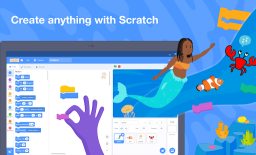
The block-based programming system is the foundation of Scratch. Instead of writing lines of code, users connect colorful blocks that represent commands, conditions, variables, movements, sounds, and actions.
I appreciate how this system allows beginners to understand programming concepts without getting distracted by syntax. A new learner can immediately see how actions connect and how one decision affects another.
This visual approach also makes mistakes easier to understand. When something does not work, I can look at the structure of the blocks and identify where the logic needs improvement. The learning process becomes more interactive and less frustrating.
Game Creation Turns Learning Into Practice
One of the most popular uses of Scratch is creating games. I think this works especially well because games naturally motivate experimentation. A creator can imagine a mechanic, build a simple version, test it, and improve it.
I like how creating a game teaches many different skills at once. A project may require planning, storytelling, design, problem-solving, and logical thinking. Even a small game can become a complete creative challenge.
The process also teaches patience. A first version rarely looks perfect, but improving it step by step is part of the experience. Scratch helps users understand that creating something complex usually begins with a simple idea.
Animations and Stories Add Emotional Expression
Scratch is not only about games. Animation and storytelling are equally important parts of the platform. Users can create scenes, characters, dialogue, and interactive stories that communicate their ideas.
I like that storytelling becomes connected with programming. A character can move because of code, a scene can change because of a condition, and a story can react to the viewer’s choices.
This combination helps develop creative thinking. A creator is not only asking “How do I make this work?” but also “What do I want people to experience?” That shift makes programming feel more expressive.
The Scratch Community Encourages Sharing
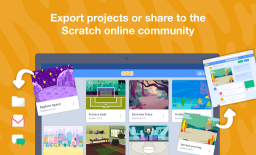
The community aspect is one of Scratch’s strongest features. Creators can share projects, explore other people’s work, remix ideas, and learn from different approaches.
I enjoy how sharing changes the learning process. Instead of creating something alone and stopping, users can receive inspiration from others. Seeing different solutions to similar problems can teach new techniques and encourage experimentation.
The remix culture is especially interesting because it shows how creativity can build on existing ideas. Someone can take a project, change it, improve it, and create something new while learning from the original structure.
Educational Value Goes Beyond Programming
Scratch teaches much more than basic coding. Creating projects requires planning, organization, creativity, communication, and persistence. These skills are useful far beyond programming.
I like how the platform encourages learners to think like creators. Instead of only consuming digital content, users become people who build and design their own experiences.
The learning process also develops confidence. Completing a project, even a small one, gives a sense of achievement because the result comes from personal effort and ideas.
The Interface Keeps Learning Comfortable
The design of Scratch is built for accessibility. The colorful interface, simple controls, and clear organization make it approachable for younger users and beginners.
I appreciate that the platform does not overwhelm new creators with unnecessary complexity. The first steps are simple, but there is enough depth for users to continue improving over time.
This balance is important because a learning tool should invite exploration. If the first experience feels too difficult, many beginners may lose interest before discovering what they can create.
Sound and Visual Tools Expand Creativity
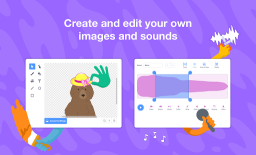
Scratch becomes more powerful when users combine programming with multimedia. Adding music, sound effects, drawings, and animations allows projects to feel more complete.
I like how these tools encourage creators to think about the entire experience. A game is not only mechanics. A story is not only text. Every element contributes to the final result.
This makes Scratch feel closer to a complete creative environment rather than only a coding lesson. Users can explore many different forms of digital creation.
Learning Through Mistakes Becomes Part of the Experience
One of the best things about Scratch is that mistakes are expected. A project may not work correctly at first, but fixing problems becomes part of learning.
I like this because programming is naturally connected with experimentation. Testing ideas, finding errors, and improving solutions are important skills that Scratch introduces in a friendly way.
The platform creates an environment where curiosity is rewarded. Instead of being afraid of mistakes, users learn that problems are opportunities to understand something better.
Where Scratch Feels Strongest and Where It Has Limits
Scratch feels strongest as an introduction to programming and creative technology. It gives beginners the confidence to build projects while teaching important concepts through practice.
The main limitation is that advanced programmers may eventually need more powerful tools. Scratch is designed as an accessible starting point, not a replacement for professional programming environments.
For me, Scratch succeeds because it makes creation feel possible. It removes the fear surrounding programming and replaces it with curiosity, experimentation, and imagination.