Duolingo: Learn Languages Free Summary
Get From the Official Digital Markets
All trademarks belong to their
respective owners.
Duolingo is the rare education app that understands one awkward truth about learning: motivation is usually messier than ambition. I may want to speak Spanish, French, Japanese, Korean, German, or Italian, but on a normal weekday, I also want coffee, sleep, fewer notifications, and maybe five quiet minutes where nobody asks me to conjugate anything. Duolingo works because it compresses language practice into a small daily ritual. A lesson can be quick, colorful, low-pressure, and just game-like enough to make me think, “Fine, one more round,” which is exactly how a tiny owl sneaks vocabulary into my routine.
The Biggest Strength Is Habit Formation
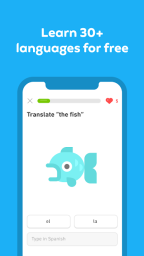
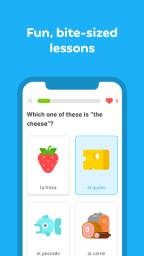
Duolingo’s official app listings describe it as a fun, free app for learning 40+ languages through quick, bite-sized lessons, with practice across speaking, reading, listening, and writing. That sentence explains why the app became so recognizable. It does not ask most users to sit down for an hour with a textbook. It asks for a few minutes, then tries to make those minutes feel satisfying enough to repeat tomorrow.
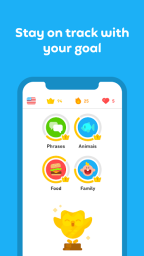
I think that habit-first design is Duolingo’s real magic. The app is not always the deepest language tool, but it is unusually good at making practice happen. Streaks, XP, daily goals, leagues, quests, hearts, chests, animations, and tiny celebrations all push the same idea: come back, do a little, keep going. For beginners and casual learners, that consistency can matter more than heroic study plans that collapse after three days.
-
Short lessons make daily practice feel manageable;
-
Streaks create a simple reason to return every day;
-
XP, quests, and leagues make progress feel visible;
-
The app lowers the emotional barrier to starting a lesson;
The Bite-Sized Lesson Format Is Easy to Love
Duolingo’s lesson structure is quick and repetitive by design. A typical session mixes translation, listening, matching, speaking, sentence building, vocabulary review, and grammar patterns. The pace is fast enough to keep attention, but slow enough that beginners can usually understand what is being asked.
I like this because it removes the heavy feeling that language learning sometimes has. Instead of opening a dense grammar chapter, I can complete a few exercises while waiting for food, sitting on a train, or pretending I am not procrastinating. The lessons are small, but they add up. A single session may not feel dramatic, yet a few weeks of daily repetition can create real familiarity with words and sentence patterns.
The App Feels More Like a Game Than a Class
Duolingo is famous for gamification, and the app leans into it proudly. Duolingo’s own guide says it combines gamification with learning science to keep users motivated and help them reach goals, and it mentions over 100 courses teaching 40+ languages. This is not a hidden design trick. It is the product’s main personality.
I enjoy the game-like layer because it turns study into momentum. A completed lesson gives a small reward. A streak makes tomorrow feel connected to today. A league makes progress competitive. Sometimes that is useful. Sometimes it is a little too effective, because I may find myself chasing XP instead of thinking deeply about what I just learned. That is the trade-off.
-
Gamification keeps practice lively and approachable;
-
Leaderboards can motivate competitive learners;
-
Achievements make progress feel more concrete;
-
Some users may focus too much on points instead of understanding;
The Free Model Is a Major Advantage
Duolingo’s app listings continue to emphasize that it is free, and that matters. Language learning can become expensive quickly, especially with tutors, paid apps, textbooks, and course subscriptions. Duolingo gives learners a way to begin without paying first.
I like that accessibility. A teenager curious about Korean, a traveler trying basic French, a parent brushing up on English, or someone testing whether they truly want to learn Japanese can all start with very little friction. The free version has ads and limitations, but it still offers enough material to make a real beginning.
The Course Range Is Impressive
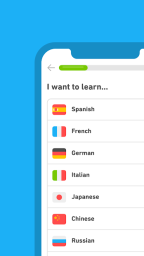
Duolingo’s course catalog is one of its clearest strengths. The app supports major global languages and also includes smaller or less commonly studied options. Google Play and the App Store both describe the app around 40+ languages, while Duolingo’s own course page presents quick, science-based courses in languages and more.
I like having so much choice in one app. A user can focus seriously on Spanish or French, casually explore Norwegian, test Japanese, revisit German, or try something completely new. The variety makes Duolingo feel like a language playground. The downside is that not every course feels equally deep, polished, or complete. Popular languages usually feel stronger than niche ones.
-
Major languages offer strong beginner-friendly paths;
-
Less common languages make the app feel more exploratory;
-
One account can support multiple learning interests;
-
Course depth and polish can vary from language to language;
The App Is Best for Beginners and Returning Learners
Duolingo is especially strong at the beginning stage. It teaches core words, basic sentence structures, pronunciation habits, and everyday phrases in a way that feels less intimidating than a traditional course. It also helps returning learners rebuild rhythm after a long break.
I find Duolingo most useful when I treat it as a daily warm-up. It gives me exposure, repetition, and confidence. It can remind me of grammar patterns I forgot. It can help me recognize words faster. It is not enough by itself for advanced fluency, but it is very good at getting the learning engine moving.
Speaking Practice Helps, but It Has Limits
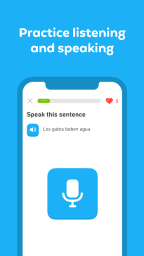
Duolingo includes speaking exercises, and the app listings highlight speaking practice alongside reading, listening, and writing. This is useful because many learners avoid speaking until they feel “ready,” and that perfect moment usually arrives sometime around never.
I like that the app pushes me to say things out loud, even if the exercises are simple. Speaking a sentence, hearing the rhythm, and repeating pronunciation patterns can help. Still, app-based speaking is not the same as live conversation. Duolingo can help build confidence, but it cannot fully replace talking with real people who respond unpredictably.
-
Speaking exercises make pronunciation practice less intimidating;
-
Listening tasks help connect written words to sound;
-
Short voice prompts are useful for beginners;
-
Real conversation practice is still necessary for stronger fluency;
Duolingo Max Makes AI Practice More Conversational
Duolingo Max adds AI-powered learning features in supported regions and languages. Duolingo’s help page says Roleplay lets learners practice real-world conversation skills with app characters in different scenarios, and Duolingo’s earlier Max announcement introduced AI features such as Explain My Answer and Roleplay.
I think Roleplay and Video Call point toward the most interesting future for the app. Traditional exercises are useful, but conversation practice is where many learners feel stuck. An AI character can give a lower-pressure way to practice ordering food, asking directions, chatting about plans, or making small talk. The feature is not a perfect replacement for human conversation, but it can make the jump from exercises to speaking feel less scary.
AI Features Are Useful, but They Need Trust
AI in language learning is exciting, but it also creates new questions. Learners need corrections to be accurate, explanations to be clear, and examples to sound natural. If an AI response is wrong or vague, a beginner may not know how to judge it. That is why Duolingo’s AI direction is powerful but also sensitive.
I like AI practice most when it is used as a supplement. It can generate conversation, explain mistakes, and make practice more flexible. But I would not rely on it as the only authority for grammar, pronunciation, or cultural nuance. A language is not only a puzzle of words. It is people, context, tone, and habit.
-
Roleplay can make conversation practice less stressful;
-
AI explanations can help learners understand mistakes faster;
-
Video-style practice may support speaking confidence;
-
Learners should still combine AI practice with reliable grammar resources and real conversation;
Math, Music, and Chess Make Duolingo Broader Than Before
Duolingo is no longer only about languages. The App Store listing currently says users can learn a new language, chess, math, and more, while Duolingo’s blog announced the addition of Math and Music into the app so learners could study more subjects in one place.
I find this expansion interesting because Duolingo’s true product is not just language content. It is a learning habit engine. If the company can turn math, music, and chess into the same short-session structure, the app becomes a broader education platform. The risk is dilution. Language learning is already a huge challenge. Adding more subjects makes the app feel ambitious, but it also needs careful design so everything does not become too shallow.
The Interface Is Bright, Fast, and Friendly
Duolingo’s interface is one of the reasons it feels less intimidating than many education apps. The colors are bright, characters are expressive, buttons are clear, and lessons move quickly. The app gives feedback immediately, which makes each answer feel connected to progress.
I like that the design removes the old classroom fear of making a mistake. Wrong answers are corrected quickly, and the app usually pushes me forward instead of making failure feel embarrassing. The famous owl can be intense about reminders, but the actual lesson experience is friendly and low-pressure.
-
The interface is colorful and easy to understand;
-
Immediate feedback keeps lessons moving quickly;
-
Characters and animations make practice feel less dry;
-
The playful design helps reduce beginner anxiety;
Streaks Are Motivating and Slightly Dangerous
The streak system is one of Duolingo’s most powerful features. It turns learning into a visible chain. Missing one day feels like breaking something, which can be surprisingly motivating. For many users, streaks are the reason they keep practicing long after the first burst of enthusiasm fades.
But streaks can also shift the goal. Sometimes I may complete the easiest possible lesson just to protect the number. That is still better than doing nothing, but it is not always meaningful learning. A streak is a useful tool, not the whole purpose. The best use of Duolingo is to let the streak support study, not replace it.
Super Duolingo Improves Comfort More Than Content
Super Duolingo mainly improves the experience by removing ads and easing some limitations. For serious daily users, that can make the app feel much smoother. Ads in the free version are understandable, but they can interrupt the learning rhythm, especially when I only planned a quick session.
I see Super as most useful for people who already know they will use Duolingo often. It does not magically make the app a complete language school, but it makes daily practice cleaner. The value depends on how much the user dislikes ads, hearts, and interruptions.
-
The free version is enough to start learning;
-
Super Duolingo makes frequent practice smoother;
-
Removing ads helps preserve lesson momentum;
-
Paid plans are most useful for users who already practice consistently;
The App Teaches Recognition Faster Than Production
Duolingo is excellent at helping me recognize words and patterns. After repeated lessons, vocabulary starts to feel familiar. Sentence order becomes easier to predict. Listening exercises help connect spelling and sound. That recognition is valuable.
The harder part is production: creating original sentences without prompts. Duolingo supports this somewhat, but many exercises still guide the learner heavily. I may be able to select the right words from a box, but speaking freely in a real conversation is a bigger leap. That is not a failure of the app; it is a reminder to use Duolingo alongside other practice.
Grammar Is Introduced Gently, Sometimes Too Gently
Duolingo often teaches grammar through examples rather than long explanations. This can be great for beginners because it avoids overwhelming them. Instead of studying a full grammar table, users see patterns repeatedly until they start to feel natural.
However, some learners need more explicit explanation. When a sentence is marked wrong, I may want to know exactly why. AI explanations and guidebook-style notes can help, but the app’s gentle approach may still leave analytical learners hungry for deeper grammar support. Duolingo is friendly, but sometimes I want the friendly owl to bring a whiteboard.
-
Pattern-based grammar keeps lessons approachable;
-
Repeated examples help users absorb structure naturally;
-
Some learners may want deeper rule explanations;
-
External grammar resources can make Duolingo practice more effective;
Listening Practice Is One of the Better Everyday Benefits
Duolingo’s listening exercises are useful because they train the ear through repetition. Even simple sentences help learners connect sound, spelling, and meaning. The app’s short format makes listening practice easier to fit into a normal day.
I like the way listening tasks gently expose me to rhythm. Languages are not only vocabulary lists. They have speed, stress, pronunciation patterns, and sentence music. Duolingo cannot replace podcasts, films, tutors, or real conversation, but it gives beginners a steady starting point for hearing the language often.
The Social Layer Can Motivate or Distract
Leagues, friend quests, shared streaks, and XP competition can make Duolingo feel social even when the lessons are solo. This can be motivating because learning no longer feels private and invisible. A little competition can push me to practice when I might otherwise skip.
At the same time, the social layer can distract from the actual goal. If I am doing easy lessons just to beat someone in a leaderboard, I may be gaming the app more than learning the language. The social tools are best when they encourage consistency, not when they turn study into a numbers race.
-
Friend quests can make practice feel less lonely;
-
Leaderboards add energy for competitive learners;
-
XP chasing can distract from meaningful study;
-
The social layer works best when it supports real learning goals;
Duolingo Is Strongest as Part of a Learning Stack
I would not use Duolingo as my only language-learning tool if my goal were serious fluency. It is better as one part of a stack. Duolingo can build the daily habit, introduce vocabulary, keep grammar patterns active, and provide quick practice. Then podcasts, graded readers, tutors, conversation exchanges, grammar books, and real media can fill the deeper gaps.
This is not a criticism as much as a realistic placement. A fitness app can help someone move daily, but it may not replace a full training plan. Duolingo can help someone learn daily, but it works best when paired with input, speaking, and writing that are less controlled.
Advanced Learners May Need More Than the App Offers
Duolingo has been expanding its content, and TechCrunch reported in April 2026 that Duolingo was making advanced language learning content free across nine languages, including English, Spanish, French, German, Italian, Portuguese, Japanese, Korean, and Chinese. That is a meaningful improvement because one common criticism has been that Duolingo is strongest at beginner and lower-intermediate levels.
Even with advanced content, serious learners still need broader practice. Advanced language ability requires long-form listening, real conversations, cultural context, writing feedback, vocabulary depth, idioms, and comfort with messy real speech. Duolingo can help, but it should not be the whole road.
-
Newer advanced content makes the app more useful beyond beginner stages;
-
Popular languages are likely to feel stronger at higher levels;
-
Advanced learners still need real-world input and conversation;
-
The app is most powerful when it keeps daily study alive;
The App’s Popularity Is Not Accidental
Duolingo is one of the most recognizable education apps in the world. Reuters reported that Duolingo had 56.5 million daily active users and 12.5 million paid subscribers in the first quarter of 2026, with the company investing in AI-powered tools and speaking features for long-term engagement. Those numbers show that the app is not only popular with casual downloaders; it has become a daily learning habit for a huge audience.
I think that popularity comes from clear product design. Duolingo is easy to start, easy to understand, and easy to return to. It does not solve every language-learning problem, but it solves one of the hardest: getting people to practice repeatedly.
The Main Weakness Is Depth
Duolingo’s biggest weakness is that its strengths can also limit it. Short lessons are convenient, but language is bigger than short lessons. Gamification is motivating, but communication is bigger than XP. Pattern recognition is useful, but real speech is less predictable than word tiles.
I do not think this makes Duolingo bad. It makes it specific. The app is excellent at building beginnings and supporting daily practice. It is less excellent as a complete path to confident, flexible fluency. Learners who understand that will get much more from it.
-
Short lessons cannot fully replace deep immersion;
-
Gamified goals may distract from communication goals;
-
Some courses feel stronger and deeper than others;
-
Real conversation practice remains essential for serious progress;
The Best Audience Is Busy Beginners
Duolingo is ideal for busy beginners, casual learners, travelers, students who need extra practice, and anyone trying to rebuild a language habit. It is also useful for people who have failed with heavier study plans and need something lighter to restart.
It may be less satisfying for advanced learners who need nuanced grammar, professional vocabulary, essay-level writing feedback, or spontaneous conversation practice. Those learners can still use Duolingo, but they should treat it as maintenance, warm-up, or supplemental practice rather than the full learning plan.
Where Duolingo Feels Most Effective
Duolingo feels most effective when it turns a dead moment into a useful one. A bus ride becomes listening practice. A lunch break becomes vocabulary review. Five minutes before bed becomes one more step toward a streak. The app’s genius is not that every lesson is revolutionary. It is that the lessons are easy to repeat.
The product also succeeds because it makes learning feel emotionally safe. A beginner can make mistakes, retry, hear the language, and keep going without embarrassment. That sense of low-pressure repetition is valuable, especially at the start of a language journey.
Where Duolingo Feels Less Strong
Duolingo feels less strong when I need open-ended language production. Real conversation requires improvisation, listening under pressure, and building sentences without neat prompts. The app supports parts of that process, especially with AI features in Max, but it still cannot fully recreate the unpredictability of another human being.
It also feels less strong when gamification becomes the main goal. Protecting a streak can be motivating, but true progress depends on comprehension, memory, speaking, and confidence. A long streak is nice. Understanding a real conversation is better.