Bridge Race Summary
Get From the Official Digital Markets
All trademarks belong to their
respective owners.
I opened Bridge Race expecting a very simple hyper-casual mobile game, and that is exactly what it is, but I do not mean that as an insult. Bridge Race is built around one instantly understandable idea: collect blocks of your own color, carry them to a bridge path, build your way forward, and reach the finish before the other runners. There is no complicated story, no deep character system, and no long tutorial standing between the player and the first race. The game works because it understands the appeal of quick physical competition. I run, gather, build, lose blocks, steal momentum, take shortcuts, and try again when someone reaches the top before me. It is light, repetitive, sometimes chaotic, and clearly designed for short mobile sessions.
The Core Idea Is Easy to Understand in Seconds
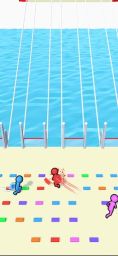
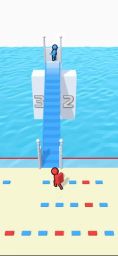
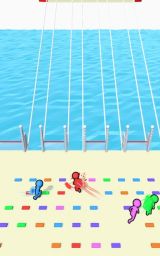
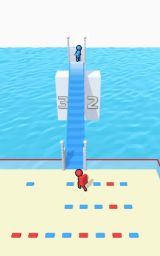
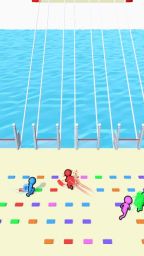
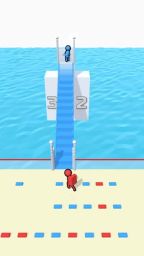
Bridge Race has one of those mobile concepts that explains itself almost immediately. The floor is full of colored blocks. My character has a color. I collect matching blocks, bring them to the path, and those blocks become steps on a bridge. If I build efficiently, I move upward and forward faster than the other players. That is the whole hook, and it is strong because it is so clear.
Google Play describes the game around collecting blocks, building bridges, competing against rivals, choosing smart shortcuts, and reaching the finish first. That directness matters. Bridge Race is not trying to be subtle. It wants the player to understand the goal instantly and focus on movement, timing, and route choice.
The Block-Collecting Loop Is Simple but Satisfying
The most satisfying part of Bridge Race is the collection loop. Running through a field of blocks and watching the stack grow behind the character gives the game a quick sense of progress. Each block feels like a tiny step toward victory. When the stack is large, I feel ready to rush forward. When it is small, I know I need another loop before committing to the bridge.
I like how the game creates a small risk-reward decision from a very simple mechanic. Should I collect a huge stack before building, or should I start climbing quickly with fewer blocks? Should I take the shortest bridge route, or use a safer path with more opportunities to gather? These are not deep strategy questions, but they are enough to make each race feel active.
-
Collecting matching blocks gives the player immediate visual progress;
-
Large stacks create confidence but can also invite mistakes;
-
Bridge building turns collected resources into forward movement;
-
The loop is easy to repeat during short mobile sessions;
The Racing Pressure Keeps the Game From Feeling Like a Puzzle
Bridge Race could have been a quiet building puzzle, but the rival runners change the mood completely. The other characters create pressure. I am not only solving the route. I am racing against opponents who are collecting, building, and climbing at the same time. That competition makes even a basic level feel more energetic.
The rivals also create visual chaos. They run across the same space, interrupt my sense of control, and make the race feel less predictable. Sometimes I think I am ahead, then another runner suddenly builds a cleaner path and reaches the next platform first. That mild frustration is part of the design. It pushes me into another attempt.
Shortcuts Make the Game More Interesting Than a Straight Race
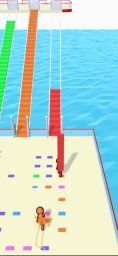
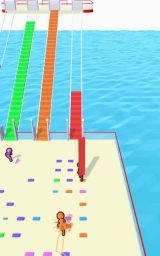
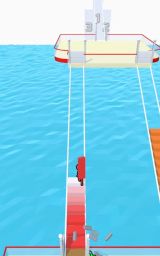
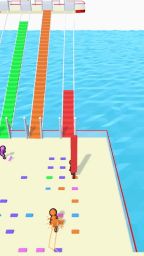
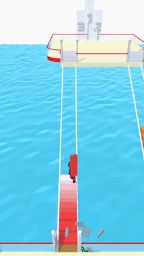
The best levels are the ones where Bridge Race lets me think about shortcuts. A bridge path is not just a decorative staircase. It is a decision. Building a longer route may be safer, while a shorter route might demand more blocks but save time. The game is at its best when I feel like I found a faster path rather than simply followed the obvious one.
This gives the race a little strategic flavor. The challenge is not only collecting blocks quickly. It is knowing when to stop collecting and start building. If I wait too long, another runner may pass me. If I build too early, I may run out of blocks halfway up the bridge. That timing is the heart of the game.
The Level Variety Helps the Formula Last Longer
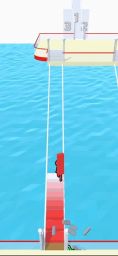
App Store describes Bridge Race as having more than 1000 levels with mechanisms such as sliders, trampolines, zip-lines, ladders, and elevators. That variety is important because the basic loop is extremely simple. Without new level elements, the game could become stale quickly.
I appreciate when a casual game adds small mechanical changes instead of only changing colors or backgrounds. Sliders can change movement timing. Trampolines add physical comedy. Zip-lines and elevators create new ways to move through the stage. These additions do not turn Bridge Race into a complex platformer, but they do help break up the repetition.
-
Sliders add timing and movement variation;
-
Trampolines make levels feel more playful;
-
Zip-lines create faster movement moments;
-
Ladders and elevators help stages feel less identical;
The Game Works Because It Is Built for One-Handed Mobile Play
Bridge Race feels designed for easy mobile control. The movement is simple, the camera is readable, and the player’s attention stays on collecting blocks and choosing a path. This kind of design is important for hyper-casual games because complicated control schemes would ruin the quick-session appeal.
I like that the game does not ask for precision buttons or advanced timing. It is more about steering and decision-making than execution difficulty. That makes it accessible to players who do not usually play competitive games. A child, casual player, or someone passing time for a few minutes can understand what to do almost immediately.
The Visual Style Is Bright, Clear, and Functional
Bridge Race uses a colorful, clean visual style that fits its casual identity. The character colors, blocks, paths, and platforms are easy to identify. That readability matters because the player needs to quickly spot their own blocks while ignoring other colors. If the screen were too visually complicated, the whole loop would become annoying.
The game’s look is not especially detailed or artistic, but it does the job well. It uses color as gameplay information. My color tells me what to collect. Other colors tell me what to ignore or avoid. The bridge path shows where progress happens. Everything is built around immediate understanding.
The Competition Can Feel Funny and Slightly Unfair
Part of Bridge Race’s appeal is that races can feel messy. Rivals may seem to move efficiently, routes can overlap, and the player can lose momentum quickly after a bad choice. Sometimes that creates funny frustration. I might think I am building perfectly, then realize an opponent has already climbed ahead because they took a better route.
This kind of casual unfairness is common in hyper-casual games. The goal is not perfect competitive balance. The goal is to create enough tension that the player wants to retry. Bridge Race usually succeeds at that. Even when I lose, the level is short enough that trying again does not feel like a major commitment.
-
Rivals make levels feel more alive;
-
Messy races create quick emotional reactions;
-
Short attempts reduce frustration after losing;
-
The competitive pressure supports replayability;
The Hyper-Casual Design Is Both the Strength and the Limit
Bridge Race is very clearly a hyper-casual game. It is built around one strong mechanic, short sessions, quick rewards, and instant replay. That makes it easy to enjoy casually, but it also means the game has limited depth compared with larger mobile titles. It is not trying to become a long-term strategy game or a deep racer.
I think this is important to understand before playing. Bridge Race is best when treated as a quick entertainment loop. It is satisfying for a few levels at a time, especially when I want something simple and colorful. It is less satisfying if I expect layered progression, meaningful storytelling, or advanced skill development.
The Ad Experience Can Shape How Much Fun It Feels
Like many free mobile games, Bridge Race’s overall experience can be influenced heavily by ads and monetization pacing. The core gameplay is quick and easy to enjoy, but frequent interruptions can weaken that rhythm. A game built around short races needs momentum, and ads can either feel like a fair trade for free play or like friction between attempts.
I would enjoy Bridge Race most when the ad pacing does not interrupt every small moment. Hyper-casual games depend on flow. If I can finish a race, retry quickly, and move into the next stage, the loop feels smooth. If I am stopped too often, the simplicity of the game becomes harder to forgive.
The Massive Download Claims Show Its Broad Appeal
Bridge Race’s store listings emphasize huge download numbers, with Google Play saying approximately 250 million downloads and App Store saying more than 500 million downloads. The exact number differs by store listing, but the broader point is clear: this is a widely played casual mobile hit.
That popularity makes sense. The game has a simple visual hook that works well in ads, a mechanic that is easy to understand from a screenshot or short video, and races that create instant win-or-lose tension. It is the kind of product that fits the mobile casual market extremely well.
The Game Is Better for Quick Sessions Than Long Play
I enjoyed Bridge Race most in short bursts. A few levels can feel fun because the gameplay is direct and satisfying. The problem is that the core loop does not change dramatically enough to support long sessions for every player. After many races, collecting blocks and building bridges can start to feel familiar.
The extra mechanics help, but the heart of the game remains the same. That is not necessarily bad. Many mobile games are designed for short daily play rather than long uninterrupted sessions. Bridge Race fits that model. It is better as a quick distraction than as the main game of the evening.
-
Short levels make the game easy to start anytime;
-
The simple loop is satisfying in small doses;
-
Long sessions may make the repetition more noticeable;
-
New mechanisms help, but the core formula remains familiar;
The Game Has a Strong “One More Try” Quality
The strongest psychological trick in Bridge Race is how quickly a loss turns into a retry. If another runner beats me, I usually understand why. Maybe I collected too few blocks. Maybe I chose a bad bridge route. Maybe I hesitated before climbing. Because the mistake feels simple, the retry feels tempting.
This is exactly what a good hyper-casual game needs. The player should feel that victory is close, not distant. Bridge Race creates that feeling well. Even when I lose, I often feel like the next attempt will be cleaner, faster, and smarter. That is enough to keep the loop going.
Where Bridge Race Feels Most Effective
Bridge Race feels most effective when the race is close and the route choice matters. A good level makes me collect blocks, watch opponents, decide when to build, and adjust my path quickly. The fun comes from turning a small pile of blocks into a shortcut that gets me ahead at the last moment.
I also think the game succeeds because it is visually obvious. Anyone watching for a few seconds understands what is happening. That makes it easy to market, easy to learn, and easy to play without mental effort. Sometimes that directness is exactly what a casual mobile game needs.
Where Bridge Race Feels Less Strong
The biggest weakness is repetition. Bridge Race has a clever core loop, but it is still a very simple loop. Players who want deeper mechanics, rich progression, or strategic complexity may lose interest quickly. The game is designed around quick fun, not long-form depth.
The other issue is that ads and monetization can strongly affect the overall experience. If interruptions are frequent, the game’s quick-session strength becomes weaker. Bridge Race depends on speed and flow, so anything that breaks that rhythm can make the game feel more disposable.