
Brawlhalla Summary
Get From the Official Digital Markets
All trademarks belong to their
respective owners.
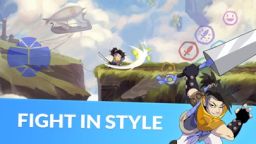
I started Brawlhalla expecting a light platform fighter that would be fun for a few quick matches, but it turned out to have more staying power than its simple visual style first suggests. The idea is immediately familiar: several fighters jump around floating arenas, grab weapons, knock each other off the stage, and try to survive longer than everyone else. But Brawlhalla works because it keeps that idea fast, readable, and flexible. It is easy to understand in the first match, yet difficult to truly master. I like that the game can be silly in a casual free-for-all, tense in ranked 1v1, chaotic with friends, and surprisingly technical once movement, spacing, dodges, weapon matchups, and recovery options start to matter.
The Free-to-Play Platform Fighter Idea Is Immediately Accessible
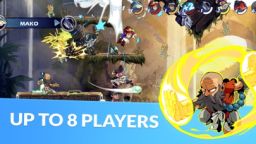
Brawlhalla’s biggest strength is how easy it is to enter. The official site calls it a free 2D platform fighting game that supports up to eight local or online players with full cross-play across major platforms. That is a strong pitch because it removes many of the usual multiplayer barriers. A player can try the game without buying it, invite friends on different systems, and understand the core goal quickly.
I like that Brawlhalla does not bury the fun under complicated setup. A match can start fast, the controls are clear, and the objective is obvious: stay alive, control the stage, and send opponents flying. That simplicity gives the game broad appeal. It works for casual players who just want a messy brawl, but it also leaves enough room for competitive players to dig much deeper.
The Legends Give the Game Its Personality
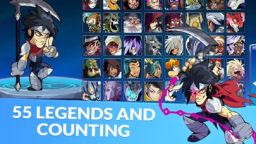
The roster is one of the reasons Brawlhalla keeps feeling fresh. App Store and Google Play descriptions mention over 50 Legends, with frequent updates and more being added over time. Each Legend has a combination of stats, weapon pairings, signature attacks, and visual personality, which makes character choice feel meaningful without making the game impossible to learn.
I enjoy how the Legends cover a wide range of fantasy, sci-fi, historical, mythic, and cartoon-inspired archetypes. Some feel like classic warriors, others like strange future fighters, pirates, monsters, or crossover icons. That variety gives the roster a toy-box feeling. Even before I fully understand every matchup, I can usually find someone who looks fun to try.
-
Legends have different weapon pairings and signature attacks;
-
The roster gives players many styles to explore;
-
Frequent additions and events help the cast feel alive;
-
Character personality makes the game more memorable than a plain arena fighter;
Weapons Make Every Match Feel More Dynamic
Brawlhalla’s weapon system is one of its smartest design choices. Instead of locking each character into only one fighting style, Legends use two weapon types. Weapons spawn during the match, and picking one up immediately changes range, rhythm, combo routes, and pressure options. That keeps the action from becoming too predictable.
I like how weapons create mini-decisions inside every round. Do I rush to grab one first, or pressure an opponent before they arm themselves? Do I keep the weapon I understand best, or switch to one that fits the situation? Do I throw it to interrupt recovery, or hold it for safety? These small choices make matches feel active even before the big knockouts happen.
The Movement Is Simple to Start and Hard to Master
At first, movement in Brawlhalla feels straightforward: jump, dodge, recover, attack, and return to the platform. After more time, I started noticing how much depth sits inside those basics. Good players use spacing, dodge timing, air movement, wall touches, weapon throws, and recovery routes to survive situations that look impossible.
This is where Brawlhalla becomes more interesting than it first appears. The cartoon style may look light, but the movement system rewards practice. A player who understands stage control can make an opponent feel trapped even before landing a heavy hit. A player with strong recovery skills can survive far longer than expected. The better I get, the more every mistake feels like something I can study.
Ranked Play Reveals the Competitive Core
Brawlhalla includes ranked 1v1 and 2v2, and those modes reveal the game’s sharper side. App Store listings specifically mention online ranked 1v1 and 2v2 PvP, with solo play or teaming up with friends against players near your skill level. Ranked strips away some of the casual chaos and makes spacing, matchup knowledge, and emotional control much more important.
I like ranked because it shows how much precision the game can demand. In a casual free-for-all, I can laugh off a messy loss. In ranked 1v1, every dodge, punish, edgeguard, and missed recovery feels personal. The matches are short, but the tension can be high because there is less noise between my decisions and the result.
-
Ranked 1v1 emphasizes spacing, reads, and consistency;
-
Ranked 2v2 rewards team coordination and shared pressure;
-
Skill-based queues give competitive players a clearer path to improvement;
-
Short ranked matches make it easy to play several rounds in one session;
Casual Modes Keep the Game Friendly
Brawlhalla would feel too intense if ranked were the only real attraction. Fortunately, the casual modes give it a more relaxed personality. The official and store descriptions mention casual free-for-alls, custom game rooms, local play, and multiple PvP/co-op modes. These options help the game serve different moods.
I enjoy casual matches because they let Brawlhalla be ridiculous. Four-player free-for-alls can become messy in the best way. Custom rooms let friends set their own tone. Alternate modes can turn the game into something more playful than a standard fighting match. That flexibility makes Brawlhalla easier to keep installed because it is not always asking me to sweat.
Cross-Play Is a Huge Advantage
Full cross-play is one of Brawlhalla’s most important features. The official site lists PC, PlayStation, Xbox, Nintendo Switch, iOS, and Android as supported cross-play platforms. For a multiplayer game, that matters enormously. It means friends do not need to own the same device to play together.
I think cross-play is especially valuable for Brawlhalla because the game’s structure is so social. It is easy to invite someone for a quick set, a casual free-for-all, or a private room. The larger combined player base also helps matchmaking feel more alive. A free fighting game becomes much more attractive when the platform wall is lower.
Mobile Play Is Impressive, but Controls Matter
Your product list includes Brawlhalla with Android and iOS links, so the mobile version is especially relevant for this review. The fact that the full platform fighter experience exists on phones is impressive. The app store descriptions highlight full cross-play and up to eight online players in a match, meaning mobile players are part of the same broad ecosystem.
At the same time, fighting games depend heavily on precise inputs. Touch controls can work for casual play, but serious players may prefer a controller, especially in ranked or against experienced opponents. On mobile, Brawlhalla is still fun, but the control setup can influence how competitive it feels. For relaxed matches, touch input is acceptable. For technical play, better input comfort makes a difference.
-
Mobile access makes the game easy to play almost anywhere;
-
Cross-play keeps mobile players connected to the wider community;
-
Touch controls are convenient but may feel less precise for advanced play;
-
Controller support can make mobile matches feel more comfortable for serious players;
The Art Style Is Clean and Built for Readability
Brawlhalla’s art style is colorful, simple, and readable. It does not chase realism, and that is the right choice. In a platform fighter where several characters can fly around the screen at once, clarity is more important than visual detail. I need to see weapons, attacks, stage edges, recovery paths, and danger quickly.
I like that the character designs are expressive without making the screen too crowded. Stages have personality, but they usually do not distract from the fight. The animation is clear enough to communicate attacks, dodges, and movement timing. That visual readability helps the game feel fairer, especially when matches become fast.
The Crossover Content Adds Fun Recognition
One thing that gives Brawlhalla extra personality is its crossover culture. Over the years, the game has included many crossover characters and skins from recognizable franchises. I see this as a smart fit because the base game already feels like a big arena where different warrior types can collide.
Crossovers are not the core reason to play, but they do make the game feel more eventful. They give casual players familiar faces, create reasons to return, and make the roster feel like a celebration of fighting-game chaos. The best part is that the core mechanics remain understandable even when the cosmetics and themes change.
The Free-to-Play Model Is Friendly, but Still Present
Brawlhalla is free, which is a major reason it is so easy to recommend. The game lets players enter without an upfront purchase, and the official Ubisoft store description also emphasizes that it is free. That accessibility is a real advantage, especially for friends who want to try it together casually.
Still, it is a free-to-play game, so cosmetics, unlocks, and monetization are part of the experience. I do not find the model as intrusive as some mobile games, because the main competitive value is in skill rather than buying power. But players should understand that skins, colors, crossovers, and optional purchases are part of the ecosystem. The best way to enjoy Brawlhalla is to treat spending as cosmetic and optional.
The Game Modes Give It More Range Than Expected
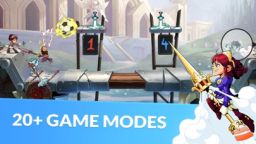
Google Play and App Store descriptions mention over 20 game modes for PvP and co-op. That variety helps Brawlhalla avoid feeling like only one repeated fight. Standard modes are great for learning fundamentals, while alternate modes give the game a party-like edge.
I like when a fighting game gives players different ways to relax. Not every session needs to be ranked. Sometimes I want a serious 1v1. Sometimes I want a chaotic free-for-all. Sometimes I want custom rooms with friends. Brawlhalla supports all of those moods, and that range is a major reason it has lasted.
-
Free-for-all modes create quick casual chaos;
-
Ranked modes give competitive players structure;
-
Custom rooms make friend groups easy to organize;
-
Alternate modes add party-game variety to the platform fighter base;
The Skill Ceiling Is Higher Than It Looks
Brawlhalla can look simple from the outside, especially compared with more technically intimidating fighting games. But after spending time with it, I can see how high the skill ceiling becomes. Better players move with purpose, punish mistakes instantly, control weapon spawns, edgeguard aggressively, and survive offstage pressure with impressive precision.
That depth is important because it gives the game long-term value. A beginner can enjoy button presses and stage chaos. An intermediate player can learn weapons and signatures. A serious player can study matchups, dodge reads, true combos, and tournament-level movement. Brawlhalla grows with the player more than its bright presentation first suggests.
The Community Size Helps the Game Feel Alive
Store descriptions mention over 100 million players, which gives Brawlhalla a sense of scale. A fighting game needs an active community to stay enjoyable, because empty matchmaking can ruin even good mechanics. Brawlhalla’s player base and cross-platform availability help keep it visible.
I also think the community contributes to the learning curve. Players can find guides, tier discussions, combo videos, tournament clips, and character advice. That makes improvement easier if someone wants to go beyond casual play. The game is simple enough to start, but the community gives serious players a path to get better.
Where Brawlhalla Feels Most Effective
Brawlhalla feels most effective when it gives me a clean, fast fight with just enough chaos to stay exciting. A close 1v1, a coordinated 2v2 comeback, a funny free-for-all knockout, or a tense offstage recovery can make a short match feel memorable. The game’s best moments happen when simple controls produce dramatic results.
I also think Brawlhalla succeeds because it respects different kinds of players. It can be a party game, a ranked fighter, a mobile time-killer, a cross-play hangout, or a serious competitive hobby. That flexibility is rare. Many games choose one identity and stay there. Brawlhalla moves between them more comfortably than expected.
Where Brawlhalla Feels Less Strong
The biggest weakness is that the game can feel chaotic or repetitive if a player does not connect with the weapon system or platform-fighter rhythm. Matches are fast, knockouts are frequent, and casual modes can become messy. For some players, that mess is the fun. For others, it can feel frustrating.
Mobile controls are another possible limitation. The game is impressive on phones, but precision matters in fighting games, and touch input may not feel ideal for everyone. Players who want to compete seriously may need to adjust settings, use a controller, or play on a platform where inputs feel more natural.