



Amazing Frog? Summary
Get From the Official Digital Markets
All trademarks belong to their
respective owners.
I started Amazing Frog? with the wrong kind of expectation. I thought I was opening a strange little sandbox game where the joke would wear thin after a few minutes. Instead, I found a game that knows exactly how ridiculous it is and builds its entire identity around that fact. Amazing Frog? is not smooth, elegant, or traditionally polished in the way a mainstream open-world adventure might be. It is floppy, awkward, unpredictable, and proudly absurd. That is also why it works. The game turns clumsy movement, physics chaos, strange vehicles, odd locations, and ridiculous frog behavior into the main entertainment loop. I did not play it because I needed a serious mission. I played it because I wanted to see what nonsense the world would allow next.
SwindonShire Feels Like a Playground With No Responsible Adult Nearby
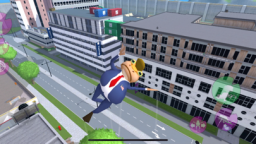
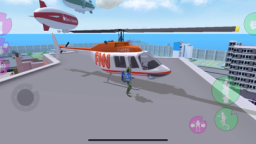
The setting is one of the funniest parts of Amazing Frog? because SwindonShire feels like a normal town that has been quietly taken over by bad decisions. Streets, buildings, vehicles, trampolines, cannons, water areas, tunnels, and hidden spaces all seem designed less for realism and more for causing physics-based accidents. That gives the map a playful sense of danger without making it feel harsh.
I liked how the world encourages curiosity. The game rarely feels like it is politely guiding me through a carefully structured path. Instead, it drops me into a place full of objects and asks me to poke everything. Can I launch myself from this? Can I drive that? Can I reach that weird building? Can I survive the ocean long enough to regret going there? This kind of design makes exploration feel silly but memorable.
The Physics Are Messy in the Best Possible Way
Amazing Frog? depends heavily on physics comedy. The frog does not move with heroic precision. It stumbles, flops, bumps into objects, flies through the air, and turns basic navigation into a performance. At first, that movement can feel awkward. After a while, the awkwardness becomes the joke and the challenge at the same time.
What I enjoyed is that the physics do not only create random comedy. They give the game its personality. A simple jump can become an accident. A vehicle ride can become a rolling disaster. A launch from a cannon can send the frog into a completely unexpected situation. The game feels funniest when I stop trying to control everything perfectly and accept that chaos is part of the design.
-
Ragdoll movement gives every mistake visual comedy;
-
Vehicles often feel unpredictable in a fun way;
-
Launchers and trampolines make travel feel absurd;
-
The world rewards experimentation more than precision;
The Humor Comes From Letting Players Create Their Own Disasters
Amazing Frog? does not rely on traditional jokes as much as player-made accidents. That is a smart choice. The funniest moments usually happen because I tried something foolish and the game let me follow the idea to its natural, ridiculous end. It is the kind of sandbox where a plan does not need to be useful to be entertaining.
This makes the game feel especially good for players who enjoy messing around rather than chasing objectives. There are things to unlock and places to discover, but the real appeal is the freedom to create a chain reaction of nonsense. The game gives me toys, movement, strange locations, and physics, then steps back.
Exploration Works Because the World Is Full of Weird Promises
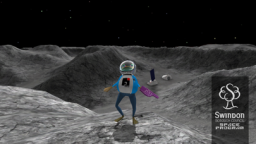
One reason Amazing Frog? kept my attention longer than expected is that the world feels packed with weird promises. The official description mentions areas and activities such as sewers, blimps, sharks, drones, cannons, trampolines, and even the moon, and that variety gives the game a strong sense of “what else is hiding here?”
I liked that exploration does not always feel clean or efficient. Sometimes I found something interesting because I made a mistake, got thrown somewhere, or followed a strange object for no good reason. That makes discovery feel less like checking icons off a map and more like stumbling into a joke the developers wanted me to find eventually.
The Aesthetic Is Strange, Plain, and Somehow Memorable
Amazing Frog? is not a beautiful game in the traditional sense. Its visual style is simple, odd, and sometimes rough around the edges. But that plainness works with the game’s tone. A highly polished, cinematic version of this idea might actually feel less funny. The slightly awkward look makes the world feel like a giant toy set built for experiments.
The frog designs are especially important because they make even basic actions look ridiculous. The body language, movement, and ragdoll reactions turn the character into a comedy object. I found that more memorable than a smoother mascot would have been. The game looks strange because it is strange, and that honesty gives it charm.
Multiplayer Makes the Chaos Much Better
Amazing Frog? can be amusing alone, but it makes more sense with other players. Steam describes support for single-player and up to 4-player split-screen, with options to play co-op, combat, or simply do your own thing. That freedom fits the game perfectly because the experience becomes stronger when friends are reacting to the same nonsense.
In multiplayer, the game feels less like a solo sandbox and more like a shared comedy machine. One player tries to drive, another gets launched somewhere ridiculous, someone else discovers a strange object, and suddenly the session has a story. Amazing Frog? benefits from social laughter. It is the kind of game where watching a friend fail at a simple task can be more entertaining than succeeding yourself.
-
Split-screen makes the chaos feel more social;
-
Co-op play supports shared exploration;
-
Competitive messing around can create funny moments;
-
The game is easier to enjoy when friends embrace the absurd tone;
Vehicles and Gadgets Give the Sandbox More Energy
The vehicles and gadgets help Amazing Frog? avoid feeling like a one-joke physics toy. Cars, launchers, drones, cannons, and other interactive objects give players more ways to test the world. The official site highlights drones, trampolines, cannons, and similar sandbox tools, which is exactly the kind of object variety the game needs.
I enjoyed how tools often feel slightly unsafe. A vehicle is not just a way to travel. It is another chance for the physics system to create trouble. A cannon is not just a launch device. It is a question: where will I land, and how badly did I misjudge this? These objects make the map feel more active because they invite experimentation.
The Game Feels Like a YouTube Moment Generator
Amazing Frog? has the kind of design that naturally creates shareable moments. It is easy to understand visually, funny to watch, and full of sudden mistakes. That makes it especially suited to clips, livestreams, and casual group play. The viewer does not need a deep explanation of the mechanics to understand why a frog flying across SwindonShire is funny.
I think this is part of the game’s long-running appeal. Some games are fun because of balance and mastery. Amazing Frog? is fun because it creates situations that are easy to retell. I launched myself, I landed badly, I found something strange, I tried again, and everything got worse in the funniest way. That is a strong formula for a sandbox comedy game.
Objectives Exist, but Freedom Is the Real Attraction
The Steam page refers to exploration, unlockable worlds, skins, weapons, vehicles, challenges, and the Quest for the Magical Mystery Toilet. Those elements give Amazing Frog? more structure than it first appears to have. There are reasons to move around, discover things, and keep experimenting beyond pure random play.
Still, I think the best way to enjoy the game is not to treat it like a traditional checklist adventure. The objectives work as excuses to experience the sandbox. They point players toward new places and objects, but the entertainment often happens on the way. The journey is usually funnier than the goal.
The Rough Edges Are Part of the Personality
Amazing Frog? can feel rough, and I do not want to pretend otherwise. Movement can be clumsy, the humor is intentionally silly, the presentation is odd, and players who need polished missions or tight controls may bounce off quickly. This is not a game built for everyone.
But for me, the roughness is connected to the appeal. The game feels like an experiment that kept expanding because people enjoyed the nonsense. Fayju’s official site describes a physics-simulated sandbox world full of bizarre possibilities, and that spirit matters more than conventional polish here. Amazing Frog? is best when judged by whether it makes the player curious enough to try one more ridiculous idea.
Why the Game Still Feels Distinct
Amazing Frog? stands out because it commits to being a weird sandbox rather than sanding itself into a generic open-world game. It is not chasing cinematic seriousness. It is not trying to make the frog cool in a normal way. It lets the character be clumsy, strange, and ridiculous, then builds a world where that makes sense.
I found that refreshing. Many games give players freedom but still quietly push them toward efficient progress. Amazing Frog? gives players freedom to waste time creatively. That may sound small, but it is actually the whole charm. The game understands that sometimes the best sandbox moments come from doing something pointless and laughing because the result was better than the plan.