Portal 2 Summary
Get From the Official Digital Markets
All trademarks belong to their
respective owners.
Portal 2 feels like one of those rare games where every element seems designed with a clear purpose. I went into it expecting clever puzzles built around the famous portal mechanic, but what impressed me most was how much more it offers. It is not only a puzzle game. It is a carefully written science-fiction adventure with unforgettable characters, brilliant humor, creative level design, and a world that feels mysterious even when the focus is simply moving from one room to another.
What makes Portal 2 special for me is the balance between intelligence and entertainment. The game asks me to think carefully, experiment, and understand physics, but it never feels like a boring test. Every puzzle feels connected to curiosity. I am not just finding a solution because the game demands it. I am exploring what is possible with the portal device and discovering new ways to interact with the environment.
The experience also stands out because of its personality. Many puzzle games focus almost entirely on mechanics, but Portal 2 surrounds its puzzles with humor, character development, and a strange atmosphere. The result is a game where I remember conversations, locations, and moments just as much as I remember solving challenges.
A Science-Fiction World Built From Mystery
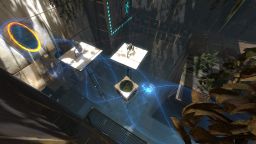
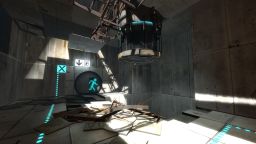
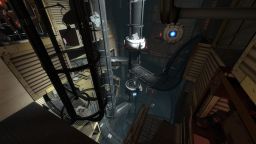
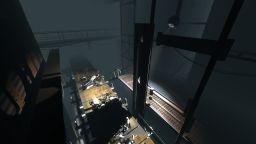
The Aperture Science facility is one of the most memorable settings in gaming. It feels like a place where technology, ambition, and strange experiments have created something fascinating and unsettling. The laboratories are clean and artificial in some areas, while others reveal years of decay and abandonment.
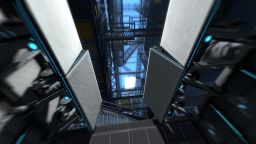
I like how the environment tells a story without constantly explaining itself. Broken test chambers, old machinery, hidden areas, and forgotten sections of the facility suggest a much larger history. The world feels like it existed before I arrived, which makes exploration more interesting.
The contrast between futuristic technology and abandoned spaces creates a unique atmosphere. One room can feel like a perfectly controlled experiment, while the next can reveal a forgotten part of the facility covered in dust and damage. That variety keeps the adventure visually interesting from beginning to end.
Chell Is a Silent Character With Strong Presence
Chell, the main character, is interesting because she rarely speaks. Instead of defining her through dialogue, Portal 2 lets the player create the connection through action. She survives impossible situations, solves complex puzzles, and continues moving through a world controlled by forces much larger than herself.
I appreciate this approach because the silence makes me feel more involved. Chell does not tell me how she feels about what is happening. I experience the situation directly through her perspective. Every solved puzzle feels like my own achievement rather than something delivered through a scripted scene.
Her relationship with the other characters becomes stronger because of this silence. The personalities around her are loud, dramatic, and unpredictable, creating a great contrast with the calm determination of the protagonist.
GLaDOS Remains One of Gaming’s Most Memorable Characters
GLaDOS is one of the biggest reasons Portal 2 works so well. She is funny, threatening, sarcastic, and completely unpredictable. Her dialogue creates a constant feeling of uncertainty because I never know whether she is trying to help, manipulate, or simply entertain herself.
I love how the game uses humor through GLaDOS. Her personality turns simple moments into memorable scenes. A basic test chamber becomes more interesting because of the commentary surrounding it. She transforms the experience from a series of puzzles into a strange conversation with an artificial intelligence that has its own personality.
What makes GLaDOS especially effective is that she is not only a source of jokes. She also represents the strange relationship between humans, technology, control, and curiosity that defines Aperture Science. Her character adds emotional weight to the adventure.
Wheatley Brings a Different Kind of Energy
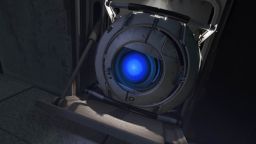
Wheatley creates a completely different atmosphere from GLaDOS. Where GLaDOS is controlled and calculated, Wheatley feels nervous, chaotic, and overly enthusiastic. His personality changes the rhythm of the story and creates some of the funniest interactions in the game.
I enjoy how Wheatley’s character is built around contrast. He wants to appear helpful and important, but his decisions often reveal insecurity and confusion. This makes him entertaining because his confidence and actual abilities do not always match.
The relationship between Chell, GLaDOS, and Wheatley creates much of the emotional structure of Portal 2. The game succeeds because these characters are not simply voices explaining puzzles. They are part of the reason I want to continue exploring.
The Portal Gun Creates Endless Possibilities
The portal mechanic remains the foundation of Portal 2, and it is still one of the smartest gameplay ideas I have experienced. The concept is simple: create two connected portals and use them to move through space. The execution becomes increasingly creative as the game introduces new challenges.
I like how the puzzles encourage experimentation. A solution is rarely about memorizing a pattern. I need to understand movement, momentum, timing, and the relationship between objects. The best moments happen when I suddenly realize the solution and think, “Of course, that is exactly how this should work.”
The portal gun also makes the player feel intelligent. The game does not rely on random guessing. It gives me tools and allows me to discover the possibilities. Every successful solution feels earned because I understand why it works.
Puzzle Design Rewards Creativity and Observation
Portal 2’s puzzles are carefully designed to introduce ideas gradually. Early challenges teach the basics, while later chambers combine multiple mechanics into more complex situations. The difficulty grows naturally, which makes improvement feel satisfying.
I appreciate that the game rarely depends on unnecessary complexity. The puzzles are challenging because they require thought, not because the rules are confusing. The best chambers create a moment where everything suddenly connects.
The game also knows when to give players time to explore. Not every moment is about pressure. Sometimes I can simply observe the room, experiment with objects, and understand how the environment works before committing to a solution.
Gel, Lasers, and Other Mechanics Expand the Formula
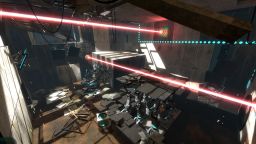
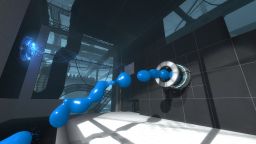
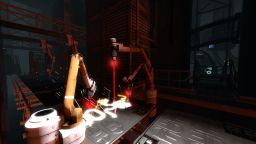
Portal 2 becomes even more interesting when it introduces additional mechanics. Different surfaces, movement tools, lasers, buttons, platforms, and environmental systems create new possibilities without replacing the original portal concept.
I like how each mechanic feels like a natural extension of the original idea. The game does not add features just to create more content. Every new element exists because it changes how I think about space and movement.
The combination of these systems creates some of the most satisfying puzzles in the game. A solution may require several steps, but each step feels logical. When everything comes together, the final result feels like a small personal discovery.
Cooperative Mode Adds a New Perspective
The cooperative campaign gives Portal 2 another layer because solving puzzles with another person changes the experience completely. Communication becomes just as important as logic. A solution that seems obvious to one player may be confusing to another, creating moments of teamwork and unexpected humor.
I like how cooperative puzzles require both players to participate. Nobody can simply follow along. Each person has a role, and success depends on understanding what the other player is trying to do.
The cooperative characters, Atlas and P-body, also add personality. Their designs fit the strange humor of the Portal universe, and their animations make even simple moments entertaining.
The Writing Makes Every Moment Memorable
Portal 2’s writing is one of its greatest strengths. The humor is sharp, the timing is excellent, and the dialogue constantly adds personality to the experience. The game understands that silence, pauses, and unexpected comments can be just as funny as direct jokes.
I like how the writing never distracts from the gameplay. The characters enhance the puzzles instead of interrupting them. A test chamber becomes more memorable because of what happens around it, not only because of the mechanics inside it.
The story also manages to balance comedy and mystery. Behind the jokes is a fascinating world filled with questions about Aperture Science, experiments, artificial intelligence, and human ambition.
Sound Design Creates the Perfect Atmosphere
The audio design in Portal 2 is excellent. The mechanical sounds of the facility, the effects of portals opening, the voices of artificial intelligence, and the music all create a strong sense of place.
I especially like how sound communicates the personality of the world. Aperture Science feels technological but strange. The facility has its own rhythm, and every machine movement reinforces the idea that I am inside a massive experimental complex.
The music also knows when to support emotion and when to create energy. Some moments are quiet and mysterious, while others become dramatic and memorable because of the soundtrack.
Where Portal 2 Feels Strongest and Where It Has Limits
Portal 2 feels strongest when all of its parts work together: the puzzles, characters, writing, atmosphere, and humor. The game does not rely on one great idea. It creates a complete experience where every piece supports the others.
The main limitation is that the experience is not endless. Once I complete the main campaign and solve the major puzzles, there is less new content compared with larger games. However, the quality of the journey makes the shorter length feel intentional rather than disappointing.
For me, Portal 2 remains memorable because it respects the player’s intelligence while still being entertaining. It proves that a puzzle game can be funny, emotional, creative, and deeply engaging without needing constant action.