


Mario Kart Tour Summary
Get From the Official Digital Markets
All trademarks belong to their
respective owners.
Mario Kart Tour feels like Nintendo tried to squeeze the chaos of a Mario Kart race into a phone screen and then wrapped it in daily goals, collectible drivers, shiny karts, gliders, tours, cups, and a constant stream of rewards. I did not approach it expecting the exact same feeling as a console Mario Kart game. I treated it as a mobile version with its own rhythm, and that helped me enjoy it more. It is faster to enter, easier to control, and much more focused on collecting than a traditional kart racer.
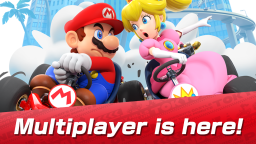
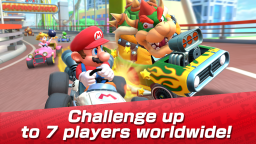
What stood out to me first was how instantly familiar it feels. Mario, Luigi, Peach, Bowser, Yoshi, Toad, Donkey Kong, Rosalina, Wario, and the rest of the cast bring that unmistakable Nintendo energy. The tracks are colorful, the items are chaotic, and the races are short enough to fit neatly into a quick mobile session. At the same time, Mario Kart Tour is not just a miniature console game. Its scoring system, character advantages, gacha-style history, ranked cups, and rotating tour structure give it a different personality.
A Pocket-Sized Mario Kart With Bright Arcade Energy
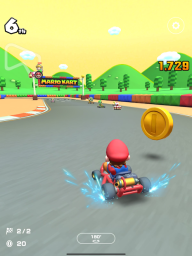
The visual style is one of the easiest things to enjoy. Mario Kart Tour keeps the polished, toy-like charm of the series, with bold colors, expressive characters, shiny vehicles, and tracks that feel cheerful even when the race becomes hectic. Everything is readable on a phone screen, which matters because mobile racing can become messy very quickly if the interface is too crowded.
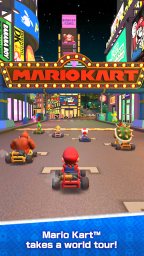
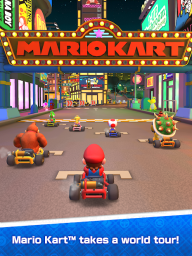
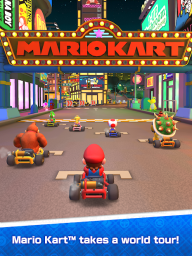
I like how the game adapts classic Mario Kart aesthetics for shorter sessions. Tracks feel lively without demanding long attention spans. City-themed courses, classic circuits, beach routes, snowy roads, haunted areas, jungle paths, and castle tracks all bring different moods. The game uses familiar Mario imagery, but it also leans into the idea of a traveling tour, which gives the race calendar a sense of movement.
The character animations add a lot of charm. A driver reacting to a boost, getting hit by an item, gliding through the air, or celebrating a strong finish keeps the race feeling playful. Even when I am mainly chasing points, the presentation keeps reminding me that this is still Mario Kart: silly, colorful, and built around cheerful mayhem.
The Main Characters Are the Drivers I Collect
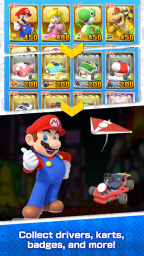
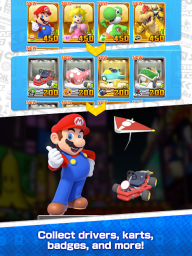
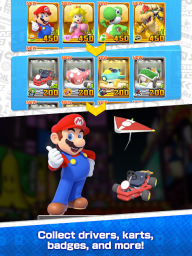
Mario Kart Tour’s cast is one of its biggest hooks. The main characters are not only racers; they are collectible versions of familiar Nintendo icons. I might use a classic Mario one race, then switch to Peach in a themed outfit, Bowser in a special variation, or Yoshi with a different seasonal look. This collection layer gives the game a strong mobile identity.
I enjoy how each driver has a special item that affects the way races feel. Some drivers are better suited for certain tracks, and that makes choosing a character more strategic than simply picking a favorite. A strong driver on the right course can turn a normal race into a high-scoring run, especially when item slots and frenzy chances come into play.
The alternate costumes are also a major part of the appeal. Mario Kart Tour understands that fans like seeing familiar characters in new outfits. A holiday version, city-themed outfit, racing suit, or elegant costume can make a character feel fresh even if I have used them many times before. The character roster gives the game personality beyond the racing itself.
Controls Are Simple, But They Take Adjustment
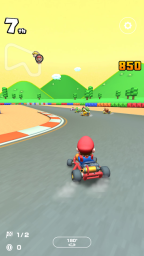
Mario Kart Tour uses mobile-friendly controls that simplify the traditional racing setup. The kart moves forward automatically, and I focus on steering, drifting, using items, and choosing when to take sharper lines. At first, this felt strange because I am used to more direct control in console racing games.
After some time, I started to appreciate the design. The game is built for touchscreens, so it avoids overloading me with too many buttons. Once I got used to drifting and steering properly, races became smoother and more satisfying. There is still skill involved, especially when trying to maintain combos, take shortcuts, and avoid wasting items.
The controls are not perfect for everyone. Players who want precise console-style racing may find them limited. But for a mobile game, they work well enough to keep the pace fast and accessible. Mario Kart Tour is not trying to simulate every tiny driving detail. It wants me to make quick decisions, chase points, and enjoy the race without wrestling the phone.
Scoring Changes the Way I Think About Racing
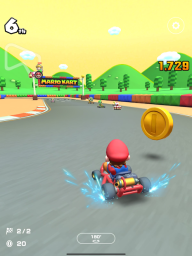
One of the biggest differences in Mario Kart Tour is that winning first place is not always the only goal. The game places heavy emphasis on score. I earn points for actions like drifting, boosting, collecting coins, hitting opponents, gliding, using items, maintaining combos, and finishing well. This changes the entire rhythm of play.
I like this system because it gives every race more layers. I am not only asking, “Can I finish first?” I am also asking, “Can I keep my combo alive?” A good run becomes a chain of small actions: drift, boost, grab coins, hit a rival, glide, use an item, take a ramp, and keep the points flowing.
This makes Mario Kart Tour feel more arcade-like than a standard race. Sometimes I take a route because it has more coins or better combo opportunities, not because it is simply the fastest. That scoring focus can be addictive, especially in ranked cups where every point matters.
Items Keep the Classic Mario Kart Chaos Alive
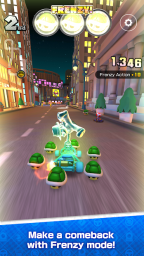
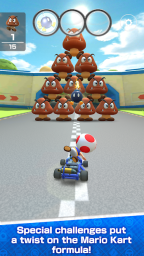
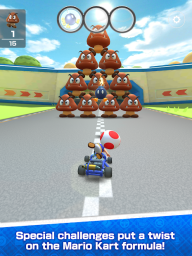
Items are still central to the experience. Bananas, shells, mushrooms, bombs, lightning, coins, and character-specific items keep races unpredictable. Even in a mobile format, Mario Kart’s famous chaos remains intact. One strong item can change a race, rescue a bad position, or ruin a perfect combo at the worst possible moment.
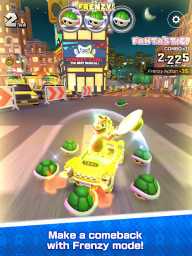
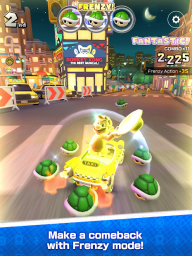
I enjoy how items create sudden shifts in mood. A clean race can turn messy in seconds. A rival can pass me near the finish line. A well-timed shell can push me back into contention. A frenzy can transform a weak run into a point explosion. That unpredictability is part of the series’ identity.
At the same time, item chaos can be frustrating when I am chasing a high score. Getting hit repeatedly near the end of a strong run can feel unfair, especially in ranked play. But Mario Kart has always lived in that space between skill and disorder. Mario Kart Tour keeps that tradition alive, for better and worse.
Tours Give the Game a Constant Sense of Rotation
The tour structure gives Mario Kart Tour its live-service rhythm. Instead of one static set of tracks, the game rotates through themed tours with different cups, challenges, drivers, karts, gliders, and rewards. This gives me a reason to return regularly because the available content keeps changing.
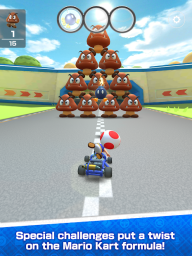
I like the feeling of a new tour beginning. It refreshes the menu, changes the focus, and gives me new goals to chase. Even if some tracks return often, the combination of cups, bonus challenges, ranked competitions, and available rewards can make the experience feel active.
The downside is that rotating content can also create pressure. A favorite driver, kart, glider, or reward may only feel relevant for a limited time. I enjoy the freshness, but I prefer playing at my own pace rather than feeling pushed to keep up with every event.
Karts and Gliders Add Strategy Beyond Character Choice
Drivers are important, but karts and gliders also matter. Each one can affect bonus points, combo time, favored courses, and overall scoring potential. This makes the setup before a race almost as important as the race itself.
I enjoy comparing loadouts because it gives the game a light strategy layer. The best choice is not always the coolest-looking kart or glider. It depends on the course, rarity, level, and bonus category. Finding the right combination can make a huge difference in score.
This system also makes collection feel meaningful. A new kart or glider is not only cosmetic. It may become valuable on a specific track or in a ranked cup. That keeps the garage interesting, though it can also make progression feel complicated for players who only want simple racing.
Ranked Cups Bring Competition to Short Sessions
Ranked cups are one of the most engaging parts of Mario Kart Tour because they give me a clear competitive target. Instead of only racing for fun, I am trying to improve scores across selected tracks and climb against other players. This creates a strong reason to replay races.
I like how ranked play turns small improvements into meaningful progress. A better combo, a stronger item run, a higher-level driver, or a cleaner finish can move me up the leaderboard. Even a few hundred extra points can feel important when rankings are close.
The competitive side can also highlight the game’s collection pressure. Players with stronger drivers, karts, and gliders may have a major advantage. Skill still matters, but account progression matters too. That makes ranked cups exciting when I have good tools and frustrating when I feel under-equipped.
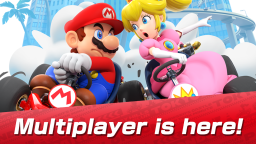
Multiplayer Adds Real Players, Real Chaos, and Real Friction
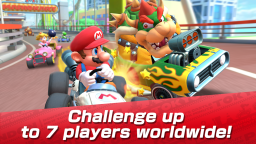
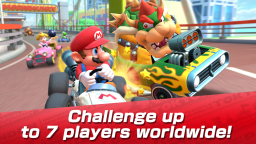
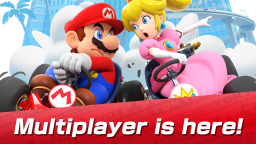
Multiplayer gives Mario Kart Tour a more direct racing feel because I am competing against real people rather than only chasing scores. Human opponents make races less predictable. They take strange lines, use items aggressively, make mistakes, and create moments that feel more alive than racing against standard opponents.
I enjoy multiplayer most when the connection feels stable and the match is close. A final-lap fight with several racers packed together can be genuinely exciting. The mobile format makes it easy to jump into quick races, and that accessibility is a strong point.
However, multiplayer can also feel uneven. Connection issues, item chaos, and control limitations can make some races frustrating. Mario Kart is naturally unpredictable, and online mobile play adds another layer of uncertainty. It is fun in short bursts, but I do not always find it as smooth as the single-player scoring loop.
Progression Is Rewarding, Though Sometimes Too Busy
Mario Kart Tour is filled with progression systems: driver levels, kart upgrades, glider upgrades, coins, rubies, tickets, challenges, tour gifts, ranked rewards, and shop rotations. This creates constant motion. There is nearly always something to claim, upgrade, unlock, or improve.
I like having goals beyond individual races. Upgrading a favorite driver or improving a glider that helps on several tracks gives me a sense of long-term progress. The game rewards regular play with small steps forward, and that makes short sessions feel productive.
The issue is that the systems can feel crowded. A casual player may just want to race as Mario on a fun track, but the game keeps presenting score bonuses, levels, tickets, rewards, and optimization decisions. I enjoy that depth in moderation, but it can sometimes make the experience feel more like managing a collection than racing for fun.
Sound and Music Keep the Nintendo Charm Intact
The audio presentation does a lot to preserve the Mario Kart feeling. The music is cheerful, energetic, and instantly suited to arcade racing. Item sounds, character voices, kart effects, boosts, coin pickups, and finish-line cues all make the game feel lively.
I especially like how familiar sound effects create immediate nostalgia. A shell launching, a coin collecting, or a character celebrating after a strong result gives the mobile game a direct connection to the larger Mario Kart series. These sounds make even short races feel more complete.
The music also helps tracks feel distinct. City courses, classic circuits, and themed routes each have their own flavor. Since races are short, the soundtrack needs to establish mood quickly, and it usually succeeds. The result is a mobile racer that still sounds unmistakably like Mario Kart.