
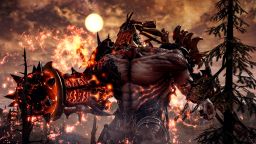

Lost Ark Summary
Get From the Official Digital Markets
All trademarks belong to their
respective owners.
Lost Ark is what happens when an MMORPG puts on the clothes of an isometric action RPG, walks into a room full of loot, raids, sailing routes, collectible systems, dramatic bosses, and glowing skill effects, then asks whether anyone has plans for the next several hundred hours. It is free-to-play, fast, enormous, stylish, and sometimes exhausting. At its best, Lost Ark makes every class feel like a fireworks display with a job description. At its most demanding, it reminds me that MMO progression can become a second calendar if I let it.
The Product List Places Lost Ark as an Active Action Game
Your product list marks Lost Ark as an active game in the Action category, with Combine as the type and a product page for the game. That fits the current public identity of the title. Lost Ark is not a mobile app or a movie tie-in. It is a large-scale PC online RPG built around real-time action, class progression, quests, dungeons, raids, collectibles, gear upgrades, and long-term live-service updates.
I would describe Lost Ark as an MMO ARPG rather than a traditional tab-target MMORPG. The camera angle, flashy skills, enemy packs, and dungeon pacing give it that action-RPG flavor, while the progression systems, raids, guilds, currencies, events, islands, and endgame structure make it unmistakably MMO. The result is a hybrid that feels exciting, generous, and complicated all at once.
-
The uploaded product list identifies Lost Ark as active;
-
The category is Action, with Combine as the product type;
-
The game is best framed as a PC free-to-play MMO action RPG;
-
The strongest SEO intent is around classes, raids, Steam, Amazon Games, Smilegate RPG, and free-to-play progression;
The Core Pitch Is Fast MMO Action
The official Lost Ark website describes it as a free-to-play MMO ARPG set in a vast, vibrant world with thrilling fights, endless customization, and endless adventure. Steam describes the game as an action-packed free-to-play RPG where players explore new lands, seek lost treasures, and test themselves in action combat while choosing classes, advanced classes, skills, weapons, and gear.
I like that Lost Ark starts from movement and spectacle. Many MMOs ask players to accept slower combat because the world, social systems, and progression are the main attraction. Lost Ark puts action closer to the front. Skills look dramatic, enemies arrive in satisfying waves, and even routine fights can feel visually energetic. The game wants every class to look like it has rehearsed for a fantasy stage show.
Arkesia Gives the Game a Huge Fantasy Canvas
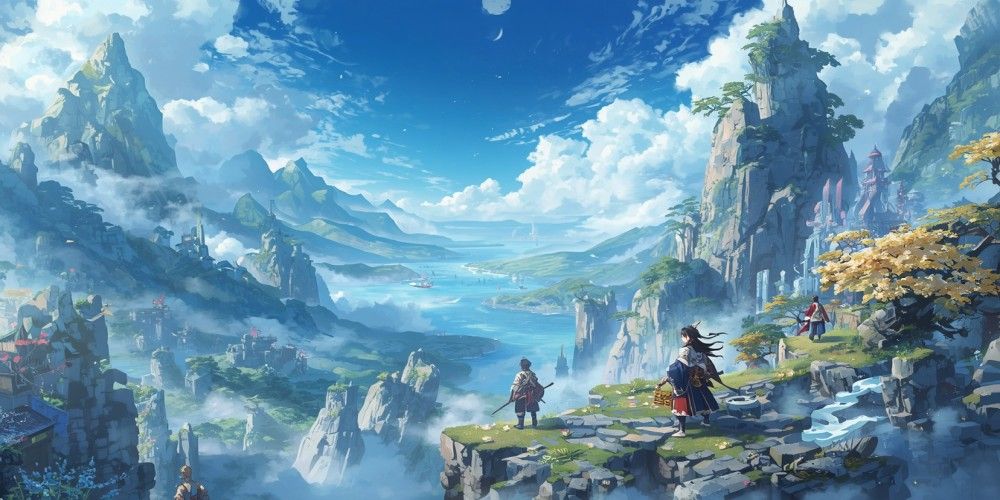
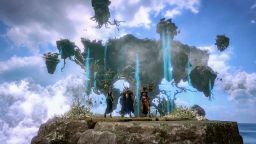
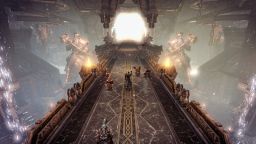
Amazon Games describes Lost Ark as a journey into Arkesia, where players seek the Lost Ark and battle to reclaim its eternal power and light. That framing gives the game a classic fantasy mission, but the real appeal of Arkesia is scale. The world includes continents, cities, dungeons, islands, seas, cultures, bosses, and enough side systems to make the map feel like it was designed by someone allergic to empty space.
I enjoy Arkesia most when the game moves through different moods. One region can feel like heroic fantasy, another like political drama, another like grim battlefield spectacle, and another like whimsical MMO side content. The story itself can be uneven, but the world variety helps the journey stay visually interesting.
-
Arkesia gives Lost Ark a broad fantasy setting with many regions and tones;
-
The world supports quests, dungeons, islands, sailing, and endgame activities;
-
Different continents help prevent the campaign from feeling visually flat;
-
The setting works best as a large activity framework rather than only a linear story backdrop;
The Class Design Is the First Big Hook
Lost Ark asks players to define their fighting style through a class and advanced class, then customize skills, weapons, and gear. That choice matters because classes are not just stat profiles. They feel dramatically different in rhythm, range, mobility, visual effects, and role identity.
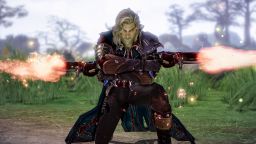
I like class selection in Lost Ark because the game makes abilities feel physical and expressive. A martial artist can feel quick and technical. A gunner can feel mobile and ranged. A warrior can feel heavy and direct. A mage can turn the screen into a controlled magical accident. Even before endgame optimization, the class fantasy is strong.
Advanced Classes Make Identity More Specific
The advanced-class system is important because it narrows the player’s combat personality. Rather than choosing only a broad archetype, players eventually commit to a more defined style with unique skills and builds. That gives Lost Ark one of its biggest replay hooks: trying a new class can feel like learning a new action game inside the same MMO shell.
I enjoy this because alt characters make sense in Lost Ark. In some MMOs, making another character feels like repeating homework. Here, a new class can genuinely change how combat feels. The downside is that the game’s progression demands can make alts feel like both fun experiments and additional responsibilities. Lost Ark gives me variety, then quietly hands me a spreadsheet.
-
Advanced classes create distinct combat identities within broader archetypes;
-
Different classes change range, mobility, burst windows, support tools, and rotation style;
-
Alt characters are appealing because class gameplay can feel meaningfully different;
-
Managing multiple characters can also increase progression pressure;
The Combat Is the Main Reason to Try It
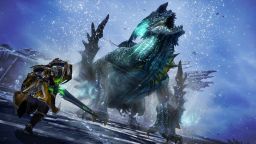
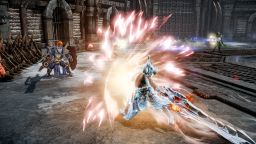
Lost Ark’s combat is the feature that most clearly separates it from slower MMOs. Skills have strong animation, positioning matters, enemy patterns matter, and bosses often ask players to dodge, read telegraphs, manage cooldowns, and understand mechanics. The isometric perspective gives battles a clean tactical view while keeping the action fast.
I like how the game makes impact feel generous. A well-placed skill can clear a group of enemies with style. A boss pattern can turn a confident player into a floor decoration in seconds. The game is accessible at first, but serious content asks for timing, coordination, and knowledge. It is flashy, but not only flashy.
Dungeons Give the Campaign Its Best Pace
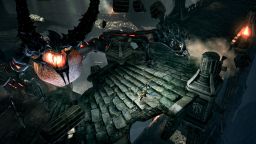
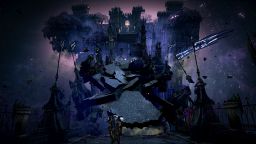
Lost Ark’s story campaign has plenty of questing, but dungeons are where the game often feels most focused. They compress spectacle, enemy waves, bosses, environmental moments, and class expression into shorter adventure chunks. The best dungeons are cinematic enough to feel memorable but fast enough to avoid dragging.
I enjoy dungeons because they make the game feel like an action RPG with MMO polish. The camera, effects, scripted moments, and boss entrances can be dramatic without requiring a long raid schedule. For new players, dungeons are often the first sign that Lost Ark has more energy than its quest text might suggest.
-
Dungeons make the campaign feel faster and more cinematic;
-
Boss encounters introduce positioning and pattern recognition early;
-
Class skills feel especially satisfying against enemy groups;
-
The best dungeons balance spectacle, pace, and mechanical clarity;
The Story Is Big, but Not Always the Star
Lost Ark has a grand fantasy story about the Ark, powerful enemies, ancient forces, and the fate of Arkesia. That gives the game a functional epic structure. But the writing is not always the main reason I keep playing. The spectacle, class fantasy, progression, and encounters often carry more weight than dialogue or character drama.
I do not think that ruins the game. Many players come to Lost Ark for combat, raids, collectibles, and the MMO loop. The story works best as a delivery system for regions, dungeons, bosses, and cinematic scenes. If someone wants a deeply intimate narrative RPG, Lost Ark may feel broad and uneven. If someone wants a fantasy action tour with occasional drama, it does the job.
The Endgame Is Where Lost Ark Becomes Itself
Lost Ark’s long-term identity is tied to endgame. Leveling introduces the world, but the game’s real routine begins around gear progression, raids, weekly activities, dailies, events, islands, collectibles, and build optimization. This is where the MMO structure becomes much more visible.
I like the endgame when it gives me meaningful goals: improving gear, learning a raid, refining a build, or pushing a character toward a new milestone. I like it less when progression starts to feel like maintenance. Lost Ark can be thrilling when I am learning content with a group. It can feel heavy when I am logging in only to keep up with systems.
-
The campaign is only the beginning of the long-term MMO loop;
-
Endgame includes gear progression, raids, daily and weekly activities, events, and collectibles;
-
Build optimization gives dedicated players many goals;
-
The same systems can feel demanding for casual or returning players;
Raids Are the Game’s Biggest Test
Lost Ark is well known for challenging group content, especially raids that require mechanical knowledge, positioning, timing, and coordination. This is where the combat system becomes more than a flashy skill showcase. Players need to understand patterns, communicate, execute mechanics, and avoid dragging the group down.
I enjoy Lost Ark raids because they feel like action-game boss fights inside an MMO framework. They are not only gear checks. The best ones ask players to read the screen, respond quickly, and learn through repetition. The downside is that group expectations can become intense. A new player entering established raid content may feel like they are arriving late to a class where everyone else already memorized the exam.
Progression Can Be Rewarding and Punishing
Lost Ark’s progression is one of its most debated systems. Improving gear, pushing item levels, upgrading materials, and preparing for later content can feel rewarding because each milestone unlocks more of the game. But it can also feel grind-heavy, especially for players who dislike daily routines or repeated resource collection.
I think the progression loop is both the engine and the friction. It gives players reasons to return. It also creates pressure to stay current. Lost Ark is easier to enjoy when I accept that I do not have to do everything every day. The game offers a mountain of tasks, but I do not need to pack lunch for the entire mountain every login.
-
Gear progression gives players clear long-term goals;
-
Higher item levels unlock new activities and harder content;
-
Daily and weekly routines can become repetitive over time;
-
The game is healthier when players set realistic goals instead of chasing every system at once;
The Free-to-Play Model Is Generous, but Complicated
Lost Ark is officially free-to-play, with Amazon Games and Smilegate RPG describing the Western launch as free-to-play and available for PC through Steam. That makes the game easy to try. Anyone curious about the combat, classes, or world can download it without buying a box first.
I like free access because it lowers the barrier. But free-to-play MMOs always require careful attention to currencies, convenience items, cosmetics, boosts, and progression pacing. Lost Ark can be played without paying, but players should understand that the economy and time investment are part of the design. Free does not mean frictionless. It means the entry ticket is free, while the long-term relationship has many buttons, menus, and temptations.
The Steam Launch Was Huge
Amazon Games and Smilegate RPG launched Lost Ark in North America, Europe, Latin America, and Oceania in February 2022 for PC via Steam. That Western release gave the game a massive visibility boost after its earlier success in Korea and other regions.
I remember the early conversation around Lost Ark being enormous because players were hungry for a polished MMO with strong combat. The launch scale also created practical problems, including crowded servers and heavy demand. That kind of explosive start is impressive, but it also sets expectations that are hard for any live-service game to maintain forever.
-
The Western launch covered North America, Europe, Latin America, and Oceania;
-
The game arrived on PC via Steam as a free-to-play title;
-
Amazon Games handled Western publishing with Smilegate RPG as developer;
-
The launch built major attention around Lost Ark’s MMO ARPG hybrid identity;
The Game Is Still Being Updated
The official Lost Ark news page shows active 2026 updates and community posts, including June 2026 news and upcoming July through September 2026 content mentions on regional news pages. That matters because live-service games need current support to remain relevant. Lost Ark is not a static release frozen in 2022.
I like seeing ongoing updates because they show that the game still has a roadmap, events, and content rhythm. For new or returning players, that is important. The challenge is that live-service updates can also make the game feel harder to follow. A returning player may come back to new systems, changed progression, new raids, and a community that has moved several steps ahead.
Amazon and Smilegate’s Relationship Defines the Western Version
Smilegate identifies Lost Ark as a blockbuster MMORPG developed by Smilegate, with publishers including Amazon Games and others by region. In the West, Amazon Games has been the key publishing partner. That distinction matters because development, localization, content rollout, monetization communication, and community management all depend on the regional structure.
I think Lost Ark’s Western identity is shaped by that partnership. Smilegate provides the game’s core design and major content direction, while Amazon Games handles publishing and regional service work. For players, this can sometimes make communication feel complicated because expectations from one region do not always translate perfectly to another.
-
Smilegate RPG is the original developer behind Lost Ark;
-
Amazon Games publishes the Western PC version;
-
Regional versions can differ in timing, events, and service decisions;
-
Western player expectations often depend on communication between developer, publisher, and community;
The Visual Style Is Flashy and Readable
Lost Ark has a polished fantasy look with dramatic skill effects, large bosses, cinematic dungeons, ornate gear, and colorful zones. It is not trying to look minimal. The game wants action to feel spectacular, especially when classes unleash big abilities across groups of enemies.
I enjoy the visual drama because it makes each class feel powerful. The risk is screen clutter. In group content, effects, boss mechanics, teammates, projectiles, and UI elements can become intense. The game is at its best when spectacle remains readable. When it gets too busy, I sometimes feel like I am decoding a magical traffic accident.
Sound and Skill Feedback Carry a Lot of the Fun
Lost Ark’s skills often feel satisfying because of timing, animation, hit impact, and sound design. A powerful ability needs to sound heavy and look responsive. When that feedback works, combat becomes addictive even before loot rewards appear.
I like how the game makes class identity audible and physical. A heavy melee class should feel different from a ranged gunner or spellcaster, and Lost Ark usually delivers that. The feedback loop is simple but effective: press a skill, see a dramatic result, hear impact, watch enemies react, and immediately want to do it again.
-
Skill animations make classes feel expressive and powerful;
-
Sound effects help combat feel more physical;
-
Enemy reactions and hit feedback support the action-RPG feel;
-
Visual clarity can become harder in busy group encounters;
Sailing and Islands Add a Different Rhythm
Lost Ark is not only about dungeons and raids. Sailing, islands, events, collectibles, and side activities give the game a broader adventure identity. The sea map helps connect regions and gives players many optional destinations beyond the main quest path.
I like this part of Lost Ark because it breaks the combat rhythm. Sometimes I want intense boss fights. Sometimes I want to chase collectibles, visit an island, complete a side activity, or wander through a strange piece of content that feels like the MMO designers had a fun meeting and nobody stopped them. The variety helps the world feel larger than a combat queue.
Collectibles Are Everywhere
Lost Ark is packed with collectibles: island souls, mokoko seeds, rapport rewards, adventure tome progress, cards, mounts, pets, cosmetics, and more. For completionist players, this is wonderful and dangerous. There is always another thing to collect, another percentage to improve, another region to revisit.
I enjoy collectibles when I treat them casually. They give me reasons to explore beyond combat. But trying to complete everything can become overwhelming. Lost Ark has the kind of checklist density that can either relax a player or activate a deep internal need to organize browser tabs. Both outcomes are possible.
-
Collectibles encourage exploration outside raids and dungeons;
-
Mokoko seeds and island rewards give casual goals between major content;
-
Completion systems can add hundreds of hours of optional play;
-
The volume of collectibles may overwhelm players who prefer simpler progression;
The Social Side Depends on Your Goals
Lost Ark can be social through guilds, raids, party finder, events, and shared world activities. It can also feel surprisingly solo during questing and routine tasks. The social experience depends heavily on whether a player joins a guild, plays with friends, or focuses on group endgame.
I like Lost Ark more with people. Raids, learning parties, guild chat, and shared progression make the MMO side feel alive. Solo play is possible for much of the journey, but the game’s strongest moments often happen when a group finally understands a mechanic together after several messy attempts and celebrates like they just solved international diplomacy.
New Players May Feel Late
One of Lost Ark’s biggest challenges is onboarding new players years after launch. A long-running MMO builds layers: systems, catch-up mechanics, raids, currencies, events, expectations, guides, and community norms. New players can still enjoy the game, but they may feel like everyone else has already moved to a later chapter.
I think this is where Lost Ark needs to be judged honestly. The early campaign is accessible, but the path into endgame can feel intimidating. Catch-up events help, and official updates have continued, but the game still asks for patience. New players should take it as a long journey, not a weekend project.
-
Years of updates can make the game feel dense for newcomers;
-
Catch-up systems and events can help, but they require attention;
-
Community expectations in raids may be difficult for first-time players;
-
New players benefit from guides, guilds, and realistic pacing;
Returning Players Face a Different Challenge
Returning players may find that Lost Ark has changed since they left. Progression may be smoother in some places, new classes may exist, raids may have shifted, and current community priorities may be different. That can be exciting and disorienting.
I like returning to MMOs when they give me a clear path back. Lost Ark can do that through events and updates, but players still need to re-learn systems. The best approach is to pick one main character, understand current progression goals, and avoid trying to catch up to everything instantly. Panic is not a build strategy.
The Game Rewards Skill, But Also Routine
Lost Ark is interesting because it rewards both execution and consistency. Raid mechanics reward learning and skill. Daily and weekly systems reward routine. Gear progression rewards planning. Market and material management reward economic awareness. That mix is very MMO.
I enjoy the skill side most. Learning a class, improving rotations, mastering boss patterns, and helping a group clear content feels genuinely satisfying. The routine side is more personal. Some players love the structure. Others find it tiring. Lost Ark is best for players who enjoy both action and long-term progression habits.
-
Combat skill matters in raids and harder group content;
-
Routine activities support material and gear progression;
-
Planning helps players avoid wasting resources;
-
The game suits players who enjoy both reflex-based action and MMO scheduling;
The Economy Can Feel Intimidating
Lost Ark’s economy includes gold, materials, market activity, crafting components, upgrade costs, and many item systems. For experienced players, this creates depth. For casual players, it can feel like being handed a fantasy finance course after a boss fight.
I like economic depth when it supports meaningful decisions. But the game can become difficult to parse for players who only want action. Understanding what to sell, what to save, what to upgrade, and when to push progression takes time. Lost Ark is not only about skill buttons. It is also about resource judgment.
The Best Audience Is MMO Players Who Want Action
Lost Ark is easiest to recommend to players who enjoy MMOs but want faster combat, stylish classes, large-scale progression, raids, collectibles, and long-term live-service goals. It is also a good fit for action-RPG fans who want something more social and persistent than a standard loot game.
It may be less ideal for players who want a relaxed single-player RPG, a clean story-first experience, or an MMO with minimal grind. Lost Ark is generous, but it is not small. It asks for time, attention, and a willingness to learn systems. The game is not a casual snack. It is a buffet that also wants you to understand the kitchen schedule.
-
Best for players who like MMO depth with action-RPG combat;
-
Strong for raid learners, class experimenters, and completionists;
-
Good for players who enjoy long-term online progression;
-
Less ideal for players who dislike grind, currencies, and daily routines;
Where Lost Ark Feels Most Effective
Lost Ark feels most effective when its class design, boss mechanics, and visual spectacle come together. A good encounter makes me feel powerful but not careless. I dodge, rotate skills, watch patterns, coordinate with others, and land a big ability at the right moment. That is when the MMO ARPG hybrid truly works.
The game also succeeds when it gives players many ways to spend time. Raid tonight, island tomorrow, collectibles later, alt class next week, event rewards in between. Lost Ark is full of things to do, and for the right player, that abundance feels exciting rather than heavy.
Where Lost Ark Feels Less Strong
Lost Ark feels less strong when progression becomes more obligation than adventure. Daily tasks, upgrade materials, raid requirements, and catch-up pressure can make the game feel demanding, especially for casual players or anyone joining late.
It can also feel overwhelming because systems stack quickly. Classes, engravings, cards, gear, gems, raids, islands, currencies, events, and collectibles all matter in different ways. Lost Ark is rewarding if you enjoy learning a dense live-service MMO. It is tiring if you want everything to stay simple.