

















Homescapes Summary
Get From the Official Digital Markets
All trademarks belong to their
respective owners.
Homescapes feels like a house renovation fantasy powered by match-3 puzzles, family drama, and the unstoppable enthusiasm of Austin the butler. I went into it expecting a familiar casual puzzle game, but the longer I played, the more I understood why it has such a strong pull. It is not only about matching colorful pieces on a board. It is about slowly restoring a neglected family mansion, room by room, while uncovering small stories, decorating spaces, and watching an old home become warm again.
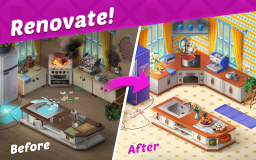
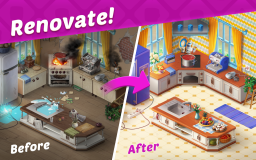
What I like most about Homescapes is the feeling of visible progress. Every completed level gives me stars, and those stars become new wallpaper, repaired stairs, cleaned furniture, fresh carpets, restored rooms, and emotional family moments. The game knows how satisfying it is to turn something messy into something beautiful. Even when a puzzle level gives me trouble, I keep going because I want to see the next corner of the house open up.
A Mansion That Feels Like a Memory Being Repaired
The main setting of Homescapes is the family mansion, and it gives the game its strongest identity. Unlike a plain puzzle app where levels exist without context, Homescapes gives every level a purpose. I am not just clearing tiles. I am helping Austin restore a place connected to his childhood, his parents, and his sense of home.
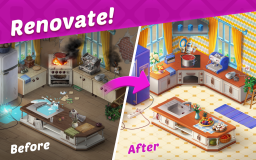
The mansion has a cozy, slightly old-fashioned charm. Rooms are full of worn furniture, dusty corners, faded decor, and spaces that clearly need care. As I complete tasks, the house starts to feel brighter and more alive. That transformation is the emotional engine of the game. I enjoy seeing a room move from neglected to welcoming because the change feels immediate and rewarding.
I also like that the mansion is not restored all at once. The game reveals it gradually, which makes each new area feel like a small discovery. A living room, kitchen, garden, bedroom, hallway, library, or special event space can become its own project. This structure keeps the renovation loop fresh because I always have another room waiting behind the current one.
Austin Makes the Renovation Personal
Austin is the face of Homescapes, and he gives the game much of its personality. He is cheerful, dramatic, sentimental, and often overly invested in every small household detail. I find him charming because he treats the mansion like more than a building. To him, it is a family history that needs to be protected and refreshed.
His relationship with his parents adds warmth to the story. The renovation is not only about interior design. It is also about reconnecting with family, revisiting old memories, and creating a comfortable space for the people he loves. That emotional frame makes the tasks feel more meaningful than simply changing furniture for decoration.
Austin can sometimes be a little too energetic, but that is part of the game’s tone. He reacts to every repair, celebrates progress, worries about problems, and turns simple chores into tiny theatrical events. Without him, Homescapes would feel much more mechanical. With him, the mansion feels inhabited, personal, and slightly chaotic in a friendly way.
The Match-3 Gameplay Is Familiar but Addictive
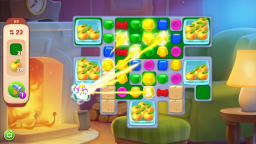
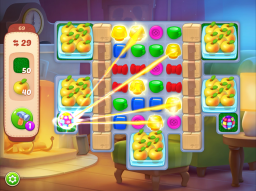
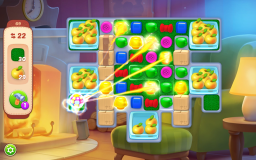
The puzzle boards in Homescapes follow a match-3 structure that is easy to understand. I swap pieces, create matches, clear obstacles, collect items, and try to complete objectives before the moves run out. It is simple at first, but the game gradually adds more blockers, goals, and board layouts that require planning.
I like how the game gives each level a specific task. Sometimes I need to collect certain pieces. Sometimes I have to clear carpets, break boxes, remove chains, or guide objects to the bottom of the board. These changing goals keep the levels from feeling exactly the same, even though the basic rules remain familiar.
Power-ups are the most satisfying part of the puzzle system. Rockets, bombs, paper planes, and rainbow balls can turn a difficult board into a chain reaction of movement and color. Combining power-ups feels especially good because one clever move can clear a huge section of the board. The best moments happen when I think I am stuck, then one strong combination suddenly saves the level.
Difficulty That Can Be Fun and Frustrating
Homescapes looks cozy, but it can become surprisingly difficult. Some levels are relaxed and quick, while others feel designed to test patience. A tight move limit, awkward board layout, or stubborn obstacle can stop progress for several attempts. That contrast is part of the game’s personality: soft home renovation on the outside, sharp puzzle challenge underneath.
When the difficulty feels fair, it is rewarding. I enjoy levels that make me think carefully about each move. Planning a power-up, clearing the right section first, or saving a special piece for the perfect moment can feel genuinely strategic. Beating a hard level after several tries gives me a strong sense of relief.
When the difficulty feels less fair, the free-to-play structure becomes more noticeable. Extra moves, boosters, and lives can become tempting, especially when I lose a level by one move. That can interrupt the relaxed mood. I prefer Homescapes when it challenges my planning rather than making me feel dependent on luck or resources.
Decoration Choices Give the House a Personal Touch
One of the most enjoyable parts of Homescapes is choosing how rooms should look. The game usually gives several design options for furniture, wallpaper, carpets, decorations, and other household details. These choices are not as deep as a full interior design simulator, but they are enough to make the renovation feel personal.
I like comparing styles before choosing. A room can feel classic, bright, elegant, cozy, or playful depending on the selected pieces. Even small changes affect the atmosphere. A sofa color, table design, lamp style, or wall pattern can shift the whole mood of a room.
This decorative layer makes progress more satisfying because I am not only unlocking a fixed result. I am participating in the look of the house. The options are limited, but they still give me a sense that this mansion is becoming my version of Austin’s family home.
The Story Adds Warmth Between Puzzle Sessions
Homescapes uses story scenes to connect the puzzles and renovation tasks. Austin talks with his parents, meets neighbors, handles household problems, and reacts to new discoveries in the mansion. The story is light, but it gives the game a cozy rhythm between harder levels.
I enjoy the small domestic drama. It is not trying to be a deep novel, but it gives personality to the setting. A broken room, an old object, or a family memory can make a renovation task feel sweeter. The story works best when it focuses on emotional details rather than random errands.
Sometimes the pacing can feel stretched because stars are spent on very small actions. I prefer using stars for visible changes, like furniture, repairs, and room transformations. When stars go toward tiny conversations or minor tasks, progress can feel slower. Still, the story helps the mansion feel like a lived-in place rather than a static menu.
Events and Rewards Keep the Game Busy
Homescapes has a lot of events, daily rewards, seasonal activities, and temporary challenges. These features give me more reasons to return beyond the main renovation. There is usually something extra to collect, complete, or unlock, which keeps the game feeling active.
I like events when they support the core gameplay with useful boosters, coins, or decorative rewards. They make regular puzzle sessions feel more productive. A normal level can suddenly contribute to a larger event goal, which adds another layer of motivation.
At the same time, the number of pop-ups and reward screens can feel overwhelming. Homescapes is at its best when it lets me enjoy the cozy mansion atmosphere. Too many prompts can make the experience feel crowded. I appreciate the extra content, but I enjoy it more when it does not interrupt the flow too aggressively.
Sound and Animation Make the House Feel Alive
The presentation of Homescapes is polished and pleasant. The music is gentle, the sound effects are clear, and the animations make both puzzles and renovations feel satisfying. Matching pieces, triggering power-ups, completing tasks, and placing new furniture all have cheerful feedback.
I especially like the animations during room restoration. Dust disappears, furniture appears, walls brighten, and objects settle into place with a small flourish. These details make each task feel like a tiny reward. The house does not simply change; it performs its transformation.
The character animations also add warmth. Austin moves around, reacts dramatically, and makes the space feel inhabited. His parents and other characters help the mansion feel like a real family environment. The overall tone is soft and friendly, which fits the casual puzzle structure well.
Why Homescapes Works as a Daily Habit
Homescapes is very good at becoming part of a routine. I can open it, play a few levels, spend stars on a task, claim a reward, and leave with a sense that I made progress. That short-session structure is one of its biggest strengths. It does not require a long commitment every time.
At the same time, it has enough long-term goals to keep me invested. Restoring the entire mansion is a huge project, and each room creates a new reason to continue. The game gives me small rewards constantly while keeping a much larger transformation in the background.
I think Homescapes works best for players who enjoy cozy progress, light story, decoration, and match-3 challenges. It is not a pure interior design game, and it is not only a puzzle game either. It sits between those ideas, using renovation as motivation and puzzles as the engine that powers every change.