Grand Theft Auto V Summary
Get From the Official Digital Markets
All trademarks belong to their
respective owners.
Grand Theft Auto V is one of those games that feels less like a normal release and more like a whole entertainment district that somehow moved into gaming and refused to leave. Los Santos is loud, sunny, shallow, rich, desperate, hilarious, cruel, and weirdly beautiful in the way only a city built from satire can be. Even years after launch, I can still understand why players return to it: the driving feels immediate, the world is dense with distractions, the story moves between three very different protagonists, and GTA Online turned the same city into a long-running social crime sandbox with cars, businesses, missions, chaos, and questionable financial decisions.
Los Santos Is Still the Main Character
Rockstar North describes Grand Theft Auto V as taking players to Los Santos and the surrounding hills, countryside, and beaches in what it called Rockstar’s largest and most ambitious game world at the time. That ambition still shows. Los Santos does not feel like a background. It feels like a living satire machine built from traffic, billboards, radio stations, luxury homes, cheap motels, celebrity culture, beach bodies, mountain roads, police sirens, bad decisions, and fake brands that are only slightly more ridiculous than real ones.
I like the city because it works at several speeds. I can drive carefully through downtown and admire the detail, or I can fly down a highway while the radio turns a simple trip into a scene from a crime comedy. The map is not only big. It is varied enough to support missions, races, exploration, online events, stunts, and aimless wandering. A good open world makes the player want to take the long route, and GTA V does that constantly.
-
Los Santos feels dense, satirical, and full of visual personality;
-
The countryside, beaches, mountains, highways, and city districts give the map strong variety;
-
Driving through the world is enjoyable even outside missions;
-
The setting supports both story missions and long-term GTA Online play;
The Three-Protagonist Structure Still Feels Smart
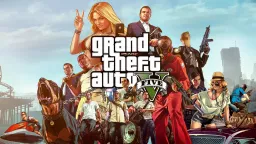
GTA V’s story follows Michael, Franklin, and Trevor, and the character-switching system remains one of its strongest design choices. Instead of building the whole campaign around one criminal perspective, Rockstar uses three. Michael brings midlife crisis and old-money criminal regret. Franklin brings ambition and the desire to escape smaller opportunities. Trevor brings danger, absurdity, loyalty, and the kind of energy that makes every room worse and every mission louder.
I enjoy the way the three-protagonist setup changes the rhythm. Switching characters can move the story, shift tone, or drop me into a completely different situation. It also lets the campaign explore different kinds of crime-fantasy storytelling: family dysfunction, street ambition, professional planning, rural chaos, and Hollywood-style spectacle. The structure keeps the campaign from feeling stuck in one mood.
Michael Gives the Game Its Midlife Crisis
Michael is the most interesting when the game treats him as a man who got the expensive version of everything he wanted and still feels empty. He has the house, the family, the money, and the retirement fantasy, but none of it works emotionally. His story turns GTA’s crime world into a dark joke about success.
I like Michael because he gives the game a sour kind of comedy. He is not a clean hero, and the game knows that. His frustration, dishonesty, nostalgia, and self-pity make him funny and irritating in equal measure. That is a useful combination. GTA V is at its best when it lets characters be entertaining without asking me to approve of them.
-
Michael brings family drama and criminal nostalgia into the campaign;
-
His wealth does not make him emotionally stable;
-
His missions often mix professional planning with personal disaster;
-
He gives the story a strong satirical view of success and emptiness;
Franklin Is the Most Grounded Lead
Franklin often feels like the campaign’s most grounded character because his goals are clearer and more relatable. He wants more than the limited opportunities around him. He wants movement, status, money, respect, and control over his future. Through him, Los Santos feels like a place where ambition is both understandable and dangerous.
I like Franklin’s role because he gives the story a cleaner point of entry. Michael and Trevor already carry huge histories. Franklin is closer to the player’s discovery of the bigger criminal ladder. He is learning what success costs, who uses whom, and whether moving up means becoming exactly the kind of person he once distrusted.
Trevor Is the Game’s Chaos Button
Trevor is extreme, loud, unpredictable, and morally awful, but he is also written as more than simple shock value. He is the game’s human disaster zone: funny, frightening, loyal in strange ways, and impossible to make safe. He brings the campaign a wildness that neither Michael nor Franklin can provide.
I think Trevor works because he turns GTA’s violent absurdity into a person. He is not subtle, and he is not designed to be comfortable. His presence makes the story feel unstable. Whenever Trevor enters a mission, the plan may still technically exist, but it feels like it has already started sweating.
-
Trevor gives the campaign its most chaotic and unpredictable energy;
-
His missions often push the game toward dark comedy and outrageous spectacle;
-
His loyalty and anger make him more complicated than a simple comic villain;
-
He is intentionally uncomfortable, which may divide players;
The Heists Are the Campaign’s Best Structural Idea
GTA V’s heists remain some of the campaign’s most memorable sequences because they combine planning, character roles, vehicle work, shooting, escapes, and cinematic pacing. The setup missions give the final job more weight. Choosing an approach gives the player a small sense of control. The payoff feels bigger because the game spends time preparing it.
I like heists because they make the campaign feel organized rather than just episodic. A smaller mission can be funny or exciting, but a heist feels like a chapter. The best ones turn Los Santos into a playground of routes, timing, equipment, and consequences. They also give the three-lead structure a reason to exist mechanically, not only narratively.
Driving Is Still One of GTA V’s Greatest Pleasures
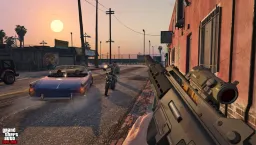
Grand Theft Auto V would not work nearly as well if driving felt weak. The handling is accessible, responsive, and loose enough for dramatic escapes without becoming pure simulation. Cars have weight, motorcycles feel risky, aircraft open the map vertically, and even a casual trip across town can turn into a comedy of traffic, police attention, and bad cornering.
I enjoy driving in GTA V because it supports both skill and mess. A clean highway run feels great. A chaotic downtown chase feels better. The radio stations add personality, the road network gives variety, and the map design constantly encourages one more drive. For a game with so many systems, the simple act of moving through Los Santos remains one of the strongest.
-
Driving feels fast, readable, and satisfying across many vehicle types;
-
The road network supports races, escapes, exploration, and casual cruising;
-
Radio stations make ordinary travel more entertaining;
-
Vehicles are central to both story missions and GTA Online progression;
The Shooting Is Functional, but Not the Main Star
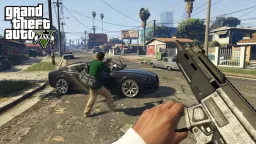
GTA V’s combat is solid enough to carry the campaign, but it is not the most elegant third-person shooting system ever made. Cover, aiming, weapon variety, explosives, and vehicle combat all work, but the real appeal usually comes from mission context rather than pure gunplay depth.
I think this is fine because GTA V is not only a shooter. It is a crime sandbox, driving game, satire engine, mission machine, and multiplayer platform. The combat does its job best when it sits inside a bigger sequence: an escape, a heist, a chase, a rooftop standoff, or a mission that goes very wrong very quickly.
The Satire Is Sharp, Loud, and Sometimes Messy
GTA V takes aim at celebrity culture, capitalism, social media, policing, television, politics, tech companies, wellness trends, influencer behavior, and the general American talent for turning everything into branding. Sometimes the satire is extremely funny. Sometimes it is so loud that it almost trips over itself.
I like GTA V’s satirical world most in the details: radio ads, fake websites, product names, background dialogue, billboards, and tiny environmental jokes. The main story can be blunt, but the world texture is consistently entertaining. Los Santos feels like a city where every business has a slogan and every slogan is lying.
-
Radio stations and fake ads give the world a strong comic identity;
-
Los Santos satirizes celebrity, wealth, politics, technology, and consumer culture;
-
The humor is often sharp, but rarely subtle;
-
The best jokes are often found in background details and worldbuilding;
GTA Online Turned the Game Into a Platform
Rockstar’s official GTA V page now presents Grand Theft Auto V and GTA Online together, with availability on PlayStation 5, Xbox Series X|S, and PC. That pairing is important because GTA Online transformed GTA V from a single premium release into a long-running online world. For many players, GTA Online is not an extra mode anymore. It is the main reason the game keeps living.
I understand why. GTA Online turns Los Santos into a shared space for races, missions, businesses, apartments, vehicles, heists, weapons, events, and social chaos. It is messy, uneven, sometimes grind-heavy, and sometimes hilarious. But it gives the world an afterlife far beyond the campaign. A city built for story became a place where players could create their own expensive problems.
The Online Progression Can Be Addictive and Exhausting
GTA Online’s progression is built around money, reputation, property, vehicles, businesses, missions, and constant new goals. That can be very satisfying. Buying a first apartment, saving for a better car, building a business, or joining a heist crew gives the mode long-term pull.
At the same time, the economy can feel intimidating for new or returning players. GTA Online has years of updates, expensive items, and systems stacked on systems. I like the ambition, but the onboarding can feel rough. New players may look at the prices and wonder whether they accidentally joined a second job with better explosions.
-
GTA Online offers long-term goals through money, properties, vehicles, and businesses;
-
Heists and missions are strongest with reliable friends or crews;
-
The economy can feel grind-heavy for new players;
-
Years of updates make the mode rich but also overwhelming;
The PC Version Remains Important
Steam lists Grand Theft Auto V as developed by Rockstar North, published by Rockstar Games, and released for PC on April 14, 2015. The PC version became important because it offered higher visual settings, modding culture, broader performance options, and a long-running home for GTA Online.
I like GTA V on PC because the world benefits from visual clarity and smooth performance. Driving through Los Santos at higher settings still looks impressive in many moments, especially at sunset, during night drives, or from the hills above the city. PC also gave the game an enormous creative afterlife through roleplay servers, videos, mods, and community experiments, although players should be careful with online rules and avoid anything that risks account penalties.
The Enhanced Versions Keep the Game Technically Relevant
Rockstar’s current GTA V page highlights availability for PlayStation 5, Xbox Series X|S, and PC, while Rockstar Support shows ongoing 2026 title updates across PS5, PS4, Xbox Series X|S, Xbox One, and PC Enhanced/Legacy. That ongoing support helps explain why GTA V still feels present in the market so many years after its original release.
I think the enhanced versions matter because GTA V is a game many players revisit across hardware generations. Better resolution, smoother performance, faster loading, and continued GTA Online support all help the game stay playable. It is unusual for one title to remain this commercially and socially relevant across so much time, but GTA V has managed it through technical updates, online content, and pure cultural gravity.
-
Current official availability includes PlayStation 5, Xbox Series X|S, and PC;
-
Rockstar Support still lists 2026 updates for GTA V and GTA Online;
-
Enhanced versions help the game remain comfortable on newer hardware;
-
The game’s longevity is tied strongly to GTA Online support;
The Mission Variety Is One of the Campaign’s Strengths
GTA V rarely stays in one mission type for too long. It mixes driving, shooting, stealth, flying, boating, heist preparation, character moments, satire, and cinematic set pieces. Some missions are better than others, but the variety helps the campaign feel like a crime anthology inside one city.
I like that the missions often feel tied to character personality. Michael’s missions often lean into family crisis and professional crime. Franklin’s missions connect ambition, loyalty, and career movement. Trevor’s missions tend to arrive with a warning label that the game forgot to print. The variety keeps the campaign moving even when the writing becomes intentionally unpleasant.
The World Is Packed With Distractions
Beyond the main story, GTA V offers races, side activities, collectibles, random encounters, shops, strangers, sports, stunt opportunities, hidden details, and the simple joy of causing trouble until the city pushes back. It is the kind of open world where a planned mission can be delayed by twenty minutes because I saw a bike, a ramp, or a plane and made the mistake of having curiosity.
I enjoy that abundance because it makes Los Santos feel generous. Not every activity is deep, but the density matters. The game constantly gives the player something to do, steal, drive, fly, watch, purchase, crash into, or regret. That sense of possibility is a huge part of GTA V’s staying power.
-
Side activities and random encounters make the city feel active;
-
Races and vehicle challenges support the game’s driving strengths;
-
Collectibles and hidden details reward exploration;
-
The sandbox is often funniest when plans collapse unexpectedly;
The Characters Are Memorable, Even When They Are Hard to Like
GTA V is full of characters who are funny, selfish, desperate, manipulative, absurd, or exhausting. That is intentional. This is not a world filled with role models. It is a world of opportunists, liars, hustlers, officials, criminals, celebrities, and people trying to sell an identity before anyone notices it is empty.
I like the cast because they fit the satire. Many characters are unpleasant, but they are rarely boring. The game’s tone depends on that. Los Santos would feel weaker if everyone were noble and reasonable. Instead, almost everyone feels compromised, which is exactly the point.
The Mature Content Is Not for Every Player
Grand Theft Auto V is a mature game with crime, violence, strong language, adult themes, substance references, and cynical humor. That should be obvious by now, but it still matters. The game is not designed for young children, and the online mode adds unpredictable player behavior on top of the official content.
I think GTA V is best approached by players who understand its tone. It is satire and crime fantasy, not a moral instruction manual. For adult players who enjoy dark comedy and open-world chaos, that tone can be entertaining. For players who dislike crude humor, criminal themes, or intense content, it may be too much.
-
The game is intended for mature audiences;
-
Its humor can be crude, cynical, and intentionally offensive;
-
GTA Online adds unpredictable interactions with other players;
-
Parents should treat it as adult entertainment, not a general family game;
The Radio Stations Are Still Excellent
GTA V’s radio stations are one of its strongest mood-setting tools. Music, talk shows, ads, news, and DJ commentary turn every drive into a piece of worldbuilding. The soundtrack gives Los Santos more cultural texture, while talk radio turns the game’s satire into background noise that somehow becomes part of the city’s personality.
I love how the radio makes travel feel less like empty transit. A mission marker across the map becomes an excuse to hear another song or absurd commercial. Few open-world games make driving around with no urgent goal feel this naturally entertaining.
GTA V’s Age Shows in Some Places
For all its strengths, GTA V is still built on design choices from an earlier era. Some mission structures can feel rigid. Some checkpointing and objective rules limit player freedom more than the open world suggests. Some jokes have aged better than others. Some character writing is intentionally abrasive in ways that may feel tiring now.
I do not think this ruins the game, but it is noticeable. GTA V’s world is still impressive, yet newer open-world games have pushed different kinds of freedom, responsiveness, and storytelling. The game remains great, but not timeless in every detail.
-
Some missions restrict creativity more than the sandbox implies;
-
Certain jokes and character beats may feel dated;
-
The story can be abrasive by design;
-
The open world still holds up better than some mission rules;
GTA VI Changes the Context, but Not the Legacy
Grand Theft Auto VI is now scheduled for November 19, 2026 on PlayStation 5 and Xbox Series X|S, according to recent reporting and Rockstar-related updates. That naturally changes how people look at GTA V. The sequel is finally close enough to feel real, but GTA V’s legacy is already secure.
I think GTA VI’s arrival will make GTA V feel even more historically important. It carried the franchise for more than a decade, powered GTA Online, crossed multiple hardware generations, and remained a cultural reference point long after most open-world games would have faded. Whether someone loves or dislikes GTA V, its impact is hard to ignore.
The Best Audience Is Open-World Crime Sandbox Fans
Grand Theft Auto V is easiest to recommend to players who enjoy open-world freedom, driving, crime stories, dark satire, cinematic missions, online progression, car collecting, heists, and chaotic multiplayer. It is especially strong for players who want one game that can be a campaign, a driving sandbox, a stunt playground, and an online social world.
It is less ideal for players who want quiet storytelling, heroic characters, realistic police simulation, family-friendly action, or open worlds with full mission freedom. GTA V is loud, scripted, cynical, and deliberately excessive. That is the appeal, and also the warning label.
Where Grand Theft Auto V Feels Most Effective
Grand Theft Auto V feels most effective when the city, characters, vehicles, and mission design all collide. A heist plan turns into a chase. A clean drive becomes a police pursuit. A serious conversation happens in a ridiculous place. A mission shifts from satire to spectacle in seconds. That ability to move between tones is what makes the game so memorable.
The game also succeeds because Los Santos remains fun outside objectives. When an open world is strong enough that I can ignore the main story and still enjoy myself, the design is doing something right. GTA V built a city that players wanted to inhabit, disrupt, customize, and revisit for years.
Where Grand Theft Auto V Feels Less Strong
Grand Theft Auto V feels less strong when its scripted missions limit the freedom that the open world promises. The sandbox says “try anything,” but some missions say “stand here, use this, follow that, do it exactly.” That contrast can be frustrating.
It also feels less strong for players entering GTA Online late. The online mode is huge, but that size can be intimidating. Money, businesses, vehicles, menus, public lobbies, and years of content can make the first steps feel noisy. GTA Online is powerful, but not always graceful.