







Fortnite Summary
Get From the Official Digital Markets
All trademarks belong to their
respective owners.
Fortnite always feels to me like a game that refuses to stand still. Every time I return, something has shifted: the map has changed, a new crossover has appeared, a weapon behaves differently, or the lobby is full of outfits that look like they came from five different universes having a loud argument at the same party. That constant motion is part of why I find it fascinating. Fortnite is not just a battle royale anymore. It is a social platform, a creative playground, a competitive arena, and a pop-culture showroom packed into one bright, restless experience.
What makes Fortnite memorable is how it combines chaos with control. On one hand, the game throws me into a colorful island with dozens of players, unpredictable encounters, vehicles, quests, strange items, and environmental surprises. On the other hand, it gives me enough tools to feel that my choices matter. Where I land, how I rotate, what gear I carry, when I engage, and how I use terrain can all change the outcome. Even when a match goes badly, I usually leave with a small story: a ridiculous escape, a clever ambush, a mistake I should have avoided, or a moment where the game’s physics and spectacle created something I did not expect.
A Bright Island With a Constantly Changing Personality
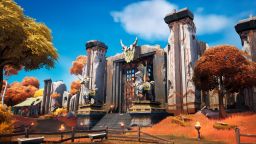
The aesthetic of Fortnite is one of its strongest qualities. It has a clean, colorful, slightly exaggerated visual style that makes everything readable without looking dull. The island feels playful rather than grim, and that tone helps the game stay welcoming even when the competition becomes tense. Buildings, forests, rivers, towns, snowy zones, futuristic areas, and strange themed locations all fit together because Fortnite has trained me to accept visual madness as normal.
I like how the map often feels like a character of its own. It is not just a backdrop for combat. It shapes the rhythm of every match. A quiet rural area encourages slow looting and cautious movement. A named location packed with players turns the opening minutes into a frantic scramble. High ground can become a temporary fortress. Open fields can feel dangerous when I have no cover. The map keeps asking me to adapt.
The colors also matter. Fortnite’s bright look makes it easy to spot movement, understand threats, and recognize items quickly. The game never tries to hide behind muddy realism. Instead, it embraces clarity and personality. That makes each session feel energetic, even when I am simply gliding down at the start of a match and deciding where to land.
The Main Characters Are Whoever I Decide to Become
Fortnite does not have a single main character in the traditional sense. The main character is the skin I choose, and that choice can completely change the mood of a match. I might play as an original Fortnite character, a superhero, a musician, an anime-inspired fighter, a sports icon, or a creature that looks like it escaped from a cereal box. Somehow, they all belong because Fortnite has built a world where absurd combinations are part of the identity.
This is one of the game’s smartest tricks. The characters are cosmetic, but they still influence how I feel while playing. A sleek outfit makes me feel focused. A silly costume makes every serious duel funnier. A crossover skin gives the game a collectible quality, almost like I am carrying a piece of another franchise into Fortnite’s strange stage.
The emotes add even more personality. They are not necessary for winning, but they are central to the social language of the game. A dance before a match, a quick reaction after a close escape, or a synchronized moment with teammates can make the lobby feel like a virtual hangout. Fortnite understands that expression is part of play, not just decoration.
Building Creates a Skill Ceiling That Still Feels Unique
Building is the mechanic that originally made Fortnite stand apart, and it remains one of the most distinctive systems in multiplayer gaming. The ability to place walls, ramps, floors, and roofs instantly turns every encounter into a mix of shooting, movement, defense, and architecture. At its best, building feels creative and tactical. I can protect myself, gain height, cross gaps, block pressure, or create a new angle in seconds.
I respect how much depth this system adds. A skilled builder can transform an empty field into a layered structure almost instantly. That can be impressive to watch and satisfying to learn. The game rewards fast thinking, spatial awareness, and mechanical practice in a way few shooters do.
At the same time, building can be intimidating. When I face someone who edits and builds at high speed, the match can suddenly feel less like a casual battle royale and more like a rapid construction duel. That is why I appreciate that Fortnite now offers different ways to play, including modes where building is removed. It lets players choose whether they want the classic high-skill chaos or a more direct combat experience.
Zero Build Makes the Island Feel Different
Zero Build changed the way I look at Fortnite. Without instant structures, the island itself becomes much more important. Hills, rocks, houses, trees, vehicles, and natural cover suddenly matter in a more traditional tactical sense. I have to think carefully about positioning because I cannot simply create protection out of thin air.
I enjoy Zero Build because it makes Fortnite easier to approach while still keeping the game tense. Movement, aiming, awareness, and decision-making become the main focus. I pay more attention to rotations, third-party threats, and escape options. A bad crossing through open space can be punished quickly, while smart use of cover can save an entire match.
This mode also highlights how strong Fortnite’s core combat has become. The weapons, mobility tools, healing items, and map design can carry the experience even without building. It feels like a different personality inside the same game: less architectural, more positional, but still unmistakably Fortnite.
Combat Feels Fast, Flashy, and Sometimes Unpredictable
Fortnite combat has a flexible rhythm. Some fights are close-range bursts of movement and quick reactions. Others are longer exchanges across hills, rooftops, or open terrain. The game offers enough weapon variety to support different play styles, whether I want precision, pressure, mobility, or a safer mid-range approach.
What I like most is that combat rarely feels static. Players slide, sprint, mantle, use vehicles, reposition with items, retreat behind cover, or rush forward when they sense weakness. A simple encounter can suddenly become a chase across half the map. The best fights feel dynamic, with both players constantly adjusting rather than standing still and trading damage.
There is also a playful unpredictability to Fortnite’s item pool. Some seasons introduce tools that feel wild, funny, or surprisingly powerful. That can create unforgettable moments, but it can also affect balance. I enjoy the spectacle, though I understand why competitive players sometimes prefer a cleaner, more controlled set of options.
Creative Mode Turns Fortnite Into a Platform
Creative mode is one of the reasons Fortnite has lasted so long. It expands the game beyond battle royale and gives players tools to create their own experiences. I have played custom maps that feel like obstacle courses, training arenas, racing challenges, social spaces, horror-inspired adventures, and mini-games that barely resemble the main mode.
This side of Fortnite makes the game feel much larger than a standard multiplayer title. When I am tired of regular matches, I can move into a completely different kind of activity without leaving the ecosystem. That variety keeps the game from feeling narrow.
Creative also shows how much the community contributes to Fortnite’s identity. The game is no longer only shaped by official updates. Players build, remix, experiment, and share their own ideas. Some maps are simple, while others are surprisingly polished. The result is a living library of player-made experiences that gives Fortnite a flexible future.
Sound, Music, and the Energy of the Match
The audio design in Fortnite does a lot of work. Footsteps, chests, gliders, vehicles, healing sounds, weapon fire, and environmental cues all help me understand what is happening around me. Good listening can reveal an opponent before I see them, and that makes sound an important part of survival.
The music and event presentation add another layer. Fortnite has hosted concerts, cinematic moments, themed menus, and seasonal transitions that make the game feel like an ongoing show. I never know exactly what form the next big moment will take, and that sense of surprise is part of its appeal.
I also appreciate the playful sound effects. Fortnite does not chase pure realism. Its audio has punch, clarity, and personality. A chest nearby creates instant curiosity. A vehicle approaching changes my mood immediately. A teammate ping or emote can turn a tense moment into something oddly funny. The soundscape supports both competition and comedy.
Progression, Battle Passes, and the Reward Loop
Fortnite’s progression system is built around steady rewards. The Battle Pass gives each season a clear structure, with cosmetics, currency, styles, emotes, and other unlocks spread across the path. I like having goals beyond simply winning. Completing quests, exploring new areas, and unlocking outfits gives casual matches extra purpose.
The reward loop is strong because Fortnite cosmetics are so visible. When I unlock something new, I actually see it in the lobby and in matches. That makes progression feel more tangible than a hidden number increasing somewhere in a menu. The game understands the appeal of showing off style.
Still, the store can feel overwhelming. There are so many collaborations, limited-time offers, bundles, and rotating cosmetics that it can feel like Fortnite is always trying to catch my attention. I enjoy the variety, but I prefer engaging with it on my own terms rather than feeling pulled toward every new shiny item.