Five Nights at Freddy's Summary
Get From the Official Digital Markets
All trademarks belong to their
respective owners.
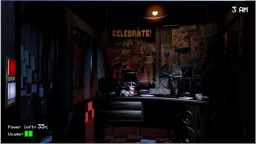
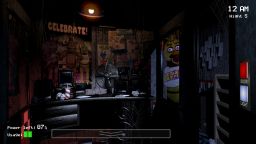
Five Nights at Freddy’s is proof that a horror game does not need a huge map, dozens of weapons, or cinematic chase scenes to make a player feel trapped. It needs one office, two doors, a limited power supply, security cameras, and animatronics that become much less charming after midnight. The original game is small in structure but massive in tension. I am not exploring a mansion or fighting through corridors. I am sitting still, watching cameras, listening for movement, checking door lights, and slowly realizing that every click costs power I will desperately need later.
The Premise Is Instantly Understandable
The setup is simple: the player takes a summer job as a night security guard at Freddy Fazbear’s Pizza, a family entertainment restaurant where animatronic characters behave unpredictably after hours. Google Play describes Freddy Fazbear and his friends as animatronic robots meant to entertain crowds, while their nighttime behavior makes the security job more dangerous than it first appears.
I like how quickly the game communicates the problem. The office is safe only if I manage it well. The cameras show danger, but checking them too often wastes attention and power. The doors protect me, but leaving them closed too long drains the same power I need to survive until morning. Five Nights at Freddy’s turns basic resource management into fear.
-
The night guard premise is easy to understand immediately;
-
The office creates a strong feeling of being trapped;
-
The animatronics turn a child-friendly restaurant theme into horror;
-
The whole game is built around tension, patience, and limited information;
The Security Cameras Are the Game’s Nervous System
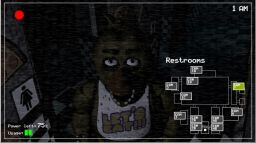
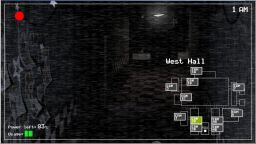
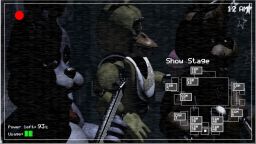
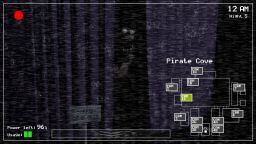
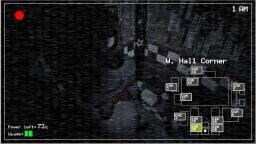
The camera system is the main reason Five Nights at Freddy’s works. The player is not running through the building. Instead, the building comes alive through grainy camera feeds. Each screen becomes a question: where is Freddy, where is Bonnie, where is Chica, and why is Foxy suddenly the most important thing in my life?
The cameras give information, but never comfort. Looking at one room means not looking at another. Pulling up the monitor blocks part of the office. Staying on the cameras too long can make the doors vulnerable. The game makes observation feel useful and dangerous at the same time.
Power Management Makes Every Decision Cost Something
The limited power supply is the smartest mechanical idea in the original Five Nights at Freddy’s. Doors, lights, and cameras all feel necessary, but every use drains the resource that keeps the office alive. That means fear itself becomes expensive. Panic-clicking is one of the fastest ways to lose control.
I enjoy this because the game punishes nervous habits. If I check everything constantly, I run out of power. If I check too little, I miss danger. The best play sits in an uncomfortable middle ground: controlled, alert, and never fully relaxed. It is a horror game where discipline matters as much as courage.
-
Doors protect the player but drain power quickly;
-
Lights reveal nearby danger but cannot be spammed forever;
-
Cameras provide information while distracting from the office;
-
The power meter turns anxiety into a mechanical threat;
The Animatronics Have Strong Personalities Without Much Dialogue
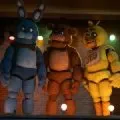
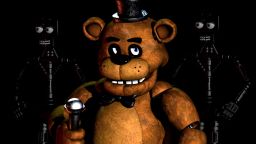
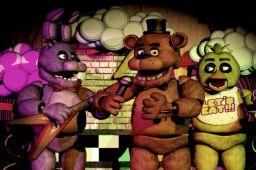
Freddy, Bonnie, Chica, and Foxy are memorable because their behavior gives them personality. They do not need long speeches. Bonnie’s movement pattern, Chica’s pressure, Freddy’s ominous presence, and Foxy’s special camera attention create different kinds of fear. The game makes each animatronic feel like a problem with its own rhythm.
I like that the characters are readable but still unsettling. The designs are simple enough to recognize instantly, yet wrong enough to stay in memory. They are mascots that should feel safe, which is exactly why they feel disturbing when they appear in dark hallways and camera frames.
The Office Is Small, but the Fear Feels Large
Five Nights at Freddy’s mostly keeps the player in one place, and that limitation is a strength. A bigger map might have made the game more active, but the office makes it more claustrophobic. I cannot run. I cannot repair the animatronics. I cannot explore freely. I can only watch, react, conserve power, and hope 6 AM arrives.
This stationary design creates a special kind of helplessness. In many horror games, movement gives confidence. Here, movement is replaced by buttons. The player’s body is safe only because the interface is working, and the interface is always costing power. That is a wonderfully cruel design loop.
-
The single-office setup keeps the player physically restricted;
-
The building feels larger because the player only sees it through cameras;
-
Not being able to move makes every sound and camera change more stressful;
-
The small location makes the game focused instead of limited;
The Jumpscares Work Because the Waiting Is Worse
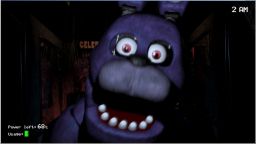
Five Nights at Freddy’s became famous for jumpscares, but the jumpscares are not the whole appeal. The real fear is waiting. The game makes me anticipate the scare long before it happens. A missing animatronic, a strange noise, a hallway shadow, or a power percentage dropping too quickly can be more stressful than the final shock.
I think this is why the game became so popular with streamers and viewers. The audience is not only reacting to sudden moments. They are watching someone slowly make mistakes under pressure. The scare is the punchline, but the setup is the real joke, and the player is usually the one writing it badly.
The Sound Design Does a Lot of Heavy Lifting
Five Nights at Freddy’s uses sound carefully. The hum of the office, camera static, footsteps, mechanical noises, music-box-like tension, and sudden audio cues all make the player feel watched. Because the screen often shows limited information, audio becomes part of survival.
I like how the game teaches listening without turning it into a formal tutorial. Over time, I start recognizing which sounds matter. Some noises are atmospheric. Others mean something has changed. The game becomes stronger when I stop treating sound as background and start treating it as evidence.
-
Audio cues help compensate for limited visual information;
-
Mechanical noises make the animatronics feel physically present;
-
Silence can become as uncomfortable as loud sounds;
-
The sound design makes the office feel unsafe even when nothing is visible;
The Mobile Version Fits the Game Surprisingly Well
Your product entry includes Android and iOS links, and both official mobile store pages position the game as a remastered version from the PC release. Google Play notes that the mobile version requires a device with at least 2 GB of RAM, while App Store describes the mobile release as a remastered PC version with high-resolution graphics, visual effects, improved UI ergonomics, and optional in-app purchases such as Survival Kit and desk plushies.
I think Five Nights at Freddy’s works well on mobile because the controls are based on tapping cameras, doors, and lights. It is not a game that needs complex movement or precise aiming. The small-screen version can actually make the experience feel more intimate, as if the whole nightmare has been compressed into a device I am holding too close to my face.
The PC Original Still Has Historical Weight
Steam lists Five Nights at Freddy’s as an Indie and Simulation title developed and published by Scott Cawthon, with a release date of August 18, 2014. That matters because the original game became one of the defining indie horror releases of the 2010s. Its simple structure, strong mascot-horror hook, and streamer-friendly tension helped it grow far beyond its modest setup.
I like returning to the first game because it feels clean. Later entries expanded the lore, mechanics, characters, timelines, and mysteries. The original is more direct. It says: here is the office, here is the power meter, here are the cameras, survive the night. That clarity is still powerful.
-
The 2014 PC original established the core formula;
-
Scott Cawthon’s small-scale design became a major indie horror success;
-
The first game is simpler and more focused than many later entries;
-
Its design remains easy to understand even years later;
The Lore Is Small at First, Then Starts Spreading
One of the most interesting things about Five Nights at Freddy’s is how much mystery it creates with very little direct exposition. Newspaper clippings, phone calls, strange behavior, background details, and unexplained events suggest that Freddy Fazbear’s Pizza has a darker history. The first game does not explain everything. It leaves enough gaps for players to speculate.
I think that restraint is one reason the franchise grew so quickly. The game is scary on a surface level, but the mystery gives fans something to discuss after the scare ends. Players were not only asking how to survive Night 5. They were asking what happened here, who these animatronics are, and why the restaurant feels haunted by more than bad maintenance.
The Phone Calls Are a Clever Tutorial and Mood Tool
Phone Guy is one of the original game’s smartest features. His calls teach the player how the systems work, but they also make the restaurant feel institutional and strange. The calm workplace tone clashes with the obvious danger. It feels like a company trying to normalize something deeply abnormal.
I like this kind of horror writing. The phone calls are not just instructions. They create corporate discomfort. The idea that this job has procedures, scripts, and explanations makes the situation feel worse, not better. Someone knew enough to leave guidance, but not enough to make the job safe.
-
Phone calls teach mechanics without breaking atmosphere;
-
The casual workplace tone makes the danger feel more disturbing;
-
Hints and warnings help players learn without full certainty;
-
The calls add personality to the restaurant’s unseen history;
The Difficulty Comes From Attention, Not Complexity
Five Nights at Freddy’s is not mechanically complex in the usual sense. There are not many buttons, menus, stats, or movement systems. The difficulty comes from attention management. I need to know when to check cameras, when to use lights, when to close doors, and when to stop wasting power because fear is making me inefficient.
That makes the game accessible and brutal. Almost anyone can understand the controls, but understanding the controls does not mean staying calm. The game’s real challenge is emotional discipline. It asks whether I can make smart decisions while expecting something awful to appear at any moment.
The Pacing Gets Stronger Across the Nights
The night structure gives the game a clean escalation. Early nights teach the basics. Later nights become faster, tighter, and less forgiving. The player starts recognizing patterns, but the animatronics become more aggressive. Familiarity does not remove fear. It simply gives the player more responsibility.
I like this progression because it creates a natural learning curve. The game does not need a long campaign to feel complete. Five nights, plus extra challenges, are enough for a compact horror arc. Each night asks for more confidence, and confidence is exactly what the game enjoys testing.
-
Early nights introduce the systems clearly;
-
Later nights demand faster reactions and better power control;
-
The short structure keeps the game focused;
-
Extra difficulty options give skilled players more challenge;
The Visual Style Is Simple but Effective
The original Five Nights at Freddy’s does not need modern high-budget realism. Its visual strength comes from framing, lighting, stillness, and mascot design. The animatronics are scary partly because they often do not move on-screen. They appear in changed positions, staring through the camera feed as if the building itself blinked.
I appreciate how the game uses limited animation to its advantage. Too much movement might have made the characters feel less eerie. Instead, the game lets still images become threatening. A character standing in a hallway can be scarier than a long chase because the player knows what may happen next and cannot leave the chair.
The Franchise Context Makes the First Game Even More Interesting
Five Nights at Freddy’s is now far bigger than one game. The franchise includes sequels, spin-offs, books, fan theories, merchandise, and films. The 2023 movie from Blumhouse and Universal had a huge global debut, with AP reporting $130.6 million worldwide on opening weekend despite a simultaneous Peacock release. A second film later expanded the screen side of the franchise, with IMDb listing Five Nights at Freddy’s 2 as a 2025 release.
I still think the original game is the best entry point for understanding why the brand worked. Before the lore became a giant puzzle box and before the films brought Freddy to wider audiences, the first game had a clean horror idea: what if friendly restaurant mascots became the reason you watched the clock like your life depended on it?
-
The original game created the foundation for a large horror franchise;
-
The films show how widely recognizable Freddy and the animatronics became;
-
The first game remains the clearest version of the core concept;
-
New players can understand the franchise’s appeal by starting here;
The Game Is Better When Played Without Too Much Spoiler Knowledge
Five Nights at Freddy’s loses some power if a player already knows every mechanic, jumpscare, animatronic route, and lore theory. The first experience matters. Not knowing exactly where Bonnie went or when Foxy will move creates the best kind of uncertainty.
I would recommend new players avoid over-researching before trying it. Learn enough to understand the controls, then let the restaurant teach the rest. The game is short enough that confusion is part of the fun. The fear comes from not fully understanding what the building wants from you.
The Game Still Feels Stream-Friendly
Five Nights at Freddy’s became famous partly because it is easy to watch. Viewers can understand the setup quickly. They can see the player making choices. They can anticipate mistakes. They can react to scares. The game is almost designed like a tension performance.
I like that spectator clarity. Some horror games are confusing to watch if the viewer does not know the map or story. FNAF is different. A viewer can immediately understand why the player is panicking over a door light or power percentage. The simplicity makes the tension shareable.
-
The office setup is easy for viewers to understand;
-
Power percentage gives spectators a clear tension meter;
-
Animatronic movement creates anticipation before scares;
-
The game works well for short videos, streams, and reaction-focused play;
The Main Weakness Is Repetition
The same focus that makes Five Nights at Freddy’s strong can also make it repetitive. Each night uses the same core actions: check cameras, manage doors, use lights, conserve power, survive until 6 AM. The escalation helps, but players who want exploration, varied objectives, or active movement may find the structure narrow.
I do not think repetition ruins the game. It is part of the design. The player is doing a job, and the job becomes terrifying because the same routine grows less reliable. Still, after the first game’s main nights are completed, some players may feel they have seen enough unless they enjoy challenge modes or lore hunting.
The Mobile In-App Purchases May Not Suit Everyone
The App Store listing mentions optional in-app purchases such as Survival Kit and desk plushies. These extras may be fun for some players, especially those replaying the game, but they can also change the feel of the original experience. A first playthrough is strongest when the player faces the systems directly.
I would treat extras as optional, not essential. Five Nights at Freddy’s does not need cheats or cosmetics to work. Its core tension already comes from limited power, uncertainty, and pressure. The clean version is still the most effective version.
-
Optional extras may help replay or customization;
-
First-time players may get the best experience without assistance features;
-
The core game does not require extra purchases to be memorable;
-
Players should check store listings before buying on mobile;
The Best Audience Is Horror Fans Who Like Pressure Over Action
Five Nights at Freddy’s is ideal for players who enjoy suspense, limited-resource horror, mascot horror, simple controls, and short but intense sessions. It is also a strong pick for people who like horror that builds through anticipation instead of constant movement.
It may be less appealing to players who want combat, exploration, long story scenes, or direct control over a character moving through a space. FNAF is about being stuck and managing a system under fear. That is either the hook or the problem, depending on the player.
Where Five Nights at Freddy’s Feels Most Effective
Five Nights at Freddy’s feels most effective when several systems go wrong at once. The power is low, Foxy needs attention, Bonnie is near the door, Chica is missing, Freddy is somewhere too quiet, and the clock is not moving fast enough. That layered pressure is the game at its best.
The game also succeeds because its design is extremely readable. A player can describe it in one sentence, but the experience still creates panic. That is rare. Five Nights at Freddy’s turns a tiny interface into a full horror machine, and that is why the original still matters.
Where Five Nights at Freddy’s Feels Less Strong
Five Nights at Freddy’s feels less strong when the repetition becomes too visible. Once the player understands the patterns, some of the mystery fades. The challenge can remain, but the first-time fear naturally becomes harder to recreate.
The second weakness is that the game is narrow by design. Players looking for exploration, varied environments, deep character control, or a long campaign may find it limited. The original FNAF is brilliant at one specific thing: making a desk job feel like a nightmare. It does not try to be much more than that.