






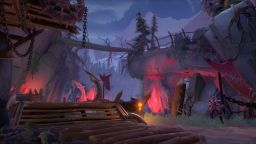




Fellowship feels like someone looked at the best part of many MMORPG nights — getting a party together, entering a dungeon, coordinating roles, learning boss patterns, chasing loot, and arguing lovingly about who stood in the wrong circle — then asked what would happen if the rest of the MMO baggage was trimmed away. The result is a focused co-op RPG built around dungeon runs rather than a massive world full of errands. It is not trying to be a traditional online fantasy life simulator. It wants the pressure, rhythm, teamwork, and reward loop of party-based dungeon content, but in a more direct package.
The Core Idea Is Clear and Smart
Fellowship is officially described by Arc Games as a multiplayer online dungeon adventure set in a fantasy world, with endlessly scaling dungeon runs, teamwork, bosses, loot, and the classic role structure of tanks, healers, and damage dealers. That is the whole pitch, and it is a good one. Many players enjoy dungeon content but do not always want the surrounding grind, travel, daily chores, reputation systems, or long social commitments that often come with bigger MMOs.
I like the clarity of the design. Fellowship knows what it is selling: group combat, role synergy, dungeon pressure, loot growth, and repeated mastery. It is not trying to hide the loop behind a huge open world. The question is simple: can four players work together well enough to survive harder and harder challenges while improving their heroes and gear?
-
The game focuses directly on dungeon runs instead of broad MMO life;
-
Team composition matters because roles are clearly defined;
-
Scaling dungeons create a natural challenge ladder;
-
The design is easy to understand for players who already enjoy co-op RPG content;
The Tank, Healer, and Damage Dealer Structure Gives the Game Its Spine
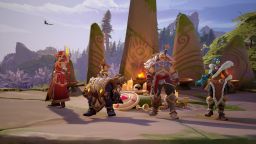
Fellowship leans into the “Holy Trinity” of party roles: tanks control pressure, healers keep the group alive, and damage dealers push enemies down before mechanics overwhelm the team. Arc Games specifically highlights this structure as part of the game’s identity. That makes Fellowship feel familiar in the best way for MMO veterans.
I enjoy this setup because it creates instant responsibility. A tank cannot play like a reckless damage dealer. A healer cannot ignore positioning. Damage dealers cannot treat every encounter like a solo damage race. Each role has a job, and when those jobs fit together, the dungeon feels like a machine finally running smoothly.
Teamwork Is Not Optional
Fellowship is built around cooperation. That sounds obvious for a co-op RPG, but not every multiplayer game truly requires coordination. Here, the structure makes teamwork central. If one player ignores mechanics, wastes defensive tools, mistimes healing, or refuses to adjust, the whole group feels it.
I like games where teamwork is not only a marketing word. Fellowship’s best moments come when players read the fight together: the tank moves at the right time, the healer prepares for incoming pressure, damage dealers switch targets, and everyone responds to a dangerous mechanic without turning the room into chaos. When it works, it feels less like four people attacking enemies and more like a small tactical unit.
-
Each role carries visible responsibility during dungeon encounters;
-
Good communication can turn difficult runs into satisfying clears;
-
Boss mechanics reward attention and coordination;
-
Poor teamwork becomes obvious very quickly;
The Dungeon-First Approach Cuts Both Ways
The best thing about Fellowship is also the thing that may divide players. It focuses heavily on dungeon content. Coffee Stain describes the game around choosing a hero, forming a party, battling through dangerous dungeons, claiming loot, progressing through seasonal Leagues, and facing endlessly scaling dungeons in Eternal. That focus gives the game a strong identity.
However, players who love MMOs for exploration, crafting, housing, social hubs, questlines, gathering, or world storytelling may find the experience narrow. Fellowship is not trying to replace every MMO feature. It is trying to isolate a specific thrill. That makes it sharper, but also more specialized.
Heroes Matter More Than Generic Classes
Fellowship uses a growing roster of Heroes, according to Coffee Stain’s official game page. This is important because a hero-based structure gives the game more personality than a plain class list. A tank is not just “the tank.” A damage dealer is not just “the damage dealer.” Each hero can bring a different combat rhythm, toolkit, and identity.
I like hero-based RPG design when the characters feel distinct. It gives players a reason to experiment beyond raw numbers. One healer may feel proactive and mobile. Another may feel more defensive. One damage hero may reward timing, while another may reward positioning or burst windows. The more distinct the heroes become, the stronger Fellowship’s replay value becomes.
-
Heroes give the role system more personality;
-
Different kits can change how a party approaches the same dungeon;
-
A growing roster supports long-term experimentation;
-
The game needs strong hero balance so preferred characters do not feel mandatory;
The Loot Loop Gives Runs a Long-Term Pull
Dungeon games live or fade by their reward loop, and Fellowship clearly understands that loot is part of the promise. Arc Games highlights collecting loot as a core part of dungeon runs, while Coffee Stain frames the game around claiming powerful loot and chasing new rewards with every fresh Season.
I enjoy loot most when it changes how I play rather than only making numbers larger. A good item should make me rethink a build, improve a role, or open a new strategy. Fellowship’s long-term appeal depends on whether its gear creates meaningful decisions without turning the game into exhausting inventory homework.
Seasonal Leagues Give the Game Structure
Fellowship includes seasonal Leagues, which Coffee Stain presents as part of the progression structure. This is a smart choice for a dungeon-focused game because seasons give players a reason to return, compare progress, chase rewards, and experience balance or content changes in cycles.
I like seasonal structures when they feel fresh without deleting the value of previous time. The danger is that seasons can become pressure machines, making players feel late if they miss a few weeks. Fellowship needs to keep that balance carefully. A season should create excitement, not homework panic.
-
Seasonal Leagues create recurring goals for active players;
-
Fresh rewards give groups a reason to return;
-
Seasonal resets can make progression feel lively;
-
The system needs careful pacing so casual players do not feel left behind;
Eternal Dungeons Are the Endurance Test
Coffee Stain mentions Eternal as Fellowship’s endlessly scaling dungeon mode. This is where the game can capture the “one harder run” mentality that makes dungeon-based RPGs sticky. Players improve gear, refine builds, learn mechanics, and push deeper into difficulty.
I like endlessly scaling content because it creates a clear skill-and-power ladder. There is always another level to test. But the design has to avoid feeling like pure number inflation. The best scaling dungeons introduce meaningful pressure: tighter execution, smarter positioning, stronger mechanics, and better team decisions.
Early Access Shapes the Whole Review
Fellowship launched into Early Access on Steam on October 16, 2025, according to Steam and Arc Games. That matters because Early Access games should be judged with two thoughts at once: what is already fun, and what still needs time. Fellowship has a strong foundation, but its future depends on content growth, balance, matchmaking health, player population, and update quality.
I do not see Early Access as a problem by itself. For a game built around repeatable co-op content, Early Access can be useful because community feedback can shape encounters, heroes, loot, and progression. But players should understand that buying in early means accepting a game still evolving. This is not the same as stepping into a finished, fully settled RPG.
-
Early Access allows the developers to adjust balance and systems with player feedback;
-
Content depth may change significantly over time;
-
Player population is especially important for a party-based game;
-
Expectations should be different from a fully finished release;
The Price Point Makes the Scope Feel More Understandable
Arc Games announced Fellowship’s Early Access launch price as $24.99, and the Steam page later showed the game as an Early Access RPG. That price point helps frame expectations. Fellowship is not being sold like a massive boxed MMORPG expansion with years of content already inside. It is a focused co-op RPG entering development with a specific lane.
I think this matters because the game’s value depends on how much the dungeon loop clicks. For players who love coordinated party runs, the price may feel reasonable if the systems and updates keep them engaged. For players who need story campaigns, solo variety, or huge world content, the same price may feel less convincing.
The Game Is Best With Friends
Fellowship can be played as an online dungeon game, but its best version is likely with a reliable group. Co-op RPGs always become stronger when players understand each other’s habits, communicate well, and enjoy improving together. A regular tank, healer, and damage group can turn repeated runs into a shared project.
I like the idea of Fellowship as a weekly group game. Instead of logging into a huge MMO and deciding what chores to do, the party can gather and run dungeons. The focus is clean. The social benefit is clear. The best sessions will probably come from groups that treat improvement as part of the fun rather than blaming every failed pull on the nearest healer.
-
Regular groups can build stronger coordination over time;
-
Role familiarity makes difficult encounters more satisfying;
-
Friends can make repeated dungeon attempts feel less frustrating;
-
Solo queue quality may vary depending on matchmaking and player behavior;
Matchmaking Will Be Crucial
Any role-based co-op game lives or struggles by matchmaking. If queues are fast, roles are balanced, and players understand expectations, Fellowship can feel smooth. If tanks or healers are scarce, if difficulty communication is unclear, or if groups collapse after one mistake, the experience can become uneven.
I think this is one of the biggest long-term challenges for Fellowship. The Holy Trinity is satisfying, but it also creates role dependency. The game needs good tools for grouping, difficulty selection, player onboarding, and maybe social systems that help reliable players reconnect. A dungeon game is only as healthy as its ability to form groups.
The Combat Needs Clarity Above Everything
In a dungeon RPG, visual clarity matters. Players need to see enemy attacks, boss mechanics, friendly effects, danger zones, healing areas, cooldown signals, and movement space. If the screen becomes too noisy, difficulty can feel unfair. Fellowship’s stylized fantasy look gives it room to be readable, but the game must protect that readability as content grows.
I like co-op combat when I can understand why the group failed. Was the tank in the wrong place? Did the healer miss a timing window? Did a damage player ignore a mechanic? Did everyone stack when they should have spread? Fellowship’s best encounters should make those lessons clear without turning every fight into visual clutter.
-
Boss mechanics need strong telegraphs;
-
Role feedback should be readable during intense fights;
-
Enemy and friendly effects must not become visually confusing;
-
Clear failures make repeated attempts more motivating;
The MMO Feeling Without the MMO Weight Is the Main Promise
Fellowship is interesting because it borrows from MMORPG dungeon culture without requiring the full MMORPG structure. Arc Games even described it as a multiplayer online dungeon adventure, while Coffee Stain presents it as a focused dungeon-and-hero experience. That makes the game appealing to players who love group combat but no longer have time for endless MMO obligations.
I find that promise very attractive. Sometimes I want the tactical pleasure of a dungeon party without managing professions, reputation, travel routes, daily quests, or massive patch catch-up. Fellowship’s focus could make it a great “just the good part” game for the right audience.
The Risk Is Repetition
Fellowship’s focus creates a clear risk: repetition. If the dungeon variety, enemy design, hero builds, loot system, and seasonal changes are not strong enough, the loop could become familiar too quickly. A game built almost entirely around dungeons needs those dungeons to stay exciting.
I do not think repetition is automatically bad. Dungeon runners are built on repetition. The key is whether each repeat teaches something, rewards something, or lets the group improve. If Fellowship makes repeated runs feel like mastery, it works. If they feel like grinding the same rooms for slightly better numbers, the magic fades.
-
Dungeon variety is essential for long-term interest;
-
Loot needs to create meaningful build decisions;
-
Seasonal updates should refresh the loop;
-
Repeated runs must feel like mastery rather than simple grind;
The Art Style Helps the Game Feel Approachable
Fellowship uses a vibrant fantasy presentation rather than an ultra-grim realistic look. Coffee Stain describes it as set in a vibrant fantasy world. That fits the game’s co-op personality. It needs to be readable, inviting, and flexible enough to support different heroes, enemies, and seasonal content.
I like stylized fantasy for this kind of game because it can age better than pure realism. It also helps distinguish character silhouettes and combat effects. A dungeon RPG should look exciting, but it should not become so visually heavy that players lose track of mechanics. Fellowship’s style gives it a chance to stay clear and lively.
The Hero Roster Needs Strong Personality
A growing hero roster is only valuable if players care about the heroes. A good co-op RPG needs characters with recognizable silhouettes, distinctive abilities, and playstyles that create loyalty. Players should be able to say, “That is my hero,” not only “that is the best current damage option.”
I think Fellowship’s future depends partly on this identity work. Balance matters, but personality matters too. If each hero feels different enough to master, the game gains long-term appeal. If heroes feel interchangeable, the role system becomes flatter.
-
Hero identity can make progression feel more personal;
-
Distinct kits encourage players to experiment;
-
Strong silhouettes help readability during combat;
-
Balance updates must protect both fairness and character flavor;
The News Around Season 3 Suggests Active Iteration
Recent coverage from PC Gamer described Fellowship’s Season 3 update as a large Early Access patch with major changes to loot, item progression, dungeon difficulty, enemies, a pinnacle dungeon, and a new hero named Gunde. That matters because it shows the developers are not leaving the Early Access build untouched.
I see that as encouraging. Dungeon games need active tuning because players quickly expose weak systems. If loot is boring, players notice. If dungeons are too easy, players notice. If builds lack agency, players notice. Big updates can be disruptive, but they are also signs that the game is still being shaped.
Player Population Is the Big Unknown
Fellowship’s design depends on people. A solo RPG can survive a small audience more easily. A party-based dungeon game needs enough active players for matchmaking, seasonal competition, community discussion, and group formation. Without that, even strong mechanics can feel isolated.
This is the practical concern I would watch most closely. A focused dungeon RPG can be excellent with a healthy community, but it can struggle if queues become slow or role balance becomes uneven. Fellowship needs players not only at launch, but across seasons.
-
Healthy matchmaking is essential for new players;
-
Role balance affects queue times and group quality;
-
Seasonal updates can help bring players back;
-
A co-op game’s long-term value depends heavily on community health;
The Game Is Not for Pure Solo RPG Players
Fellowship may have RPG systems, but its heart is group dungeon play. Players who want a large single-player story, open-world exploration, deep NPC questlines, or solo build experimentation may not find what they are looking for. This is not ELDEN RING, Baldur’s Gate, or a traditional story-heavy fantasy RPG.
I like that the game is honest about its focus, but that focus naturally narrows the audience. Fellowship is for players who enjoy coordination, repeated dungeon attempts, build tuning, party roles, and shared improvement. If someone dislikes relying on other players, this may not be their ideal fantasy adventure.
The Best Audience Is MMO Dungeon Fans With Less Time
Fellowship is easiest to recommend to players who love dungeon runs, party roles, loot progression, boss mechanics, and coordinated co-op, but do not want the full commitment of a giant MMO. It is also appealing for small friend groups who enjoy learning encounters together.
It may be less appealing to players who need a big campaign, solo freedom, open-world discovery, or a huge amount of non-combat content. Fellowship is direct. That directness is its strength and its limitation.
Where Fellowship Feels Most Effective
Fellowship feels most effective when the party rhythm clicks. The tank holds pressure, the healer keeps everyone stable, damage dealers handle priorities, and the group reacts to mechanics with just enough coordination to survive. That moment captures the best reason to play: shared execution under pressure.
The game also succeeds conceptually because it understands a specific audience. Some players do not want every part of an MMO. They want the dungeon night. Fellowship builds around that desire and gives it a dedicated home.
Where Fellowship Feels Less Strong
Fellowship feels less strong if the player expects a full fantasy world beyond dungeons. Its focused design can feel narrow, especially for people who enjoy exploration, crafting, story quests, or large social hubs. The game’s value depends almost entirely on whether the dungeon loop remains satisfying.
The second concern is Early Access uncertainty. The foundation is interesting, but balance, content depth, matchmaking, population, loot progression, and seasonal quality will determine whether Fellowship becomes a lasting co-op RPG or a cool idea that only certain groups stick with.
Pros
- Focused co-op dungeon design captures the best part of MMO party content without requiring a full MMO lifestyle
- Tank, healer, and damage dealer roles create clear teamwork, responsibility, and group identity
- Endlessly scaling dungeons and Eternal mode give skilled groups a natural challenge ladder
- Seasonal Leagues, loot progression, and a growing hero roster create strong long-term potential
- Early Access updates show active iteration on systems, difficulty, loot, heroes, and dungeon structure
Cons
- The dungeon-first focus may feel too narrow for players who want exploration, story quests, crafting, or full MMO world content
- As an Early Access game, balance, content depth, and long-term systems are still evolving
- Matchmaking quality and role availability are crucial, especially for players without a regular group
- Repeated dungeon runs can become tiring if loot, enemy variety, and seasonal updates do not stay fresh
- The game is not ideal for solo-first RPG players who dislike depending on coordinated teammates