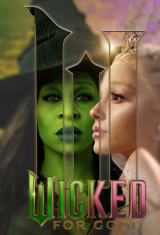




Wicked: For Good feels like a story about consequences, friendship, and the difficult moments when people must decide who they truly want to become. I entered the movie expecting another spectacular musical fantasy, but what impressed me most was how deeply it explores the emotional connection between characters and the choices that shape their futures.
What makes Wicked: For Good interesting is that it focuses less on discovering the world of Oz and more on understanding the people living inside it. The story continues the journey of Elphaba and Glinda as they face the results of their decisions and the distance that has grown between them.
I like stories where characters are forced to confront difficult truths. A strong continuation should not only increase the scale of the adventure but also deepen the emotions behind it.
Elphaba’s Journey Becomes More Personal
Elphaba remains the emotional center of Wicked: For Good. Her story focuses on identity, courage, and the challenge of standing by her beliefs when others misunderstand her.
I appreciate characters who continue to question the world around them. Elphaba is interesting because her strength comes not from being perfect, but from refusing to abandon what she believes is right.
Her journey creates many emotional moments because she must deal with both external challenges and personal feelings.
Glinda Faces the Weight of Her Choices
Glinda’s story becomes more complex as she deals with the consequences of her position and decisions.
I like characters who are not limited to simple roles. Glinda may represent a brighter side of Oz, but her journey shows that popularity and success can come with emotional challenges.
Her relationship with Elphaba remains one of the strongest parts of the story because it reveals different sides of both characters.
The Friendship Between Elphaba and Glinda
The connection between Elphaba and Glinda is the heart of Wicked: For Good.
I enjoy friendships in stories where characters influence each other deeply. Their relationship is not always easy, but that is what makes it meaningful.
Their bond explores forgiveness, understanding, and the idea that people can change each other’s lives.
The World of Oz Becomes More Dramatic
The magical world of Oz continues to provide a strong visual and emotional foundation for the story.
I appreciate how the setting is not just decorative. The cities, landscapes, and magical elements reflect the conflicts happening between characters.
The fantasy environment helps make the emotional themes feel larger and more memorable.
The Music Creates Emotional Highlights
Music is one of the most important elements of Wicked: For Good. The songs help express emotions that characters cannot always communicate through normal dialogue.
I enjoy musicals when the songs feel necessary to the story rather than simply added for entertainment.
The musical moments help reveal fears, hopes, and important changes within the characters.
The Performances Bring Emotional Depth
The performances are a major reason Wicked: For Good works so well as a character-driven story.
I appreciate when actors can show both the dramatic and lighter sides of their characters.
The emotional connection between Elphaba and Glinda depends on believable performances that make their friendship feel real.
The Visual Design Creates a Magical Experience
The production design of Wicked: For Good continues the rich fantasy style established by the first film.
I enjoy the attention given to costumes, locations, and small visual details that help create the feeling of a living fantasy world.
The colorful environments and creative designs make Oz feel unique and memorable.
The Themes Go Beyond Fantasy
Although Wicked: For Good takes place in a magical world, its themes connect with real experiences.
The story explores acceptance, reputation, power, friendship, and the difficulty of being understood by others.
I appreciate fantasy stories that use imaginary settings to discuss emotions people recognize in real life.
The Conflict Creates Emotional Pressure
The central conflicts in Wicked: For Good are not only about external challenges. They are also about personal choices and relationships.
I like when stories create tension through different beliefs and perspectives.
The strongest dramatic moments happen when characters must choose between what is expected of them and what they truly believe.
The Supporting Characters Add More Layers
The supporting characters help expand the world and create additional emotional connections.
I enjoy when side characters contribute to the larger story instead of existing only in the background.
Their relationships with Elphaba and Glinda help show different sides of the world they live in.
The Story Explores Change and Growth
One of the strongest themes of Wicked: For Good is personal transformation.
I appreciate stories where characters grow because of their experiences rather than simply becoming different people without explanation.
The journey of Elphaba and Glinda shows that change can be painful but also meaningful.
The Balance Between Drama and Spectacle
Wicked: For Good combines large musical moments with quieter emotional scenes.
I like this balance because a fantasy musical needs both visual excitement and personal storytelling.
The spectacular moments become more powerful because they are connected to the characters’ emotions.
The Legacy of Wicked Creates Expectations
As a continuation of a famous musical story, Wicked: For Good carries high expectations from audiences familiar with the original material.
I appreciate adaptations that respect their source while still creating a cinematic experience.
The movie works best when it focuses on the emotional core of the story rather than only recreating familiar moments.
The Importance of Choice and Friendship
At its center, Wicked: For Good is a story about choices and relationships.
I like how the movie shows that people can have different paths while still remaining connected.
The friendship between Elphaba and Glinda becomes a reminder that understanding others can change the way we see the world.
Where Wicked: For Good Feels Strongest and Where It Has Limits
Wicked: For Good feels strongest when it focuses on character emotions, powerful performances, and the complicated relationship between Elphaba and Glinda.
The main limitation is that viewers who are not interested in musicals or fantasy storytelling may find the style less engaging.
For me, Wicked: For Good works because it understands that the biggest battles are often personal. The magic creates the world, but the characters create the emotional impact.
Pros
- Complex themes about identity and acceptance
- Strong character development
- Memorable friendship at the center of the story
- Great performances from the main cast
- Expands the world of Oz in an interesting way
Cons
- High expectations may influence audience reactions
- Fantasy style may feel too theatrical for some viewers
- Some supporting characters could receive more attention