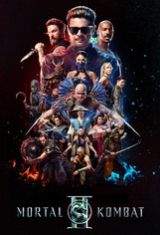
Mortal Kombat II is the kind of sequel that knows exactly what most viewers came to see: fighters with impossible backstories, supernatural realms, dramatic entrances, brutal tournament stakes, and enough fan-service energy to make every character reveal feel like a controller just vibrated in the audience’s hands. It is not a delicate movie. It is not trying to be an elegant martial-arts drama about restraint. It is a loud, R-rated fantasy action sequel built around Johnny Cage swagger, Shao Kahn menace, familiar champions, new realms, and the long-awaited feeling that the actual Mortal Kombat tournament has finally stepped into the spotlight.
The Product List Places It as a 2026 Movie Entry
Your product list names the product Mortal Kombat 2, marks it as active, places it in Movies & TV Series, and links it to the U.S. JustWatch page for Mortal Kombat II. For SEO and public naming, I would use Mortal Kombat II in the article body, because that is how Warner Bros., IMDb, Box Office Mojo, and JustWatch identify the 2026 sequel.
That distinction matters because Mortal Kombat 2 can refer casually to the sequel, while Mortal Kombat II is the official movie title. The review should still catch both search intents: people typing “Mortal Kombat 2 movie,” “Mortal Kombat II 2026,” “Johnny Cage Mortal Kombat sequel,” and “where to watch Mortal Kombat II.”
-
The uploaded list marks Mortal Kombat 2 as active;
-
The category is Movies & TV Series, with Movie as the type;
-
The linked JustWatch page points to Mortal Kombat II;
-
The strongest SEO intent is around Johnny Cage, Shao Kahn, Kitana, tournament, R rating, cast, streaming, and digital rental;
The Sequel Finally Leans Into the Tournament
The biggest promise of Mortal Kombat II is that it moves closer to the core structure fans expected from the beginning: champions facing each other in a battle that decides the fate of realms. IMDbPro’s public synopsis says the fan-favorite champions, now joined by Johnny Cage, are pitted against one another in the ultimate battle to defeat Shao Kahn’s dark rule, which threatens Earthrealm and its defenders.
I like that direction because the 2021 film often felt like setup. It introduced fighters, powers, rivalries, and mythology, but it also danced around the full tournament fantasy. Mortal Kombat II has more permission to be what the franchise naturally wants to be: a supernatural martial-arts bracket where every fight feels personal, theatrical, and slightly ridiculous in the best way.
Johnny Cage Is the Most Important New Ingredient
Warner Bros. highlights Karl Urban as Johnny Cage, and that casting immediately changes the movie’s personality. Johnny Cage is not only another fighter. He is ego, comedy, celebrity, insecurity, showmanship, and movie-star nonsense dropped into a world where gods, monsters, ninjas, sorcerers, and emperors are taking themselves very seriously.
I think Johnny is the sequel’s best pressure valve. Mortal Kombat mythology can get heavy quickly, especially when realms, prophecies, bloodlines, revenants, and ancient grudges start filling the room. Johnny Cage walks in like he thinks the room needs better lighting. That contrast is useful. He gives the movie humor without making the whole franchise feel like a joke.
-
Karl Urban’s Johnny Cage adds star-power comedy to the sequel;
-
The character gives the tournament a more playful human entry point;
-
Johnny works because he undercuts the mythology without disrespecting it;
-
His presence helps the sequel feel less like setup and more like the main event;
Karl Urban Understands the Assignment
Johnny Cage is a dangerous role because he can easily become annoying instead of funny. The character needs arrogance, but not emptiness. He needs jokes, but not constant mugging. He needs action credibility, but also that Hollywood self-mythology that makes him believe he can charm his way through a supernatural death match.
I like Urban in this kind of role because he can play swagger with a little dent in it. Johnny should not be only a punchline. He is funniest when the confidence is real enough to be impressive and fragile enough to crack under pressure. In Mortal Kombat II, his celebrity persona gives the movie a brighter comic rhythm, especially when placed against much more severe characters like Liu Kang, Sonya, and Shao Kahn.
Shao Kahn Gives the Movie a Clearer Threat
Box Office Mojo lists Mortal Kombat II under action, adventure, fantasy, and sci-fi, and the movie’s central conflict pushes the heroes against Shao Kahn’s rule and the danger to Earthrealm. That bigger villain presence is important because Mortal Kombat needs an antagonist who feels theatrical enough for the world. Shao Kahn is not subtle, and he should not be.
I like villains who understand scale. Shao Kahn is built for banners, armor, arenas, threats, and domination speeches. He is less interesting as a quiet manipulator and more effective as a force of conquest. The sequel benefits when he feels like a realm-level danger, not simply another opponent waiting his turn.
-
Shao Kahn gives the sequel a stronger fantasy-war identity;
-
The threat to Earthrealm creates clearer stakes than isolated character conflicts;
-
His presence makes the tournament feel larger and more dangerous;
-
The character works best when the movie embraces his theatrical scale;
Kitana and Jade Expand the Realm Mythology
Warner Bros. lists Adeline Rudolph and Tati Gabrielle among the cast, while IMDb identifies Rudolph with the film and Warner’s listing places both performers in the ensemble. Their presence matters because Mortal Kombat is not only about Earthrealm fighters. Edenia, Outworld, royal bloodlines, shifting loyalties, and warrior politics are central to why the game mythology became so sticky.
I enjoy the sequel more when it expands beyond Earthrealm. The first movie needed to ground the audience, but Mortal Kombat gets richer when the other realms stop being background lore and become active emotional spaces. Kitana and Jade help the sequel feel more connected to the franchise’s bigger fantasy web.
The Returning Earthrealm Fighters Still Matter
Warner Bros. lists Jessica McNamee, Ludi Lin, Mehcad Brooks, and Lewis Tan among the cast, connecting the sequel to Sonya Blade, Liu Kang, Jax, and Cole Young from the 2021 film. That continuity matters because the sequel needs more than new fan-favorite introductions. It has to show whether the original team has grown into actual defenders of Earthrealm.
I like Liu Kang and Sonya most when they give the movie discipline. Johnny Cage brings showmanship. Jax brings physical force and grounded loyalty. Cole gives continuity from the reboot’s original character angle. But Liu and Sonya help the team feel focused. They understand that this is not a celebrity stunt, a personal revenge trip, or a weird interdimensional sporting event. It is survival.
-
Sonya keeps the team grounded and tactical;
-
Liu Kang gives the sequel martial-arts discipline and mythic connection;
-
Jax adds physical power and emotional loyalty;
-
Cole Young connects the sequel back to the 2021 reboot’s original story thread;
The R Rating Is Part of the Brand
Box Office Mojo lists Mortal Kombat II with an R rating and a runtime of 1 hour 56 minutes. That rating is not a small marketing detail. Mortal Kombat has always been tied to exaggerated violence, fatalities, and over-the-top impact. A softer rating would make the movie feel strangely incomplete.
I do not think the R rating automatically makes the film better, but it lets the sequel speak the franchise’s language. Mortal Kombat without hard-edged action is like a fighting game where every character apologizes after landing a combo. The audience expects impact, consequence, and a little shock value. The sequel understands that expectation.
The Fight Scenes Are the Main Event
Mortal Kombat II lives or falls by its fights. Plot matters, but viewers are not mainly here for careful parliamentary debate between realms. They want matchups, powers, signature moves, bruising choreography, weapon styles, and moments that feel pulled from the game screen into a movie arena.
I like the sequel most when fights have identity. A Sonya fight should not feel like a Liu Kang fight. Johnny Cage should move differently from Baraka. Scorpion should bring a different kind of threat than Shao Kahn. The best Mortal Kombat battles are not only about who wins. They are about watching the character’s whole personality appear through combat.
-
The sequel works best when each fight has a distinct style;
-
Signature moves help game fans feel recognized;
-
Physical choreography matters as much as digital effects;
-
The tournament format gives fights clearer purpose and momentum;
Fatalities Need to Feel Earned, Not Just Inserted
Fatalities are the easiest fan-service tool in a Mortal Kombat movie, but they are also tricky. Use too few, and fans feel cheated. Use too many without rhythm, and they become noise. Mortal Kombat II works best when its big finishers arrive as punctuation marks to fights that already have tension.
I like fatalities when they feel like the extreme endpoint of a matchup, not just a checklist item. The games made them iconic because they were shocking rewards after a fight. In a movie, they need build-up, timing, and character flavor. A good fatality should make fans react, laugh, wince, and immediately look around to see who else saw that nonsense.
The Movie Is Not for Viewers Seeking Subtlety
Mortal Kombat II is based on a game franchise built around supernatural warriors, realms, tournament combat, and memorable finishers. It is not aiming for delicate realism. The question is not whether the movie is subtle. The question is whether it turns the franchise’s loud ingredients into something entertaining.
I think the sequel is easier to enjoy when judged by the correct standard. This is not a prestige drama accidentally wearing armor. It is fantasy action pulp with a fan-service engine. The dialogue can be broad, the mythology can be goofy, and the costumes can be theatrical. That is part of the flavor. Asking Mortal Kombat to become quiet realism is like asking a dragon to use indoor voice.
-
The movie works best as fantasy action spectacle;
-
Viewers expecting grounded realism may not connect with the tone;
-
The theatrical costumes, powers, and realm mythology are part of the appeal;
-
The sequel should be judged as a video-game adaptation, not a restrained martial-arts drama;
The Sequel Benefits From Bigger Scale
The 2021 film had the difficult job of restarting the movie universe. Mortal Kombat II has more room to expand. More characters, more realms, more mythology, more arena energy, and more direct tournament stakes all help the sequel feel larger. That is what a second entry should do.
I like sequels that understand escalation. Bigger does not always mean better, but Mortal Kombat is naturally built for expansion. Once the audience accepts the rules, the movie can stop explaining every corner and start throwing fighters into memorable situations. Mortal Kombat II feels strongest when it trusts viewers to keep up.
Johnny Cage Changes the Humor Balance
Josh Lawson’s Kano already brought comedy to the 2021 movie, and Warner Bros. lists Lawson as returning in Mortal Kombat II. Adding Johnny Cage creates a different comic layer. Kano is crude, chaotic, and antagonistic. Johnny is polished, self-obsessed, and performative. The contrast between those energies can keep the sequel from becoming too one-note.
I like that Mortal Kombat humor comes from personality clashes. Serious warriors surrounded by loud personalities are inherently funny. A movie with gods and monsters needs someone who reacts like a normal person with an abnormal ego. Johnny Cage gives the sequel that voice.
-
Kano brings rougher comic energy from the first movie;
-
Johnny Cage adds celebrity arrogance and Hollywood self-parody;
-
The humor works best when it grows from character conflict;
-
Comedy helps balance the darker fantasy violence;
The Visual Effects Need to Carry Impossible Powers
Mortal Kombat’s fighters are not only martial artists. They throw fire, ice, energy, blades, chains, souls, shadows, and realm magic at each other. The sequel needs visual effects that make these powers feel readable and physical, not just bright digital decoration.
I like effects-driven fights when the powers have weight. Sub-Zero’s ice should feel dangerous. Scorpion’s chain should feel violent and fast. Liu Kang’s fire should feel controlled and intentional. Shao Kahn’s impact should feel heavy. If effects blur the action, the fight loses character. If they support movement and timing, the franchise comes alive.
Scorpion and Sub-Zero Remain the Franchise’s Shadow
Hiroyuki Sanada and Joe Taslim are connected to the Mortal Kombat II cast through public cast listings, bringing the continued weight of Scorpion and Bi-Han/Noob Saibot lore into the sequel conversation. Even when the story expands to Johnny Cage, Kitana, Shao Kahn, and the tournament, the ninja mythology remains one of Mortal Kombat’s strongest emotional hooks.
I like that Scorpion and Sub-Zero are bigger than ordinary side characters. They carry revenge, identity, death, legacy, and iconic visual design. Their rivalry is one of the reasons Mortal Kombat became instantly recognizable. The sequel has more characters to juggle, but it still benefits whenever that shadowy mythic energy enters the frame.
-
Scorpion and Sub-Zero carry some of the franchise’s strongest legacy appeal;
-
Noob Saibot mythology deepens the supernatural side of the sequel;
-
The ninja characters bring visual clarity and fan recognition;
-
Their presence helps connect the sequel to the emotional stakes of the 2021 film;
The Cast Is Built for Fan Recognition
Warner Bros. lists a broad cast including Karl Urban, Adeline Rudolph, Jessica McNamee, Josh Lawson, Ludi Lin, Mehcad Brooks, Tati Gabrielle, Lewis Tan, Damon Herriman, and others. That ensemble shows how many fan-favorite characters the sequel is trying to serve. The advantage is excitement. The risk is crowding.
I enjoy a big Mortal Kombat roster because the games are built around character selection. Fans have favorites. They want entrances, moves, costumes, powers, rivalries, and references. But a movie has less time than a game roster screen. The sequel has to choose carefully which characters get emotional weight and which characters function more as fight-driven appearances.
The Story Is a Framework for Fights
Mortal Kombat II’s plot does not need to be overly complicated. It needs clear stakes, strong matchups, character motivations, and enough realm politics to make the tournament matter. The danger with video-game adaptations is trying to explain everything. Sometimes the smarter move is to create a clean framework and let the characters clash.
I like the sequel when it moves with purpose. A little mythology is good. Too much exposition can make the movie feel like someone reading a wiki aloud during a cage match. Mortal Kombat’s story should support action, not bury it. The best lore appears through fights, rivalries, costumes, powers, and consequences.
-
The plot works best as a clear tournament-driven structure;
-
Realm mythology should support the action rather than pause it;
-
Character rivalries make the fights feel more meaningful;
-
Too much exposition can slow the movie’s strongest appeal;
The Video-Game Adaptation Context Helps It
Mortal Kombat II arrives in an era when video-game adaptations are treated with more seriousness and commercial interest than they once were. The sequel benefits from that broader cultural shift, but it also faces higher expectations. Fans no longer expect every adaptation to be awkward. They expect recognition, craft, and respect for the source.
I think Mortal Kombat is both easier and harder to adapt than many games. Easier because the appeal is clear: fighters, powers, realms, tournament, finishing moves. Harder because the tone is absurd if handled too seriously and cheap if handled too carelessly. Mortal Kombat II works best when it accepts the absurdity but presents it with confidence.
The Digital Availability Makes It Easy to Catch Up
JustWatch US currently lists Mortal Kombat II as available to rent or buy through Apple TV Store, Fandango At Home, and Amazon Video. That makes the sequel easier to access after its theatrical run, especially for viewers who skipped cinemas or want to rewatch specific fights.
I like digital rental for this kind of movie because Mortal Kombat II is built for repeat moments. Some viewers may not rewatch the entire plot immediately, but they may absolutely return to a favorite fight, a character entrance, or a finishing move. Action sequels often live well in home viewing because fans can pause, rewind, and inspect references.
-
JustWatch US lists rental and purchase options through major digital stores;
-
Digital viewing makes it easier to revisit favorite fights and character moments;
-
Availability can vary outside the United States;
-
Local JustWatch checks remain useful for regional streaming updates;
The Box Office Was Solid, Not World-Dominating
Box Office Mojo lists Mortal Kombat II with a domestic total around $79.7 million, international total around $49.6 million, and worldwide total around $129.3 million, with Warner Bros. as domestic distributor. That is a respectable result for an R-rated video-game action sequel, though not the kind of global explosion that turns every studio meeting into a victory parade.
I see that as fitting for the brand. Mortal Kombat has a passionate audience, but it is still violent, niche in tone, and built around a very specific flavor of fantasy action. The sequel’s box office suggests strong fan interest, but also reminds us that not every video-game adaptation becomes a billion-dollar event.
Critics and Fans May Split on What Matters
Mortal Kombat II is the kind of movie where critics and fans may evaluate different things. Some viewers want strong writing, emotional depth, and elegant action filmmaking. Others want Johnny Cage, Shao Kahn, Kitana, fatalities, game-accurate references, and bigger tournament energy. Those priorities do not always lead to the same verdict.
I think the fairest way to approach the sequel is to ask whether it satisfies the Mortal Kombat fantasy. Does it make the characters feel recognizable? Do the fights have personality? Does the tournament matter? Does Johnny Cage bring the right energy? Does the movie know when to be serious and when to lean into the ridiculous? Those questions matter more here than whether the film behaves like a prestige drama.
-
Fans may value character accuracy and fight moments more than critics do;
-
Critics may focus more on script, pacing, and emotional consequence;
-
The sequel is strongest for viewers already invested in the Mortal Kombat fantasy;
-
It is less likely to convert viewers who dislike the franchise’s violent, theatrical style;
The Movie Is Best When It Feels Like a Character Select Screen Come Alive
One of Mortal Kombat II’s pleasures is watching familiar characters step into live-action form. Johnny Cage, Kitana, Jade, Liu Kang, Sonya, Jax, Kano, Scorpion, Shao Kahn, and others each carry years of game associations. A movie cannot replicate gameplay, but it can capture the thrill of seeing these identities collide.
I like when the sequel treats entrances as moments. A good Mortal Kombat character introduction should feel like selecting a fighter and hearing the arena load. Costume, posture, weapon, attitude, and first move all matter. The movie works when it understands that fans are not only watching a plot. They are watching icons arrive.
The Best Audience Is Existing Mortal Kombat Fans
Mortal Kombat II is easiest to recommend to fans of the games, viewers who enjoyed the 2021 reboot, action-fantasy audiences, Johnny Cage fans, and people who want an R-rated video-game sequel that embraces tournament spectacle. It is also a good pick for viewers who like lore-heavy fight movies where character matchups matter as much as the plot.
It is less ideal for viewers who dislike graphic fantasy violence, thin character development, exaggerated dialogue, or chaotic franchise mythology. Mortal Kombat II does not hide what it is. It walks into the arena, flexes, says the line, and dares the audience to enjoy the noise.
-
Best for Mortal Kombat game fans and viewers who enjoyed the 2021 film;
-
Strong for audiences who want Johnny Cage, tournament stakes, and realm mythology;
-
Appealing for fans of R-rated fantasy action and stylized fight scenes;
-
Less ideal for viewers seeking grounded realism, subtle drama, or clean emotional storytelling;
Where Mortal Kombat II Feels Most Effective
Mortal Kombat II feels most effective when it stops apologizing for being Mortal Kombat. The tournament structure, Johnny Cage’s showmanship, Shao Kahn’s threat, Kitana’s realm drama, and the returning Earthrealm fighters all give the sequel a clearer franchise shape than the first reboot film had. It feels bigger, louder, and more confident.
The movie also succeeds when its fights carry personality. Mortal Kombat is not only about action volume. It is about distinct fighters with instantly recognizable styles. When the sequel lets each matchup feel like a clash of identities, it delivers the fan-service thrill the series needs.
Where Mortal Kombat II Feels Less Strong
Mortal Kombat II feels less strong when the roster becomes too crowded or the mythology starts to compete with character emotion. A big ensemble is exciting, but not every fighter can receive the same depth. Some characters naturally become highlights, while others feel more like moving pieces in the tournament machine.
It can also struggle with the usual video-game movie problem: balancing plot, references, action, and fan expectations inside one runtime. The sequel is most fun when it moves fast and embraces spectacle, but that same speed can leave emotional moments feeling thinner than they should.
Pros
- Karl Urban’s Johnny Cage adds the comic arrogance, celebrity energy, and showmanship the sequel needed
- The tournament-driven structure feels closer to the core Mortal Kombat fantasy than the 2021 setup movie
- Shao Kahn, Kitana, Jade, and expanded realm mythology make the sequel feel larger and more connected to the games
- The R rating allows the movie to embrace the franchise’s hard-edged action, fatalities, and exaggerated combat identity
Cons
- The large roster can make some characters feel underdeveloped or crowded by tournament pacing
- The story works mainly as a framework for fights, so viewers wanting deep drama may find it thin