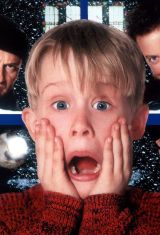


Home Alone feels like the kind of holiday film that should be too familiar to surprise me anymore, yet it still works almost every time I return to it. I watch it knowing the broad shape of the story: Kevin McCallister is accidentally left behind when his large family rushes away for Christmas travel, and the house becomes his kingdom, his playground, and eventually his fortress. What makes the film last is not only the famous traps or the festive setting. It is the way it captures childhood imagination, family frustration, loneliness, fear, pride, and the strange thrill of being trusted by absolutely no one and then proving you can manage more than they expected.
What I enjoy most is how Home Alone balances warmth with chaos. It is a Christmas movie, a family comedy, a slapstick adventure, and a small coming-of-age story all at once. Kevin begins the film feeling ignored, judged, and overwhelmed by relatives who treat him like the youngest problem in a crowded house. Once he is alone, the movie turns his wish for independence into both fantasy and challenge. At first, freedom means jumping on the bed, eating whatever he wants, watching grown-up movies, and making the house his own. Later, it means facing fear, protecting his home, and understanding that missing family is very different from simply wanting quiet.
A Christmas Suburb That Feels Cozy and Enormous
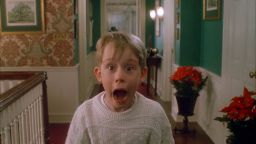
The aesthetic of Home Alone is one of its strongest qualities. The McCallister house looks warm, detailed, and slightly unreal in the best holiday-movie way. There are reds, greens, heavy curtains, patterned wallpaper, glowing lights, festive decorations, and rooms that feel both elegant and lived in. The house is big enough to become a whole world for Kevin, but it still feels like a family home rather than a fantasy castle.
I like how the film turns ordinary domestic spaces into stages for adventure. A staircase, basement, kitchen, attic, hallway, bedroom, and front door all become important. At first, the house feels too crowded. Then it feels magical. Then it feels lonely. By the final act, it becomes a carefully prepared battlefield of paint cans, ornaments, icy steps, and household objects used with alarming creativity.
The neighborhood also has a strong seasonal mood. Snow, quiet streets, church interiors, decorated homes, and holiday music create a nostalgic atmosphere that makes the comedy feel softer around the edges. Even when the film becomes loud and physical, the Christmas setting keeps it grounded in family emotion.
Kevin McCallister Is Clever, Annoying, Brave, and Believable
Kevin is the reason the film works. He is not written as a perfect child, and that matters. He can be rude, dramatic, stubborn, and impulsive. At the same time, he is imaginative, observant, resourceful, and deeply sensitive. I like that the movie allows him to be both the victim of family chaos and partly responsible for some of the conflict around him.
Macaulay Culkin’s performance gives Kevin a rare mix of confidence and vulnerability. His facial expressions are iconic because they are exaggerated enough for comedy but still connected to real childhood feelings. When Kevin celebrates being alone, I believe his excitement. When the house becomes too quiet, I also believe his fear.
What makes Kevin memorable is his growth. He does not suddenly become an adult. He remains a child with a child’s logic, but he learns how to act with courage. He shops, cleans, plans, hides, improvises, and confronts danger in ways that are funny because they are exaggerated, yet satisfying because they come from his personality. He survives by being imaginative rather than physically powerful.
The Wet Bandits Turn Threat Into Slapstick Comedy
Harry and Marv are essential to the film’s personality. They are criminals, but the movie presents them as a comic duo whose confidence is much larger than their competence. Their partnership has the rhythm of classic slapstick: one is bossier and more calculating, while the other is clumsier, louder, and easier to confuse. Together, they create danger without making the film too dark for its family audience.
I enjoy how their scenes build from sneaky to ridiculous. Early on, they feel like a genuine threat because Kevin is alone and small. Once Kevin starts preparing the house, the balance shifts. The burglars become trapped inside his imagination, forced to experience every unpleasant surprise he has arranged for them.
The physical comedy is extreme, but it is staged with cartoon timing. Slippery steps, falling irons, swinging paint cans, hot doorknobs, sharp ornaments, and collapsing plans all become part of the film’s rhythm. I know the setup, I know the pain is coming, and I still laugh because the timing is so precise. The movie turns home defense into a giant live-action cartoon.
Family Chaos Gives the Story Its Emotional Base
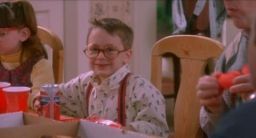
The opening family scenes are loud, crowded, and intentionally stressful. Everyone talks over everyone else. Suitcases are everywhere. Pizza causes conflict. Cousins invade rooms. Adults are distracted. Kevin feels invisible until he misbehaves, and then he becomes the center of blame. I think this opening is important because it explains why Kevin wishes his family would disappear.
The film understands that family love and family irritation can exist at the same time. Kevin’s relatives are not monsters, but they are careless with him. Kevin is not innocent in every moment, but he is overwhelmed. That emotional mess makes the later loneliness more effective. When the house is finally quiet, it feels exciting for him at first because the previous noise was so intense.
Catherine O’Hara gives the mother’s storyline a lot of heart. Her panic, guilt, exhaustion, and determination make the emotional stakes stronger. The film could have focused only on Kevin’s comic adventure, but her journey back to him reminds me that the central story is not just about a child defending a house. It is about a family realizing how much one person matters when he is suddenly missing from the group.
Comedy Built From Timing, Repetition, and Escalation
Home Alone is very carefully structured as comedy. The jokes often begin small, then return later in bigger forms. Kevin’s fear of the basement furnace, his fake conversations, his use of movie dialogue, and his improvised tricks all build through repetition. The film lets me understand Kevin’s tools before the final act uses them at full speed.
I like how the comedy comes from character as much as situation. Kevin is not simply lucky. He thinks like a child who has watched too much television, absorbed household details, and misunderstood just enough adult behavior to become unpredictable. His plans are exaggerated, but they feel connected to how a clever kid might imagine defending himself.
The editing also keeps the humor sharp. Scenes rarely linger too long after the joke lands. The film moves quickly from setup to reaction, especially during the final home invasion sequence. That pace helps the physical comedy feel energetic rather than repetitive.
The Film’s Heart Comes From Loneliness
Beneath the jokes, Home Alone is surprisingly good at showing loneliness. Kevin gets what he wanted, but the fantasy does not stay simple. Eating alone, sleeping alone, hearing noises, and missing family traditions slowly change the mood. The house is fun when it feels like a playground, but it becomes intimidating when Kevin realizes no one is there to protect him.
The church scene with Old Man Marley is one of my favorite parts because it slows the movie down. Marley begins as a neighborhood legend, a scary figure shaped by rumors. When Kevin finally talks to him, the film becomes gentler and more mature. Their conversation is about fear, pride, family distance, and the difficulty of reaching out after hurt feelings have hardened.
That scene gives Kevin emotional perspective. He is not only learning how to handle burglars. He is learning that being angry at family does not mean he wants to lose them. The movie’s best emotional moments are simple, but they work because they are placed inside a comedy that has already made Kevin’s independence feel exciting and incomplete.
Music Gives the Movie Its Holiday Soul
The music is a huge part of why Home Alone feels so enduring. The score gives the film wonder, mischief, suspense, and Christmas warmth. It can make Kevin’s adventure feel magical one moment and lonely the next. The melodies are playful enough for comedy but rich enough to make the family story feel sincere.
I like how the holiday songs and score blend with the setting. The music does not simply decorate the film. It shapes the emotional temperature. When Kevin walks through decorated streets or sits quietly in church, the sound gives the scenes a softness that balances the louder slapstick.
The final stretch also benefits from music because it turns Kevin’s plan into a grand performance. The traps are funny visually, but the score adds momentum and theatrical excitement. It makes the house feel like a stage where every room has its own cue.
Why the Movie Still Feels Rewatchable
Home Alone remains rewatchable because it has several pleasures working at once. As a child fantasy, it offers the thrill of total freedom. As a comedy, it delivers precise physical chaos. As a holiday film, it provides warmth, decoration, and family emotion. As a character story, it gives Kevin just enough growth to make the adventure feel meaningful.
I also think the film lasts because it understands scale. The stakes are huge to Kevin, but the story stays small enough to feel personal. One house, one child, one family mistake, two burglars, and one Christmas return journey are enough. The movie does not need to become bigger because the emotional idea is already clear.
There is also a timeless quality in the central wish. Many children have wanted their family to leave them alone for a while. Home Alone turns that wish into a full adventure, then gently shows why being loved, even by a loud and imperfect family, matters more than winning an argument.
Pros
- Harry and Marv provide excellent slapstick energy
- Comedy timing remains sharp and highly rewatchable
- Family themes add real heart beneath the chaos
- Music gives the film a magical holiday identity
Cons
- The story is simple and familiar after many rewatches
- Some jokes reflect the family-comedy style of its era