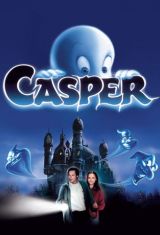
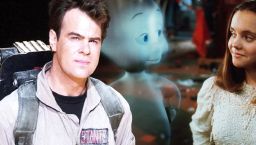
Some family films age because of spectacle, and some age because they carry a feeling that remains easy to recognize. Casper belongs to the second group. Beneath the floating ghosts, slapstick haunted-house comedy, and very 1990s visual effects, this is a movie about loneliness, grief, awkward friendship, and the wish to be seen without frightening everyone away. I think that is why the film still has a soft place in pop culture. It is not only a ghost story for children. It is a gentle fantasy about a girl who feels displaced, a father who cannot let go of the past, and a ghost who wants one ordinary human connection more than any supernatural power.
Whipstaff Manor Is the Perfect Kind of Family-Movie Haunted House
The setting does a lot of work before the story even settles in. Whipstaff Manor feels huge, dusty, strange, and theatrical, but not so terrifying that younger viewers are pushed away. It is gothic enough to create mystery, yet playful enough to support comedy. The mansion looks like the kind of place where secrets, inventions, hidden rooms, and ridiculous ghost behavior could all exist together.
I like that the house is not just a spooky backdrop. It represents unfinished emotional business. Casper is trapped there. The Ghostly Trio treats it like their private playground. Carrigan sees it as a path to wealth. Dr. Harvey sees it as a place where the supernatural might finally connect him to his late wife. Kat sees it as one more unwanted stop in a life where she has already moved too much. The mansion means something different to everyone, which makes it more memorable than a simple haunted location.
Casper Works Because He Is Kind Before He Is Funny
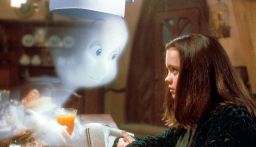
Casper’s design is soft, rounded, and approachable, but the character’s real charm comes from his emotional need. He is not trying to scare people. He is not interested in power. He is lonely. Universal’s synopsis describes him as a friendly but lonely young ghost who is looking for a friend, and that simple description captures the heart of the movie.
That loneliness gives the comedy a more tender foundation. Casper can be cute and silly, but the movie never completely forgets that he is a childlike spirit isolated from normal life. He watches people from the outside. He wants to belong. He wants Kat to see him as more than a supernatural oddity. That emotional clarity makes the film warmer than many louder family fantasies.
-
Casper’s friendliness makes the ghost premise feel gentle instead of frightening;
-
His loneliness gives the story an emotional center;
-
His connection with Kat turns the film into more than a haunted-house comedy;
-
The character design keeps him readable and appealing for younger viewers;
Christina Ricci Gives Kat the Right Mix of Sarcasm and Vulnerability
Kat Harvey could have been written as a generic lonely teenager, but Christina Ricci gives her more texture. Kat is sharp, guarded, and dryly funny, yet she also feels emotionally tired. She has followed her father from place to place, watched him chase ghosts in more than one sense, and learned to protect herself with skepticism.
I enjoy how Ricci plays Kat as someone who wants connection but does not want to look like she needs it. That makes her bond with Casper feel more natural. She does not instantly become delighted by the supernatural. She questions it, resists it, and slowly allows herself to respond. The movie needs that grounded performance because so much around her is broad and effects-driven.
Bill Pullman Makes Dr. Harvey More Than a Comic Ghost Expert
Bill Pullman’s Dr. James Harvey is one of the film’s most important emotional anchors. On the surface, he is a ghost therapist, which is already a wonderfully odd family-movie job title. But beneath the supernatural comedy, he is a grieving husband who has turned his pain into a mission. He says he wants to help spirits move on, but he is also trying to find a way back to his wife.
This gives the movie a surprisingly adult layer. Dr. Harvey is loving, but his grief has made him restless. Kat suffers because he cannot stay still. His search for closure keeps pulling them into strange situations. I like that Casper allows the father’s story and the daughter’s story to mirror each other. Both are about wanting someone who is no longer fully reachable.
The Ghostly Trio Bring Chaos, but They Also Change the Tone
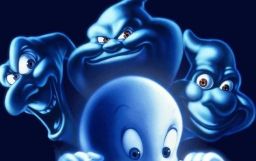
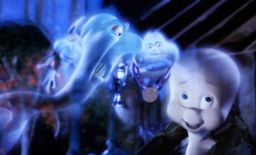
Stretch, Stinkie, and Fatso are the film’s loudest source of cartoon energy. JustWatch lists Joe Nipote as Stretch, Joe Alaskey as Stinkie, and Brad Garrett as Fatso, with Malachi Pearson as Casper’s voice. The trio’s job is simple: interrupt softness with chaos. They are rude, messy, hungry, theatrical, and delighted by the chance to make humans miserable.
I have mixed feelings about them, but I understand why they are necessary. Without the Ghostly Trio, the movie might become too gentle and sad. With them, Casper becomes more energetic and broadly comic. Their scenes are often the most exaggerated parts of the film, and some jokes feel very tied to the 1990s. Still, they give the movie a louder personality and help balance Casper’s tenderness with slapstick disorder.
-
Stretch, Stinkie, and Fatso add broad cartoon comedy;
-
Their chaotic behavior contrasts with Casper’s gentleness;
-
The trio makes Whipstaff Manor feel more alive and unpredictable;
-
Some of their humor feels more dated than the film’s emotional material;
Carrigan and Dibs Make the Treasure Plot Feel Like a Cartoon Villain Routine
Cathy Moriarty’s Carrigan and Eric Idle’s Dibs give the movie its greed-driven plot. Carrigan inherits the mansion, discovers the possibility of hidden treasure, and becomes determined to claim it. Dibs follows her as a nervous, scheming assistant whose loyalty is always conditional. They are not subtle villains, but subtlety is not really what Casper is built for.
I like Carrigan most as a live-action cartoon character. She is sharp, theatrical, selfish, and always slightly too big for the room. Dibs adds a different comic texture because Eric Idle plays him with slippery impatience. Their scenes are not as emotionally strong as Kat and Casper’s material, but they give the story a practical reason for everyone to care about the mansion.
The Movie Is Really About Grief Disguised as a Ghost Comedy
The strongest part of Casper is how openly it deals with grief while still remaining a family fantasy. Kat misses stability. Dr. Harvey misses Amelia. Casper misses being alive, even if he does not fully understand every piece of his own past at first. The film wraps those feelings inside jokes, effects, and mansion adventures, but the sadness is always present.
I think this is why Casper feels more emotional than many people remember. The movie does not use death only as a spooky concept. It uses it as a question: how do people continue when someone is gone? Dr. Harvey tries to communicate with spirits. Kat tries to act strong. Casper tries to make a friend. Each response is different, but all of them come from absence.
The Friendship Between Kat and Casper Is Sweet Without Being Too Heavy
Kat and Casper’s connection is the heart of the movie. Rotten Tomatoes summarizes the central relationship around Casper quickly bonding with Kat after Dr. Harvey arrives at the mansion, while complications come from Casper’s ghostly state and his troublesome uncles. That dynamic works because both characters are outsiders in different ways.
Kat is alive but emotionally guarded. Casper is dead but emotionally open. They meet somewhere in the middle. Their friendship has a gentle, almost innocent sadness to it because the movie knows they cannot simply become normal friends. The famous human-Casper moment works because it gives the film one brief fantasy of ordinary connection before reality returns.
-
Kat and Casper connect through shared loneliness;
-
Their friendship gives the film its soft emotional center;
-
The supernatural barrier keeps the relationship bittersweet;
-
The movie treats first affection with warmth rather than cynicism;
The Visual Effects Are Dated, but Historically Charming
Casper was released in 1995, and its effects naturally carry the look of that era. Some ghost movements, transformations, and facial expressions now feel visibly digital in a way modern viewers will notice. But I do not think that ruins the film. In some ways, the dated effects are part of its charm.
The film arrived during a period when family movies were experimenting with live-action and computer-generated characters. Casper himself still works better than some of the more chaotic effects because his design is simple and emotionally readable. The Ghostly Trio can feel more rubbery and exaggerated, but that also fits their cartoon function. The effects may not be seamless now, but they still have personality.
The 1990s Atmosphere Is a Big Part of the Appeal
Casper feels unmistakably like a 1990s family movie. The pacing, jokes, cameos, emotional sincerity, set design, villain energy, and effects all come from a particular era. For some viewers, that may make the film feel old-fashioned. For others, it is exactly the reason to revisit it.
I like the movie’s 90s texture because it feels less polished than modern franchise family entertainment. It has weird tonal swings, broad comedy, heartfelt speeches, spooky sets, and a willingness to be sentimental without irony. That combination can feel messy, but it also feels human. The film is not afraid to be sweet, which is part of why it still works.
The Cameos and Pop Culture Jokes Are Fun, but Not the Main Reason to Watch
Casper includes several pop culture jokes and cameo moments that were clearly designed to surprise audiences. Some of them remain funny, while others mostly function as little time capsules. They show the movie’s playful attitude and its willingness to treat the haunted mansion as a space where almost anything can happen.
For me, these jokes are enjoyable extras rather than the film’s core strength. The movie lasts because of Kat, Casper, and the grief story, not because of every quick reference. Still, the cameos add to the sense that Casper is a family fantasy made with a lot of mischievous studio-era energy.
-
The cameo humor adds surprise and playful variety;
-
Some references feel like charming 1990s time capsules;
-
The best jokes support the haunted-house chaos;
-
The emotional story matters more than the pop culture gags;
The Music Helps the Movie Feel More Magical Than Scary
James Horner’s score gives Casper much of its emotional lift. The music helps the mansion feel mysterious, but it also gives the story a sweeping sadness and wonder. Without that score, the film might feel much more like a simple ghost comedy. With it, Casper becomes softer, more romantic, and more openly sentimental.
I especially appreciate how the music supports the film’s bittersweet moments. Casper’s loneliness, Kat’s emotional guardedness, and Dr. Harvey’s grief all need a tone that is bigger than everyday dialogue. The score gives those feelings shape. It tells the viewer that the movie is not only joking about ghosts. It is asking us to care about them.
The Family-Film Balance Mostly Works
Casper has to balance a lot: ghost comedy, grief, teen loneliness, slapstick, villains, treasure hunting, romance, and supernatural rules. Not every piece fits perfectly, but the overall balance works better than it probably should. The movie stays friendly enough for children while offering emotional material that adults can understand differently.
I think this is one reason Casper remains rewatchable. As a child, the ghosts and mansion may be the main attraction. As an adult, Dr. Harvey’s grief and Kat’s exhaustion become much more visible. The movie changes slightly depending on the viewer’s age, which is a quality many lasting family films share.
The Story Is Simple, but the Emotional Motifs Are Clear
The plot is not complicated. A mansion is haunted. A greedy owner wants treasure. A father and daughter arrive. A friendly ghost wants connection. Mischievous ghosts create problems. But the simplicity works because the emotional motifs are clear. The film is about home, memory, friendship, mourning, and the desire to be loved as one is.
I like that Casper does not need a complex mythology to make its point. The supernatural rules are flexible and sometimes silly, but the emotional rules are stable. Casper wants a friend. Kat wants a place to belong. Dr. Harvey wants closure. Those wants are easy to understand, which keeps the movie grounded even when the plot becomes cartoonish.
-
The treasure plot gives the story forward movement;
-
The grief theme gives the fantasy emotional depth;
-
The mansion ties the characters’ goals together;
-
The simple structure makes the film easy for family audiences to follow;
Where Casper Feels Most Effective
Casper is most effective when it slows down and lets the loneliness breathe. The quiet moments between Kat and Casper, the hints of Casper’s past, and Dr. Harvey’s unresolved grief are stronger than the loudest slapstick scenes. The film may be remembered as a friendly ghost comedy, but its best scenes are built around tenderness.
I also think the movie succeeds because it uses the supernatural to talk about very ordinary human needs. Everyone wants to be seen. Everyone wants a home. Everyone wants some form of goodbye or reunion. Casper makes those ideas simple enough for children and emotionally familiar enough for adults.
Where Casper Feels Less Strong
The weakest parts are the moments where the comedy becomes too broad or the effects become too busy. The Ghostly Trio can be funny, but their scenes sometimes pull the movie away from its more touching center. Carrigan and Dibs are entertaining, but the treasure plot is not as memorable as the emotional material.
The film’s age also shows in certain jokes, digital effects, and tonal choices. Viewers who expect modern pacing or seamless CGI may find parts of Casper dated. Still, I think the dated qualities are easier to forgive because the movie has a sincere emotional core. It may look like a 1995 film, but its loneliness still feels current.
Pros
- Casper is a gentle, memorable central character with real emotional appeal
- Christina Ricci gives Kat a strong mix of sarcasm, sadness, and vulnerability
- Whipstaff Manor creates a charming haunted-house setting for family fantasy
- The film balances ghost comedy with surprisingly touching themes of grief and friendship
- The 1990s atmosphere, music, and practical fantasy tone give the movie nostalgic charm
Cons
- Some visual effects now look dated compared with modern CGI standards
- The Ghostly Trio’s slapstick humor can feel too broad in places
- The treasure plot is less emotionally interesting than Kat, Casper, and Dr. Harvey’s grief story
- Some pop culture jokes and cameos feel very tied to the 1990s
- The tonal mix of comedy, grief, romance, and villain antics can feel uneven at times