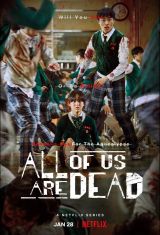
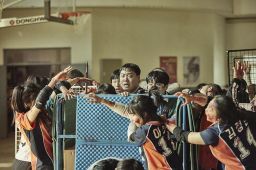
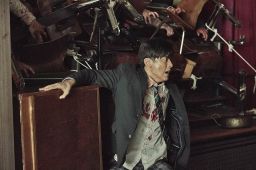

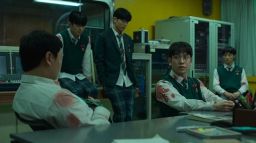
I started All of Us Are Dead expecting another outbreak story, but the series quickly felt sharper because of where it places the crisis. A high school is already a pressure cooker before anything monstrous arrives: friendships, crushes, bullying, class divides, exams, rumors, teachers, parents, and the quiet fear of not fitting in. The show takes that familiar teenage environment and turns every hallway, classroom, stairwell, cafeteria, and rooftop into a survival space. What impressed me most is how often the series makes ordinary school details feel threatening. A desk can become cover. A speaker announcement can create panic. A locked door can separate friends in seconds. The horror works because the setting feels recognizable before it becomes unbearable.
Hyosan High Makes the Story Feel Personal
The school setting is the series’ strongest decision. Hyosan High is not just a backdrop where frightening events happen. It gives the story its shape. The students know the classrooms, corridors, bathrooms, science lab, gym, and rooftop, but once the outbreak begins, that familiarity becomes strange. Places built for routine suddenly feel like traps.
I liked how the show turns school architecture into tension. Long hallways become dangerous because there is nowhere to hide. Classrooms feel safe for a moment, then too small. Windows, doors, desks, and storage rooms become tactical details. The series understands that survival horror feels stronger when the viewer can imagine being stuck in the same space.
The Teen Characters Carry the Emotional Weight
The main students are the reason the series works beyond shock value. Nam On-jo, Lee Cheong-san, Choi Nam-ra, Lee Su-hyeok, and the wider group all bring different fears and instincts into the crisis. Some characters think quickly. Some freeze. Some try to protect others. Some make selfish choices. That mix gives the show its emotional unpredictability.
I found the group dynamic especially effective because the students still feel like teenagers. They argue at the wrong times, confess feelings when the situation is terrible, hold grudges, panic, and make impulsive decisions. That can be frustrating, but it also feels honest. The series does not turn every student into a perfect action hero. It lets fear make them messy.
-
Nam On-jo gives the story a grounded emotional center;
-
Lee Cheong-san brings loyalty, urgency, and courage to the group;
-
Choi Nam-ra adds restraint, intelligence, and mystery;
-
Lee Su-hyeok gives several scenes a stronger physical presence;
The Horror Works Because It Is Fast and Close
All of Us Are Dead uses speed very well. The infected do not feel slow or distant. They rush, twist, crash into rooms, and overwhelm spaces before characters have time to think. That makes the school feel smaller with every episode. A single noise can become a disaster because danger moves too quickly for careful planning.
I liked that the series often shoots the chaos with a sense of physical pressure. Bodies slam into doors, crowds flood hallways, and students have to make decisions while everything is moving. The horror is not only about what the infected look like. It is about how quickly the situation can become unmanageable.
The Show Understands Social Cruelty as Part of the Fear
What separates All of Us Are Dead from a simpler survival series is that the outbreak does not erase the school’s existing cruelty. Bullying, class resentment, selfishness, shame, and social hierarchy remain present even after everything collapses. In some ways, the crisis exposes those problems more clearly.
I found that part of the show uncomfortable in a useful way. The infected are terrifying, but the human choices can be just as disturbing. Some characters reveal kindness under pressure. Others reveal bitterness or cowardice. The series keeps asking whether people become different in a crisis or whether the crisis simply shows who they already were.
Nam On-jo Gives the Series Its Human Pulse
Nam On-jo is one of the characters I connected with most because she does not feel exaggerated. She is frightened, resourceful, loyal, and emotionally present. Her relationship with her father adds a layer of tenderness that helps the show breathe between more intense sequences. She is not written as invincible, and that makes her easier to care about.
I also liked how On-jo often becomes a point of emotional balance for the group. She is not always the loudest person in the room, but her fear and determination feel believable. In a series with so much chaos, that kind of grounded performance matters.
Cheong-san Makes Loyalty Feel Painful
Lee Cheong-san gives the story some of its most urgent emotional beats. His loyalty to On-jo and his willingness to act under pressure make him easy to root for, but the show does not let his courage feel simple. He is still young. He still makes rash decisions. He still carries fear even when he tries to move forward.
That is what I appreciated about him. The character is brave without becoming unrealistic. He often acts because someone has to, not because he is fearless. That distinction gives his scenes more force. His best moments come from the gap between being terrified and still choosing to move.
Nam-ra Adds Mystery and Quiet Tension
Choi Nam-ra brings a different rhythm to the series. She begins as someone distant from the rest of the class, almost separated by intelligence, status, and personality. As the crisis grows, her quietness becomes more interesting. She does not react like everyone else, and the show uses that difference to create emotional and narrative tension.
I liked Nam-ra because she adds stillness to a series that is often frantic. Her scenes with Su-hyeok are especially useful because they introduce tenderness without fully softening the danger. The show gives her a complicated place in the group, and that makes her one of the more memorable characters.
-
Her calmness contrasts with the panic around her;
-
Her isolation makes her emotional changes more noticeable;
-
Her connection with Su-hyeok adds quieter drama;
-
Her arc gives the series one of its strongest identity conflicts;
The Adults Often Feel Too Far Away
One thing that made the series more stressful for me was how distant adult help feels. Parents, teachers, police, firefighters, military officials, and government systems all exist, but the students are still trapped inside a disaster that they have to face moment by moment. That gap between institutional response and immediate danger is one of the show’s most effective pressures.
The adult storylines can sometimes slow the pace, but they also widen the world beyond the school. They show confusion, delay, sacrifice, and bureaucracy. The students are not alone because nobody cares. They are alone because the situation is too fast, too chaotic, and too large for help to arrive cleanly.
The Pacing Is Addictive, Even When It Feels Overstuffed
All of Us Are Dead has a very bingeable structure. Episodes often end with enough tension to make the next one feel necessary. I rarely felt the show was calm for long. Even quiet scenes carry the knowledge that the situation can break open again at any second.
At the same time, the series can feel overstuffed. There are many characters, side plots, emotional conflicts, social issues, and action sequences competing for space. Some threads feel stronger than others. Still, the overall momentum kept me watching because the central survival situation remains clear and urgent.
The Visual Style Makes the School Feel Claustrophobic
The visual design is not built around gothic shadows or elegant horror imagery. It is built around everyday spaces becoming hostile. Bright classrooms, school uniforms, tiled corridors, stairwells, rooftops, and cafeteria areas become frightening because they were not designed for survival. That contrast gives the series a strong visual identity.
I liked the way the show uses crowds and tight spaces. The horror often comes from pressure rather than mystery. There are too many bodies, too little space, too many blocked exits, and too little time. The school becomes a maze where the students know the layout but cannot trust any route.
-
Hallways create fast, high-pressure chase scenes;
-
Classrooms make temporary safety feel fragile;
-
Rooftop scenes add open space without real comfort;
-
School uniforms make the chaos feel even more unsettling;
The Emotional Drama Makes the Horror Stick
What I remember most from All of Us Are Dead is not only the action. It is the way fear changes relationships. Friends become closer, secrets come out, selfish choices create lasting damage, and small gestures suddenly feel enormous. The show understands that survival stories need emotional stakes or the danger becomes repetitive.
The teenage drama sometimes becomes melodramatic, but I think that fits the material. Everything feels intense at that age even before disaster. Add isolation, fear, hunger, injury, and uncertainty, and every confession or argument becomes larger. The series uses that heightened emotion as part of its identity.
The Series Works Best When It Stays With the Students
For me, All of Us Are Dead is strongest when it stays close to the trapped students. Their immediate problems are simple and powerful: find safety, protect each other, get food, contact help, escape a room, cross a hallway, survive the next few minutes. Those goals are clear enough to make every scene tense.
Whenever the show moves too far into outside systems, the urgency sometimes softens. The wider response is important, but the heart of the series is inside Hyosan High. That is where the fear feels physical, the friendships feel tested, and the choices feel impossible.
The Korean Drama Energy Gives the Genre Extra Emotion
All of Us Are Dead works partly because it brings strong Korean drama instincts into survival horror. The series is not afraid of big feelings, long emotional stares, social criticism, friendship bonds, family devotion, and painful moral choices. That gives the genre material more emotional texture.
I liked that the show lets characters cry, confess, break down, and argue without treating emotion as weakness. In many action-heavy horror stories, characters become too hardened too quickly. Here, they remain young people under impossible pressure. That vulnerability is what makes the series feel more personal.
Pros
- Strong school setting that turns familiar spaces into tense survival zones
- Memorable teen characters with believable fear, loyalty, and conflict
- Fast, physical horror sequences that create constant pressure
- Emotional Korean drama elements make the story more than simple action horror
- Nam On-jo, Cheong-san, and Nam-ra give the series a strong character core
Cons
- The season can feel overstuffed with side plots and secondary characters
- Some emotional beats lean heavily into melodrama
- Outside-school storylines sometimes slow the strongest survival tension
- The pacing can feel exhausting during longer binge sessions
- Certain character decisions may frustrate viewers who prefer cleaner logic