

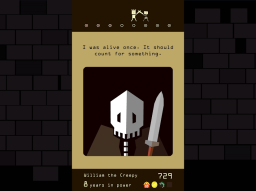
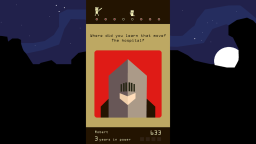


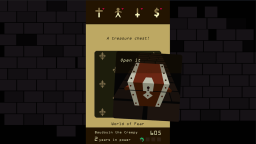
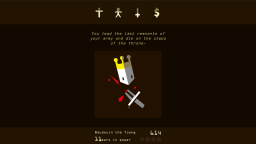
Reigns is proof that a simple idea can create a surprisingly deep gaming experience. The entire game can be explained in a few words: make decisions, manage a kingdom, and try to survive the consequences. But behind this simple structure is a clever strategy system where every choice creates new problems, opportunities, and unexpected stories.
Instead of controlling armies, exploring huge worlds, or managing complicated menus, Reigns gives me a deck of situations and asks for quick decisions. Each card represents a problem, request, opportunity, or event. I choose one direction, and the kingdom reacts.
The result is a game that feels simple at first but becomes increasingly strategic as I understand the relationships between different parts of my kingdom.
The Product List Places Reigns as a Casual Game
Your product list marks Reigns as an active Casual product, with the type Combine game and the date 26-10-2023. The entry also includes Android and iOS versions, showing that the game is designed as an accessible mobile-friendly experience.
This classification fits because Reigns focuses on quick sessions, simple controls, and strategic decisions rather than traditional action gameplay.
Steam describes Reigns as a game where players sit on the throne as a medieval monarch and make choices by swiping left or right, influencing the kingdom through decisions
-
The uploaded list identifies Reigns as active;
-
The category is Casual;
-
The product type is Combine game;
-
The strongest SEO intent is around card choices, kingdom management, strategy, decisions, and mobile gameplay;
The Swipe Mechanic Creates a Unique Experience
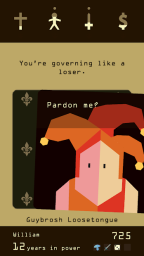
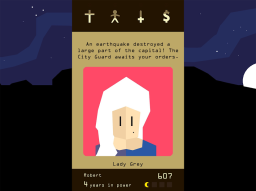
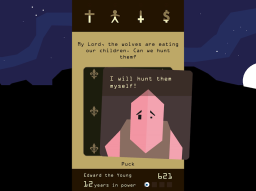
The most recognizable feature of Reigns is the swipe-based decision system. Every situation appears as a card, and I choose between two possible actions. The controls are extremely simple, but the consequences can become complicated.
I think this is the biggest reason the game works so well. The interface is easy enough for anyone to understand, but the decisions require attention. A single choice can affect relationships, resources, public opinion, and the future of the kingdom.
Simple Controls Hide Complex Strategy
At first, Reigns may look like a casual game that can be played without much thought. However, successful rulers quickly discover that every decision requires balance.
The challenge is not choosing the “correct” answer. There often is no perfect option. The challenge is understanding trade-offs and deciding which problem is the most important at that moment.
-
Players must balance different kingdom needs;
-
Every decision creates future consequences;
-
Short-term solutions can create long-term problems;
-
Strategy comes from understanding patterns;
Managing a Kingdom Feels Surprisingly Personal
One of the strongest parts of Reigns is how quickly the player becomes attached to their role. Even though the visuals are simple and the gameplay is based on cards, every decision feels connected to the story of the ruler.
I enjoy this because the game creates a feeling of responsibility. A random card does not feel random anymore when it represents the future of the kingdom. A small decision about one person can eventually affect everything.
The Storytelling Is Built Through Choices
Reigns does not tell its story through long conversations or cinematic scenes. Instead, the story emerges from decisions.
This approach makes every playthrough different. One ruler may become respected and successful, while another may create chaos through completely different choices. The player is not only experiencing a story but creating one.
The Card System Encourages Replayability
Replay value is one of Reigns’ biggest strengths. Since decisions lead to different outcomes, restarting does not feel like repeating the exact same experience.
I like games where failure creates curiosity instead of frustration. In Reigns, an unsuccessful run often makes me want to try again and see what would happen with different choices.
-
Different decisions create different situations;
-
Players can experiment with alternative strategies;
-
Unexpected outcomes encourage replaying;
-
Short sessions make experimentation easy;
The Writing Creates Humor and Personality
Although the game focuses on management and strategy, Reigns does not take itself too seriously. Many situations include humor, unusual events, and surprising scenarios.
I think this balance is important. A serious kingdom management simulator could become stressful, but Reigns uses humor to keep the experience light while still maintaining meaningful choices.
The Minimalist Visual Style Works Well
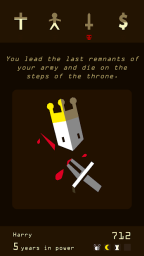
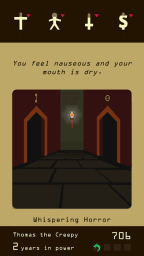
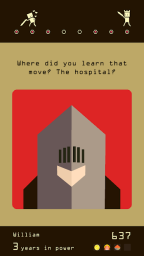
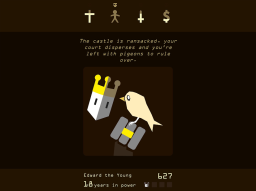
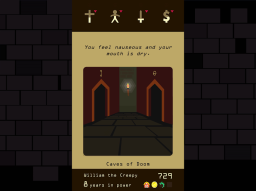
Reigns does not rely on detailed graphics. Instead, it uses a simple card-based presentation that puts attention on decisions and writing.
I think this style fits perfectly. More complex visuals could distract from the main idea. The simplicity makes the game feel clean, focused, and easy to understand.
The Game Is Perfect for Short Sessions
One of Reigns’ biggest advantages is how well it works on mobile devices. A single decision can take only a few seconds, making the game easy to play during short breaks.
However, short sessions do not mean shallow gameplay. The strategic thinking behind each choice can become surprisingly deep.
-
Easy to start and play anywhere;
-
Short decisions create fast progress;
-
The game respects limited playtime;
-
Quick sessions still contain meaningful strategy;
The Challenge Comes From Balancing Everything
The hardest part of Reigns is maintaining balance. Focusing too much on one group or resource can create problems elsewhere.
I like this because it creates tension without requiring complicated mechanics. The player constantly evaluates priorities and thinks about consequences.
The Game Rewards Experimentation
Reigns is not designed around finding one perfect strategy. It encourages curiosity. Players learn by trying different approaches and discovering what happens.
This makes the game feel more like an interactive story experiment than a traditional strategy title.
The Mobile Design Is One of Its Greatest Strengths
Many mobile games are designed around repetitive actions, but Reigns uses the platform differently. The swipe mechanic feels natural on a phone, and the short structure fits mobile habits.
I think this is an excellent example of designing a game around a platform rather than simply adapting another type of game to mobile.
The Best Audience Is Strategy and Story Fans
Reigns is ideal for players who enjoy decision-making, strategy, interactive stories, and games where choices matter.
It may be less suitable for players who want action, exploration, multiplayer competition, or visually complex adventures.
-
Best for fans of strategy and interactive storytelling;
-
Great for players who enjoy making difficult choices;
-
Strong for mobile gamers who prefer short but meaningful sessions;
-
Less suitable for players looking for action-heavy gameplay;
Where Reigns Feels Most Effective
Reigns feels strongest when it combines simple mechanics with meaningful consequences. The game proves that interesting decisions can be more important than complicated controls.
The experience works because every card feels like a small moment in a larger story. The player is constantly shaping the future of the kingdom.
Where Reigns Feels Less Strong
The simplicity that makes Reigns accessible can also become a limitation. Players who prefer longer adventures or more traditional strategy systems may find the experience too minimal.
The game depends heavily on enjoying decision-based gameplay. Without interest in reading situations and considering choices, much of the appeal disappears.
Pros
- Strong replay value thanks to different outcomes
- Simple controls hide surprisingly deep strategy
- Creative storytelling built around player choices
- Short sessions make it easy to play anywhere
Cons
- Some players may want more traditional strategy mechanics
- Repeated playthroughs can feel similar after long sessions
- Lack of action gameplay limits its audience