






Coin Master is built around one of the simplest loops in mobile gaming: spin, collect, build, attack, raid, repeat. That structure sounds almost too basic, but the game understands how to make small rewards feel constant. Every spin carries a tiny promise. Maybe I get coins. Maybe I earn shields. Maybe I attack another village. Maybe I raid someone and walk away with a pile of loot. The game does not ask for deep strategy at first. It asks for curiosity, routine, and the willingness to press one more spin because the next result might be better than the last one. That is exactly why Coin Master can feel so casual and so sticky at the same time.
The Spin Wheel Is the Whole Center of the Experience
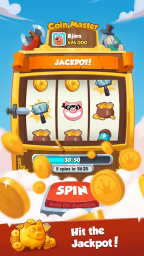
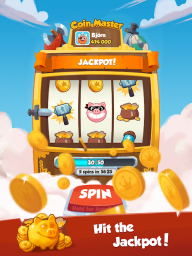
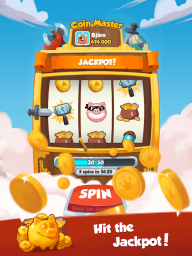
Coin Master’s main mechanic is the spin wheel. Google Play describes the game around spinning the wheel to discover fortune, attack friends’ villages, steal coins, win gold sacks, build villages, and collect shields to protect against attacks. That wheel is more than a button. It is the pacing device for the entire game.
I like how immediately understandable the wheel is. I do not need to study a long tutorial before the game starts making sense. I spin, see the result, and react. The randomness gives the game its tension. A good result feels lucky. A weak result feels like a reason to spin again. The whole design is built around that little emotional swing between reward and anticipation.
-
Spins create the main rhythm of play;
-
Coins support village building and upgrades;
-
Attack and raid results add social conflict;
-
Shields protect the village from other players;
Village Building Gives the Rewards a Visible Purpose
Coins matter because they turn into village progress. Without the village-building layer, Coin Master would feel like only a slot-style reward loop. The villages give the player something to upgrade, complete, and move beyond. App Store descriptions highlight building village after village on the journey to the top, which is a simple but effective progression fantasy.
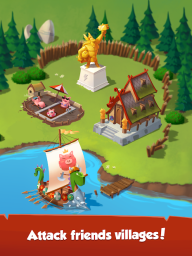
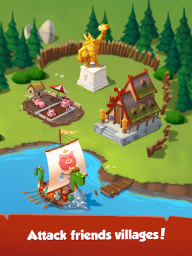
I find the village structure useful because it makes every pile of coins feel less abstract. I am not only collecting currency for the sake of watching numbers rise. I am spending it on buildings and watching a themed village come together piece by piece. The upgrades are simple, but they give the game a visual sense of progress.
Attacks Make the Game Feel Less Solitary
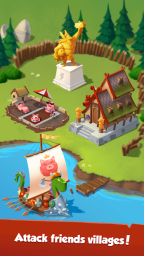
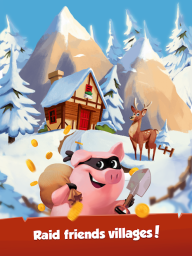
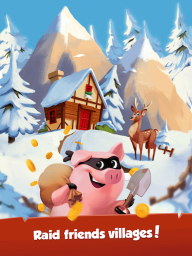
Attacking other players’ villages is one of Coin Master’s most memorable features. It gives the game a mischievous social edge. Instead of only building quietly, I can damage someone else’s progress and earn rewards from the action. That makes the world feel more connected, even if the interaction is very light.
The attack system is not deep competitive gameplay, but it does create emotion. It feels satisfying to hit a target when another player has no shield. It feels annoying when my own village gets damaged. That annoyance is intentional. It gives me a reason to care about shields, repairs, and returning to the game.
-
Attacks add playful conflict to the casual loop;
-
Damaged villages create a reason to return and repair;
-
Shields make defense part of the reward system;
-
Social targeting gives the game more personality than solo spinning alone;
Raids Are the Most Exciting Reward Result
Raids feel more dramatic than ordinary coin rewards because they turn the spin result into a small treasure-hunting moment. The game lets players steal coins from other villages, and that gives raids a stronger sense of payoff than a normal reward. Google Play specifically frames the game around attacks, raids, stealing coins, and building your own village.
I enjoy raids because they break up the rhythm of regular spinning. A raid gives me a short interactive moment and the feeling that I might uncover something bigger. It is still a simple mechanic, but it feels more active than only watching coins arrive. The game is good at turning tiny interruptions into events.
The Card Collection Adds Another Reason to Keep Playing
Coin Master is not only about villages and coins. The App Store listing also emphasizes collecting cards, completing sets, and unlocking the next village in the larger adventure. This collection layer gives the game another long-term hook beyond direct building.
I like card sets because they create a different kind of progress. Coins are immediate. Cards are more patient. Completing a set can feel rewarding because it requires accumulation, luck, trading, or event participation. That gives players a reason to care about chests and repeated sessions even when village upgrades are moving slowly.
-
Cards add collection goals beyond coins;
-
Completing sets creates longer-term motivation;
-
Chests make rewards feel more varied;
-
Card trading can make the social layer more useful;
Friends and Teams Make the Game More Social
Coin Master leans heavily into social play. App Store descriptions mention joining Facebook friends and millions of players around the world, teaming up with friends, going on expeditions, or joining a crew of fellow players. That social framing matters because the mechanics are simple. Friends make the repetition feel more personal.
I think the game is more entertaining when friends are involved. Attacking a random player is one thing. Attacking someone I know has a different comic sting. Trading cards, joining teams, and comparing progress gives the game more reasons to exist beyond the wheel itself. Coin Master is casual, but it understands that social pressure can make casual play last longer.
The Events Keep the Loop From Feeling Completely Static
Coin Master’s core loop can become repetitive, so events are important. App Store descriptions mention an ever-changing lineup of special events with unique challenges and surprises. These events give returning players something new to check, even if the basic actions remain the same.
I like events when they create a clear short-term goal. A normal session might be about spinning and building. An event can make me focus on specific rewards, extra spins, card progress, team goals, or limited challenges. The event layer gives the game a sense of motion, which is useful for a title that depends so much on daily habits.
-
Events give players fresh reasons to return;
-
Limited rewards can make normal spins feel more valuable;
-
Team events make social play more meaningful;
-
Frequent events help soften the repetition of the core loop;
The Game Feels Best in Short Sessions
Coin Master is strongest as a short-session mobile game. A few spins can feel relaxing, especially when I only want a quick distraction. The game does not demand full concentration for long periods. It is easy to open, collect, spin, build, and close.
Longer sessions are where the repetition becomes more visible. The wheel is fun because it is fast and unpredictable, but spinning repeatedly without enough variation can start to feel mechanical. I think Coin Master works best when treated like a small daily habit rather than a game meant for long, focused play.
The Visual Style Is Bright, Clear, and Friendly
Coin Master’s visuals are colorful and accessible. Villages are themed, characters are cartoonish, rewards are large and readable, and the spin wheel is designed to feel exciting without requiring much explanation. The look is not complex, but it fits the purpose.
I like that the game makes progress easy to see. A village starts incomplete and gradually fills out. Rewards pop clearly. Shields, coins, attacks, and raids all have obvious visual language. This matters because Coin Master needs to communicate quickly. The player should always know whether they won coins, triggered an attack, or protected a village.
-
Bright colors make rewards feel more exciting;
-
Village themes give progression a visual payoff;
-
Cartoon style keeps attacks and raids playful rather than harsh;
-
Simple icons make the game easy to understand quickly;
The Slot-Style Design Is Both the Hook and the Risk
The spin wheel gives Coin Master its addictive rhythm, but it also creates the game’s biggest concern. The game is built around chance, limited spins, rewards, and repeated attempts. App Store listings explicitly note in-game purchases, including randomized items. That is important for players and parents to understand.
I do not think the chance-based structure automatically makes the game bad. It is a common part of many casual mobile games. But it does mean the experience should be approached carefully. The excitement of “one more spin” is the same thing that can make the game hard to put down. Coin Master is most enjoyable when spending and playtime stay under control.
The Free-to-Play Model Is Very Present
Coin Master is free to download, but the game clearly uses free-to-play systems: spins, coins, offers, events, purchases, chests, and limited rewards. The App Store disclosure about randomized in-game purchases is especially worth noticing. The game constantly gives players reasons to want more resources.
I think the best approach is to treat purchases as optional and set limits before playing. If the game is only fun when spending, that is a warning sign. Coin Master can be entertaining as a casual routine, but the monetization layer is designed to be tempting. That is not a hidden part of the experience. It is central to how the game works.
-
Free access makes the game easy to try;
-
Limited spins create natural stopping points;
-
Purchases can speed up progress but may become tempting;
-
Randomized items make spending feel less predictable;
The Social Competition Can Be Funny or Frustrating
Coin Master turns friends into targets, which can be funny. A friend raids me, I attack back, they shield their village, and the cycle continues. This gives the game a playful rivalry that fits the casual tone. It is not serious strategy, but it creates little stories between players.
At the same time, being attacked repeatedly can feel annoying. Progress can feel fragile when other players damage a village or steal coins. The game uses that frustration to push defense, repair, and return visits. Whether that feels fun or irritating depends heavily on the player’s tolerance for social disruption.
The Village Themes Add a Light Sense of Adventure
Coin Master’s villages give the game a loose adventure structure. The App Store descriptions mention building magnificent villages and advancing through thousands of levels. Each village acts like a new stop, even if the mechanical process remains familiar.
I like the themed villages because they create variety without complicating the game. The player is still spinning, collecting, and building, but the visual setting changes enough to suggest movement. It is a simple trick, yet it works. A new village feels like a small reward for completing the last one.
The Game Is Extremely Easy to Understand
One reason Coin Master has broad appeal is that it does not require advanced gaming skill. There are no complex controls, no difficult combat systems, and no long strategy guide needed for basic play. The loop is direct: spin, earn, build, attack, raid, protect.
This accessibility helps the game reach players who might not identify as traditional gamers. Someone can play casually while waiting, relaxing, or checking in during the day. Coin Master is closer to a reward-driven social habit than a skill-heavy challenge, and that identity is very clear.
-
No complex controls are required;
-
Sessions can be very short;
-
Progress is easy to understand visually;
-
The social systems make simple actions feel more personal;
The Strategy Is Light, but Not Completely Absent
Coin Master is not a deep strategy game, but there are still small decisions to make. When should I spend coins on village upgrades? Should I build quickly or save resources? How should I use shields? Which cards should I trade? When should I participate in events? These decisions do not create hardcore strategy, but they give the game more shape than pure spinning alone.
I think the light strategy is enough for the kind of game Coin Master wants to be. It gives casual players something to think about without slowing down the loop. The game is not asking me to master a complex system. It is asking me to manage luck, resources, and timing in a simple social economy.
The Reward Timing Is Carefully Designed
Coin Master is very good at reward timing. Spins are quick. Coins arrive often. Attacks and raids interrupt the pattern. Villages create upgrade goals. Cards create collection goals. Events create limited-time goals. The game rarely leaves the player without something to chase.
That design is impressive, but it also deserves caution. Constant goals can make a game feel lively, but they can also make it difficult to stop. Coin Master’s best and most risky quality is that it always seems to have one more small thing to do. One more spin. One more upgrade. One more chest. One more raid.
-
Frequent small rewards keep the game moving;
-
Raids and attacks break up ordinary coin collection;
-
Village upgrades create short-term spending goals;
-
Events and cards create longer-term reasons to return;
The Game Works Better as a Casual Routine Than a Main Game
Coin Master is not the kind of game I would choose for deep mechanical mastery. It is better as a casual routine. The game fits moments when I want something light, colorful, and low-effort. It does not demand intense focus, and that is part of its charm.
Players who want rich tactics, skill-based competition, or meaningful worldbuilding may find it shallow. But players who enjoy collection loops, social rivalry, upgrades, and chance-based rewards may find it very easy to return to. Coin Master knows its audience well.
Where Coin Master Feels Most Effective
Coin Master feels most effective when the spin wheel gives me a chain of satisfying results. A few coin wins, a raid, a shield, an attack, and a village upgrade can make a short session feel full. The game’s strength is not one huge moment. It is the steady drip of small rewards.
It also works well when friends are part of the experience. Raiding, attacking, trading cards, joining teams, and comparing progress gives the simple loop a social personality. Without that layer, Coin Master would feel much more mechanical. With it, the game becomes a playful rivalry machine.
Where Coin Master Feels Less Strong
The biggest weakness is repetition. The spin-build-attack-raid loop is easy to understand, but it does not change dramatically over time. Villages, events, and cards add variety, yet the main structure remains the same. Players who need mechanical depth may lose interest quickly.
The second weakness is monetization pressure. Limited spins, randomized purchases, special offers, and event rewards can make the game feel very tempting. This is especially important for younger players or anyone sensitive to chance-based reward loops. Coin Master is fun in moderation, but it is designed to pull players back often.
Pros
- Simple spin-based gameplay is easy to understand and quick to start
- Village building gives coins a clear visual purpose and progression path
- Attacks, raids, shields, friends, teams, and card trading add social energy
- Special events, expeditions, chests, and card collections create reasons to return
- Short sessions make the game convenient for casual mobile play
Cons
- The core loop can become repetitive because most progress depends on spinning
- Free-to-play monetization and randomized in-game purchases can create spending pressure
- Chance-based rewards may feel frustrating when spins do not give useful results
- Social attacks and raids can be annoying when they damage recent progress
- The game offers light strategy, but players wanting deep skill-based gameplay may find it shallow