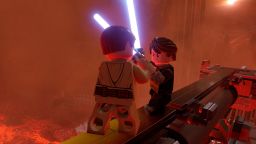
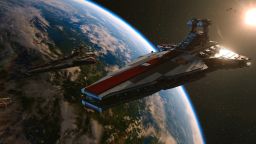
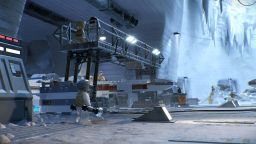
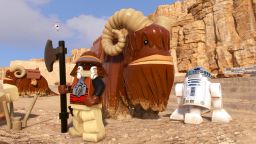
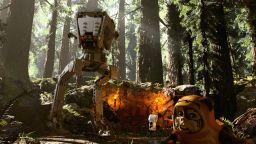
LEGO Star Wars: The Skywalker Saga feels like someone took the entire main Star Wars film timeline, poured it into a massive LEGO box, shook it loudly, and somehow built a surprisingly polished galaxy from the pieces. It is not just another small licensed game retelling one movie. It covers all nine Skywalker Saga films, lets me start with any trilogy, throws hundreds of characters into the roster, fills planets with collectibles, and wraps all the space drama in cheerful brick-based nonsense. It is the kind of game where Darth Vader can feel threatening in one scene and ridiculous in the next, which is honestly very healthy for a galaxy that takes family drama this seriously.
All Nine Films, One LEGO-Sized Package
WB Games describes LEGO Star Wars: The Skywalker Saga as a game where players experience memorable moments and nonstop action from all nine Skywalker Saga films, reimagined with signature LEGO humor. That is the central promise, and it is a big one. The game covers the prequel trilogy, original trilogy, and sequel trilogy, giving players a playful route through Anakin, Luke, and Rey’s stories.
I like that the game does not force the saga into one strict starting point. LEGO’s official news page says players can choose to start at the beginning of any trilogy, including The Phantom Menace, A New Hope, or The Force Awakens. That makes the structure feel flexible. A player can follow release nostalgia, chronological order, or simply begin with whichever era they love most. For a family game, that freedom matters because every household has a different Star Wars argument ready to go.
-
The game adapts all nine main Skywalker Saga films;
-
Players can begin with the prequel, original, or sequel trilogy;
-
Each film is filtered through LEGO humor and simplified adventure pacing;
-
The structure makes the game accessible for both longtime fans and younger players;
The Galaxy Feels Bigger Than Older LEGO Star Wars Games
Steam describes the game as featuring over 300 playable characters, over 100 vehicles, and 23 planets to explore. That scale is the first thing that separates The Skywalker Saga from older LEGO Star Wars titles. This is not only a level-by-level movie parody. It is a broader galaxy map full of hubs, side activities, collectibles, puzzles, races, and character-driven exploration.
I enjoy that wider structure because Star Wars is not only about the main story beats. It is about places: Tatooine, Coruscant, Naboo, Hoth, Endor, Jakku, Ahch-To, and many more familiar locations. The game turns those places into toy-like playgrounds. I can follow the story, but I can also wander off because a suspicious brick, locked door, or shiny collectible has clearly started whispering my name.
The LEGO Humor Softens the Saga Without Mocking It
LEGO Star Wars works because it understands affection. The jokes are silly, but they rarely feel mean. Huge emotional scenes become slapstick, background gags, awkward pauses, food jokes, or tiny visual punchlines. The story is still recognizable, but the tone becomes lighter, safer, and more family-friendly.
I like this approach because Star Wars can be very dramatic. LEGO gives the saga permission to breathe. A villain can enter with full cinematic menace and then be undercut by a visual gag. A famous scene can be recreated faithfully enough for fans, then twisted just enough to make a child laugh. The game is not replacing the movies. It is playing with them like a very expensive toy box.
-
The comedy makes darker Star Wars moments easier for younger players;
-
Visual gags reward fans who know the original scenes;
-
The humor works because it comes from affection rather than disrespect;
-
The tone makes the game a strong family-friendly Star Wars entry point;
The Character Roster Is One of the Biggest Rewards
LEGO’s official game page says there are more than 300 playable characters from throughout the galaxy, including heroes such as Luke Skywalker, Qui-Gon Jinn, Chewbacca, Leia Organa, and Poe Dameron, plus villains such as Darth Vader, Kylo Ren, Darth Maul, and Emperor Palpatine. That character variety is one of the game’s major pleasures.
I like how the roster turns Star Wars fandom into a playable collection. Some characters are obvious favorites. Others feel like deep-cut rewards. Part of the fun is not only using the strongest or most famous hero, but running around as someone absurdly specific because the game lets me. LEGO games understand that character choice is part of the joke, part of the fantasy, and part of the collectible loop.
Character Classes Give Exploration More Structure
The game uses character classes to connect different abilities with different puzzles and routes. Jedi and Sith can use Force abilities. Scavengers have traversal tools. Protocol droids, astromechs, bounty hunters, heroes, villains, and others all have uses across the galaxy. This gives the huge roster practical value beyond cosmetic variety.
I enjoy that system because it turns replay into discovery. A locked door or unreachable collectible may not be available right away, but later a different class can solve the problem. That creates the classic LEGO rhythm: play the story, unlock more characters, return in Free Play, and clean up everything the first run teased. It is simple, but it works because the galaxy is packed with small invitations to come back.
-
Character classes make the large roster useful for puzzles and exploration;
-
Free Play encourages returning to earlier areas with new abilities;
-
Different classes help collectibles feel like light problem-solving challenges;
-
The system gives completion-focused players a strong long-term loop;
The Combat Feels More Modern Than Older LEGO Titles
LEGO’s official release page highlighted new immersive combat mechanics as one of the game’s major upgrades. That is easy to feel. The Skywalker Saga uses a closer camera, more active lightsaber combat, combo-style melee attacks, aiming for blasters, and more energetic enemy encounters than many earlier LEGO games.
I like the improvement because older LEGO combat could feel almost too light. This game still stays accessible, but it gives fights more texture. Lightsabers feel more dramatic. Blaster characters feel more useful. Boss encounters have more movement and spectacle. It is not trying to become a hardcore action game, but it gives players more to do than mash one button while studs fly everywhere like space confetti.
Space Combat Adds a Nice Change of Pace
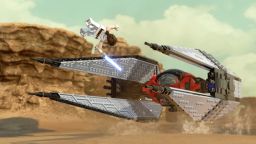
Star Wars needs ships, and The Skywalker Saga understands that. The game includes vehicle and space sequences that break up ground exploration and story levels. Steam’s store page highlights over 100 vehicles, which supports that broader galaxy fantasy.
I enjoy the space sections most as flavor. They are not the deepest starfighter simulation ever created, but they do not need to be. They let players jump into X-wings, TIE fighters, the Millennium Falcon, and other ships, then enjoy a brighter, sillier version of space adventure. The galaxy feels more complete when movement is not limited to walking around hubs and smashing objects for studs.
-
Ships and vehicles help the game feel more like a full Star Wars playground;
-
Space sections add variety between ground levels and hub exploration;
-
The vehicle roster supports fan-service and playful experimentation;
-
The space gameplay is accessible rather than highly technical;
The Planets Are the Game’s Best Long-Term Playground
The 23 explorable planets mentioned on Steam are a major part of why the game feels so generous. Each hub area gives players room to hunt Kyber Bricks, talk to NPCs, solve puzzles, find side missions, and revisit famous Star Wars locations in a more open-ended way.
I like the hub design because it gives the game a relaxed rhythm. I can push through story episodes when I want cinematic momentum, then slow down and explore when I want collectibles. The best LEGO games understand that smashing props, wandering into corners, and solving tiny puzzles can be just as satisfying as finishing the main story.
Co-Op Is Still a Natural Fit
LEGO games have always been strong couch co-op experiences, and The Skywalker Saga continues that tradition. It is easy to imagine one player focusing on the objective while the other quietly destroys every object in the room because studs are apparently more important than galactic peace. That is the LEGO co-op spirit.
I like local co-op because it makes the game feel playful instead of stressful. An adult and child can play together. Two Star Wars fans can argue over character choices. A casual player can help without mastering every system. The game is forgiving enough for shared play, which is one reason LEGO adaptations remain so durable.
-
Local co-op makes the game ideal for families and casual pairs;
-
The forgiving design lets less experienced players contribute;
-
Exploration and collectible hunting work naturally with two players;
-
The lack of online co-op may disappoint players who want remote multiplayer;
The Story Levels Are Fast and Compressed
Because The Skywalker Saga covers nine films, each movie has to move quickly. That means famous scenes are often condensed, simplified, or turned into short playable sequences. This keeps the whole package manageable, but it also means some story moments feel brief compared with their movie versions.
I do not mind the compression most of the time because the game is not trying to be a substitute for the films. It is a playful retelling. Still, players who want every emotional beat and every major scene expanded may feel that certain episodes pass too quickly. The game’s real depth is not always in the story levels themselves, but in the surrounding galaxy and replay structure.
The Prequel, Original, and Sequel Eras All Feel Playable in Their Own Way
One of the game’s strengths is how it lets each trilogy bring a different flavor. The prequels offer Jedi, politics, droids, Naboo, Coruscant, podracing energy, and clone-era spectacle. The original trilogy gives classic rebellion, Death Star drama, Hoth, Endor, and the emotional center most fans know by heart. The sequels bring newer characters, flashier locations, and a different kind of resistance-versus-order conflict.
I like having all three eras in one game because it makes the package feel complete. Even if a player strongly prefers one trilogy, the game encourages curiosity about the others. The LEGO format also smooths over tonal differences. Everything becomes part of one big toy galaxy where the main rule is: collect studs, make jokes, and do not question why everyone can rebuild machinery instantly.
-
The prequel trilogy offers large-scale Jedi and droid-era adventure;
-
The original trilogy gives the strongest nostalgia and most iconic scenes;
-
The sequel trilogy adds newer heroes, locations, and cinematic set pieces;
-
The LEGO format helps all three eras feel part of one consistent playful world;
The Game Is Great for Collectors
LEGO Star Wars: The Skywalker Saga is packed with collectibles, including studs, Kyber Bricks, characters, ships, upgrades, side missions, puzzles, and unlockable extras. This is where the game can become dangerously sticky. The main story is only the beginning if the player has completionist instincts.
I enjoy that collector loop because it gives every area purpose. A random corner may contain a puzzle. A side character may start a mission. A locked object may require a different class. The game constantly rewards curiosity. It also creates the classic LEGO problem: I say I will play one more mission, then spend forty minutes chasing one brick because my brain has decided peace is impossible until it shines in my inventory.
Kyber Bricks Make Progress Feel Tangible
Kyber Bricks are the key collectible and upgrade currency, giving exploration a clear reward. They are scattered through story levels, hub worlds, puzzles, and challenges. Because they connect to progression, collecting them feels more useful than simply ticking boxes.
I like this because it gives the game a steady sense of improvement. LEGO games can sometimes drown players in collectibles without enough reason to care. Here, Kyber Bricks help support upgrades and completion goals, which makes exploration feel more connected to growth. The reward loop is not complex, but it is satisfying.
-
Kyber Bricks give exploration a clear purpose;
-
Upgrades make collecting feel more connected to progression;
-
Hub-world puzzles encourage careful searching;
-
Completionists get far more playtime beyond the main story;
The DLC Expands the Roster Even Further
Steam’s Character Collection 1 & 2 page says players can explore the galaxy with over 400 characters when using the collection, which includes packs based on The Mandalorian, Rogue One, Solo, The Bad Batch, Obi-Wan Kenobi, Andor, The Book of Boba Fett, The Clone Wars, Rebels, and Summer Vacation.
I like the DLC concept because Star Wars has grown far beyond the nine main films. Adding characters from shows and side stories makes the game feel more connected to the wider franchise. The downside is that most DLC packs are character-focused rather than big new story expansions, so players expecting major new campaigns may need to adjust expectations.
The Galactic Edition Is the Most Complete Version
Xbox’s store listing describes the Galactic Edition as including the base game plus Character Collection 1 & 2 and many related character packs. That makes it the stronger option for players who want the broadest roster from the start. The standard game already has a huge amount of content, but the Galactic Edition turns the character selection into a much bigger Star Wars shelf.
I would recommend checking which edition is included before buying, especially during sales. Some players only need the base game. Others will want the DLC characters because playing as favorites from The Mandalorian, Rebels, The Clone Wars, or Andor adds extra fun. The best version depends on how much the player cares about roster depth.
-
The base game already includes the full nine-film adventure;
-
The Deluxe Edition includes Character Collection 1 content;
-
The Galactic Edition is better for players who want both character collections;
-
DLC mostly expands characters rather than adding full new film campaigns;
The Visual Upgrade Is Immediately Noticeable
The Skywalker Saga looks much more modern than the classic LEGO Star Wars games. Environments have more scale, lighting feels richer, characters animate with more personality, and famous Star Wars locations look like big LEGO dioramas rather than flat level backdrops. The result is bright, detailed, and toy-like in the best way.
I like that the game keeps LEGO texture visible. Bricks should look like bricks. Plastic should look like plastic. The charm comes from mixing cinematic Star Wars imagery with the physical comedy of toys. A polished spaceship flying through a dramatic battle is cool. A polished LEGO spaceship doing the same thing while everything nearby is secretly collectible is even better.
The Audio and Music Carry a Lot of Star Wars Feeling
Star Wars is almost impossible to separate from its music and sound design. The Skywalker Saga benefits from familiar themes, laser sounds, lightsaber effects, droid noises, spaceship audio, and all the little sonic details that make the franchise recognizable. Even when the tone is silly, the soundscape keeps the galaxy feeling authentic.
I enjoy that contrast. The visuals may be LEGO, but the audio still says Star Wars. That combination helps jokes land without making the whole experience feel like a parody disconnected from the source. It sounds grand, looks adorable, and then immediately drops a joke into the scene like a brick from orbit.
-
Familiar Star Wars music gives the game instant emotional recognition;
-
Sound effects help ships, blasters, sabers, and droids feel authentic;
-
The serious audio foundation makes the LEGO comedy funnier;
-
The presentation works because it balances cinematic Star Wars with toy-box humor;
The Game Is Family-Friendly Without Feeling Empty
One of the best things about LEGO Star Wars is that it works for many ages. Kids can enjoy the jokes, simple combat, co-op, characters, and constant rewards. Adults can enjoy the references, nostalgia, completion goals, and how cleverly the game transforms famous moments. It is accessible without being mindless.
I like family games that do not talk down to anyone. The Skywalker Saga is forgiving, but it still has enough systems to hold attention. Collectibles, upgrades, character classes, planets, vehicles, and story coverage all give it substance. A younger player can enjoy the basics, while an older player can chase completion and references.
The Main Weakness Is Repetition
A game this large inevitably repeats some patterns. Many puzzles involve finding the right class, moving objects, shooting targets, pressing switches, or locating hidden routes. That is normal for LEGO games, but over dozens of hours the formula becomes noticeable.
I do not think the repetition ruins the game because the charm and variety of locations help. Still, players who do not enjoy collectible-driven design may feel the loop wearing thin. The game is strongest when played in relaxed sessions rather than treated like a job where every brick must be documented by Friday.
-
Puzzle types can become familiar after many planets and levels;
-
Completion-focused play may feel repetitive for some players;
-
The story levels are sometimes too compressed because nine films must fit into one game;
-
The game is best enjoyed as playful exploration rather than pure checklist work;
The Lack of Online Co-Op Is Disappointing
Local co-op fits LEGO games beautifully, but the absence of full online co-op can be frustrating for players who want to share the adventure remotely. This matters more now than it would have years ago because many friends and families play together across different homes.
I would still call The Skywalker Saga an excellent co-op game on the couch. But if someone specifically wants online multiplayer, they should know that this is not the game’s strength. It is built around local shared-screen chaos, not remote squad play.
The Best Audience Is Star Wars Fans Who Like Playful Exploration
LEGO Star Wars: The Skywalker Saga is easiest to recommend to Star Wars fans, LEGO game fans, families, completionists, casual adventure players, and anyone who enjoys funny licensed games with lots of unlockables. It is also a strong first Star Wars game for younger players because the tone is friendly and the structure is forgiving.
It may be less ideal for players who want deep combat, serious storytelling, online co-op, or a highly challenging action-adventure. This is not a hardcore lightsaber simulator. It is a joyful brick-built celebration of Star Wars, and it works best when judged on those terms.
-
Best for Star Wars fans who enjoy humor, collectibles, and exploration;
-
Great for families and local co-op sessions;
-
Strong for completionists who want many characters, planets, and side tasks;
-
Less ideal for players seeking serious challenge or online co-op;
Where LEGO Star Wars: The Skywalker Saga Feels Most Effective
The game feels most effective when it makes the Star Wars galaxy feel like a giant interactive toy shelf. I can follow the main saga, then detour into side missions, unlock a strange character, fly a familiar ship, revisit a planet, solve a tiny puzzle, and laugh at a joke hidden in the background. That mixture of scale and silliness is the game’s strongest identity.
It also succeeds because it respects nostalgia without becoming trapped by it. The older LEGO Star Wars games are beloved, but The Skywalker Saga rebuilds the formula with larger hubs, improved combat, more characters, and a more flexible structure. It feels like a modern update rather than a simple remake.
Where LEGO Star Wars: The Skywalker Saga Feels Less Strong
The game feels less strong when its size works against it. Covering nine films means some story moments move quickly, and the collectible-heavy structure can become repetitive if played too aggressively. The more a player tries to clear everything at once, the more the galaxy starts to feel like a spreadsheet wearing a Jedi robe.
It also loses some points for not offering online co-op. Local multiplayer is fun, but remote play would have made the package more flexible. Even so, the overall adventure remains one of the most generous and entertaining LEGO games, especially for players who want a family-friendly Star Wars sandbox.
Pros
- Huge galaxy scale includes over 300 playable characters, over 100 vehicles, and 23 planets to explore
- Improved combat, character classes, Free Play, Kyber Bricks, and hub-world puzzles make the LEGO formula feel more modern
- Local co-op is excellent for families, casual players, and shared couch sessions
- Galactic Edition and Character Collection DLC add even more Star Wars characters from films, shows, and specials
Cons
- Puzzles and collectible tasks can become repetitive during long completionist sessions
- No full online co-op makes remote multiplayer less convenient than local couch play