






Cult of the Lamb has one of the strangest hooks in modern indie games: an adorable lamb becomes the leader of a woodland cult and somehow the idea feels both ridiculous and perfectly natural within minutes. The game takes two familiar genres, roguelike action and base management, then stitches them together with dark humor, cute animals, ritual drama, and a visual style that looks like a children’s storybook wandered into a forbidden temple. The result is not just memorable because it is weird. It is memorable because the weirdness has structure. I am not only fighting through dungeons. I am feeding followers, building shelters, giving sermons, choosing doctrines, managing loyalty, and trying to keep a very needy community from collapsing while monsters wait outside the village gates.
The Lamb Is Cute, but the Role Is Brutal
The central character works because the contrast is immediate. The Lamb looks small, soft, and almost harmless, but the story places them in a position of supernatural responsibility. Devolver Digital describes the premise around a possessed lamb saved from annihilation by an ominous stranger, then tasked with building a loyal following in that stranger’s name. That setup gives the game its dark fairy-tale energy from the start.
I like that Cult of the Lamb never treats the cuteness as separate from the darkness. The Lamb can be charming, but they are also a leader, warrior, preacher, builder, and decision-maker. Every soft visual detail makes the harsher systems feel more absurd. A fluffy follower asking for help can be sweet. A ritual circle glowing under the same art style can be deeply funny in a very wrong way.
The Cult-Building Loop Gives the Game Its Identity
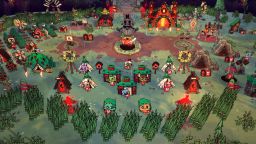
The management side is what makes Cult of the Lamb more than a dungeon crawler. Followers need food, beds, faith, cleanliness, work assignments, and attention. Buildings need resources. Sermons strengthen the cult. Rituals create dramatic choices. The community becomes a living machine that requires care, control, and occasional moral flexibility.
This loop is satisfying because progress is visible. A small camp becomes a structured settlement. Followers gather resources, pray, cook, clean, argue, age, and develop little identities. The official Steam description frames the game around building a loyal community of woodland Followers and spreading the Word to become the one true cult. That is exactly the appeal: the base is not just decoration. It is the emotional and mechanical center of the game.
-
Followers give the cult personality and constant pressure;
-
Buildings turn wilderness into a functional settlement;
-
Sermons and rituals make leadership feel theatrical;
-
Resource management keeps the village connected to dungeon progress;
The Followers Are Funny Because They Are So Needy
Followers are not complex simulation characters in the deepest sense, but they are expressive enough to make the cult feel alive. They ask for favors, get sick, lose faith, work slowly, complain, worship, and sometimes create problems at the worst possible time. A follower may look like a cute animal, but they still need constant management.
I enjoy this because it makes leadership feel messy. A run through a dungeon might be exciting, but returning home to starving followers, dirty ground, or collapsing faith creates a different kind of panic. Cult of the Lamb understands that a cult leader’s greatest enemy is not always a boss. Sometimes it is poor sanitation and bad scheduling.
The Sermons and Doctrines Add a Strong Role-Playing Layer
Sermons are more than a repeated daily action. They represent the Lamb’s growing authority. Gathering followers, preaching to them, and unlocking new power gives the cult a ritual rhythm. Doctrines push that further by letting the player shape what kind of community this becomes. Is the cult strict, forgiving, practical, cruel, generous, or deeply weird?
I like these choices because they make the cult feel personal. Different doctrines change how I respond to age, work, loyalty, resources, and follower behavior. The choices are often darkly comic, but they still create identity. The game is funnier when I realize that my “cute” settlement has a legal and spiritual system built around my own questionable decisions.
-
Sermons connect follower devotion to player power;
-
Doctrines shape the cult’s rules and personality;
-
Rituals give management decisions a dramatic visual payoff;
-
The belief system makes the base feel more personal than a normal camp;
The Crusades Bring the Roguelike Energy
Outside the cult, the Lamb goes on crusades through dangerous regions filled with enemies, rooms, resources, random events, and bosses. This is where the game becomes faster and more action-focused. The player dodges, attacks, uses curses, collects tarot-style bonuses, and makes decisions about whether to push deeper or return with resources.
I like that crusades are short enough to fit the management loop. They do not feel like separate long missions that pull me away from the village forever. Instead, they create a rhythm: prepare the cult, venture out, gather materials, fight, return, repair the community, then repeat. The two halves of the game feed each other.
The Combat Is Simple but Responsive
Cult of the Lamb’s combat is not the most complex action system in the genre, but it feels clean and readable. Weapons have different speeds and ranges. Curses add supernatural tools. Dodging matters. Enemy patterns are clear enough to learn quickly. The game favors fast reactions over heavy mechanical depth.
I think that simplicity works because the game is already asking the player to manage many systems. If the combat were overly complicated, the whole experience might become exhausting. Instead, battles are quick, punchy, and satisfying. The action side gives energy while the cult side gives structure.
-
Fast dodging keeps combat active and readable;
-
Different weapons create small but meaningful style changes;
-
Curses add ranged and supernatural options;
-
Short crusades fit naturally between base-management tasks;
The Bosses Give the World a Mythic Shape
The Four Bishops and the wider mythology give Cult of the Lamb a stronger sense of direction. Without them, the game could feel like a collection of systems. With them, each region has a religious and narrative weight. The Lamb is not just gathering wood and coins. They are challenging an established order.
The game’s premise of false prophets and rival powers gives the combat side a clear purpose. Devolver’s official description mentions venturing through mysterious regions, building a loyal community, and spreading the Word to become the one true cult. That struggle between old gods, new faith, and the Lamb’s growing power is what makes the world feel larger than the village.
The Art Style Is the Perfect Trap
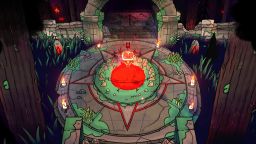
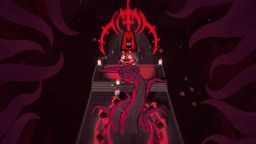
Cult of the Lamb looks cute enough to disarm the player, then uses that softness to make everything darker and funnier. The characters are rounded, expressive, and toy-like. The environments are colorful but eerie. Ritual scenes feel theatrical. Bosses and monsters push the style into stranger territory without abandoning the cartoon foundation.
I think the art direction is one of the game’s strongest achievements. It is instantly recognizable in screenshots. More importantly, it supports the tone. The game would be less memorable if it looked purely grim. The charm makes the horror playful, and the horror makes the charm feel suspicious.
-
Cute character designs make the dark premise more striking;
-
Ritual visuals give cult management a theatrical identity;
-
Enemy and boss designs keep the world from feeling too cozy;
-
The contrast between softness and menace defines the game’s personality;
The Humor Is Dark Without Becoming Empty Shock
Cult of the Lamb is funny because it commits to absurdity with a straight face. Followers ask for strange favors. Rituals are dramatic. The Lamb’s leadership can become suspiciously bureaucratic. The game constantly turns disturbing ideas into systems, then lets the player treat them as routine.
What makes the humor work is that it rarely feels random. It comes from the logic of the world. A cult needs rules. Rules create rituals. Rituals create consequences. Consequences create comedy. The game lets the player laugh at how quickly a cute settlement becomes a spiritual administration problem.
The Base Can Become a Checklist, but Usually a Good One
The management loop can sometimes feel busy. Followers need feeding. Resources need collecting. Beds break. Buildings need upgrades. Faith drops. Hygiene problems appear. Someone wants a favor. Someone else may cause trouble. The game can stack tasks quickly, especially when the cult grows.
I usually like this busyness because it gives the village a pulse. Still, players who prefer pure action may find the chores distracting. Cult of the Lamb is strongest when the village pressure feels playful. It is weaker when the player only wants another dungeon run but has to handle several domestic disasters first.
-
The village creates constant short-term goals;
-
Follower care makes the cult feel alive;
-
Too many tasks can interrupt the action rhythm;
-
The management side works best when players enjoy routine and optimization;
The Progression Feels Generous Because Everything Connects
One of the best things about Cult of the Lamb is that almost every action supports another system. Crusades provide resources. Resources improve the cult. Followers generate devotion. Devotion unlocks buildings. Sermons improve combat. Combat opens new regions. New regions bring new materials and followers.
This interconnected design makes progress feel satisfying. I rarely feel like I am doing something completely pointless. Even a messy run can bring back enough material to build something useful. Even a small cult improvement can make the next crusade easier. The game understands the pleasure of circular momentum.
Unholy Alliance Makes Co-Op Feel Like a Natural Addition
Cult of the Lamb has expanded since launch, and one of the most important additions was the Unholy Alliance update, which brought local co-op and introduced The Goat as a playable partner. The official Cult of the Lamb site lists Unholy Alliance among the game’s major updates, alongside other expansions and patch material.
I like the idea of co-op here because the game already has a playful chaos that suits shared play. Dodging enemies, managing weapons, and reacting to dungeon surprises can become funnier with another person nearby. The management side remains the heart of the game, but co-op gives crusades a more social energy.
-
Local co-op adds a new way to experience crusades;
-
The Goat gives the second player a strong visual identity;
-
Shared action fits the game’s chaotic humor;
-
Co-op makes combat feel more playful without changing the core cult loop;
Woolhaven Shows the Game Is Still Growing
The official Cult of the Lamb site currently highlights Woolhaven as a full-length expansion where a lost God calls from a mysterious mountain, asking the player to rebuild the flock and reawaken winter while uncovering the truth of fallen lambs. That is important because it shows the game has moved beyond small patches into larger expansion territory.
Woolhaven also gives the game a colder, more survival-flavored direction. PC Gamer reported that the expansion added substantial depth, including new dungeon biomes, buildings, and systems such as ranching. For a game built around balancing cute management and dark adventure, that kind of expansion makes sense. It gives the Lamb more systems to control and more secrets to uncover.
The DLC and Updates Add Real Longevity
Cult of the Lamb has benefited from a strong update path. The official site lists major content beats such as Woolhaven, Unholy Alliance, Sins of the Flesh, Relics of the Old Faith, and Pilgrim Pack. Steam also lists DLC content for the game, including Woolhaven and Pilgrim Pack with release dates and prices.
This ongoing support matters because the original game already had a strong identity, but updates make it easier to revisit. New quests, follower forms, story content, co-op, systems, and expansions give returning players something more than nostalgia. The cult keeps finding new reasons to demand attention.
-
Major updates have expanded the game beyond its launch structure;
-
Co-op, story packs, and system updates give returning players fresh goals;
-
DLC content helps the game feel active years after release;
-
The growing feature set may feel dense for brand-new players;
The Pilgrim Pack Adds Story Flavor Rather Than Only Cosmetics
The Pilgrim Pack is a good example of how Cult of the Lamb can expand through smaller content. Steam describes it as including the full Pilgrim story and bonus pages, a unique questline, five new follower forms, outfits, a fleece for the Lamb, and decorations.
I like that this kind of pack is not only about decoration, even though decoration fits the game well. A unique questline and story pages help the world feel broader. Follower forms and outfits support the management fantasy. Decorations let the cult look more personal. It is not essential for everyone, but it fits the game’s collector and customization side.
The Sound and Music Support the Strange Sacred Mood
Cult of the Lamb’s audio gives the game a ritualistic pulse. The music can feel playful, eerie, tense, or ceremonial depending on where the player is. In the cult, the soundscape supports routine and worship. In crusades, it gives the action more danger and momentum.
I appreciate how the audio avoids becoming too heavy. The game is dark, but it still has bounce and mischief. The soundtrack helps keep that balance. It can make a village feel like a cozy community one moment and a suspicious religious machine the next.
The Game Is More Accessible Than Its Theme Suggests
Despite the subject matter, Cult of the Lamb is easy to understand mechanically. The combat is direct. The base-building systems are introduced gradually. The visual language is clear. The game’s dark religious comedy may sound niche, but the actual play structure is approachable.
This accessibility is one reason the game works for a wider audience than expected. Players who like roguelikes can enjoy the combat. Players who like cozy management can enjoy the cult. Players who like dark humor can enjoy the tone. The mix creates multiple entry points.
-
Combat controls are simple enough to learn quickly;
-
Base systems expand gradually rather than all at once;
-
The art style makes dark themes feel more playful;
-
Different genres give different kinds of players something to enjoy;
The Balance Between Cute and Creepy Is the Main Magic
Cult of the Lamb would not be as memorable if it leaned only one way. If it were only cute, the premise would lose bite. If it were only grim, the management loop might feel oppressive. The magic is in the collision. A follower with a sweet face may participate in a strange ritual. A village full of tiny animals may hide a very serious power structure.
I think that balance is why the game became such a strong indie identity. It does not feel like a standard roguelike with a cosmetic twist. The tone shapes every part of the experience. Even routine chores feel funnier because the whole community exists under the Lamb’s suspiciously adorable authority.
The Difficulty Depends on Which Half You Care About
For action-focused players, the difficulty comes from combat, bosses, dodging, and surviving crusades. For management-focused players, the difficulty comes from keeping the cult productive, loyal, healthy, and supplied. The game asks for both kinds of attention, but not every player will enjoy them equally.
I like the mixture, though I can see how it may divide people. Someone who wants pure roguelike action may find the base chores too frequent. Someone who wants pure cozy building may find the combat interruptions stressful. Cult of the Lamb is best for players who enjoy switching mental modes.
The Moral Comedy Is Stronger Than the Moral Depth
The game constantly presents strange leadership decisions, but it is usually more interested in dark comedy than deep philosophical debate. That is not necessarily a weakness. Cult of the Lamb is not trying to be a serious religious simulator. It uses belief, loyalty, sacrifice, ritual, and control as exaggerated game systems.
I think the tone works because it knows how absurd it is. The game lets the player laugh at the machinery of cult leadership while still feeling responsible for the little community. It is morally weird, mechanically fun, and visually charming, which is exactly the combination that gives it personality.
-
The leadership choices are often funny rather than deeply serious;
-
Rituals turn dark ideas into theatrical game mechanics;
-
The game uses discomfort as part of its comedy;
-
Players looking for realistic moral depth may find the treatment too playful;
The Best Sessions Have a Strong Rhythm
Cult of the Lamb feels best when the rhythm is flowing: preach, collect devotion, assign work, cook food, go on a crusade, return with resources, build something new, handle follower problems, then prepare for the next run. When that loop works, the game becomes hard to put down because every system nudges another system forward.
The best part is that progress rarely feels isolated. A new follower changes the village. A new doctrine changes leadership. A new weapon changes combat. A new building changes routine. A new expansion changes the scale of what the cult can become. The Lamb’s world keeps expanding in small, satisfying steps.
Where Cult of the Lamb Feels Most Effective
Cult of the Lamb is most effective when the village and crusade halves are feeding each other cleanly. A dangerous run feels worthwhile because it brings back resources. A better cult feels meaningful because it makes the Lamb stronger. The game creates a loop where faith, labor, combat, and comedy are all connected.
It also succeeds because its visual identity is unusually strong. The game can be cute, creepy, funny, and unsettling in the same scene. That is difficult to achieve, and Cult of the Lamb does it with confidence. It is one of those games where the concept sounds like a joke, but the execution turns the joke into a full system.
Where Cult of the Lamb Feels Less Strong
The biggest weakness is that neither half of the game is as deep as a title dedicated entirely to that genre. Pure roguelike fans may want more complex combat and build variety. Pure management fans may want deeper follower simulation and city-building systems. Cult of the Lamb works because of the blend, not because either side is the deepest example available.
The second issue is task pressure. As the cult grows and expansions add more systems, the game can feel busy. That busyness is often enjoyable, but it can also become a checklist. The game is strongest when the chaos feels playful, not when the Lamb feels trapped under maintenance work.
Pros
- Brilliant mix of roguelike action, cult management, dark comedy, and cute woodland horror
- Follower systems, sermons, rituals, doctrines, and buildings make the cult feel personal and active
- Fast crusades connect naturally to resource gathering, combat progression, and village growth
- Strong art direction makes the game instantly recognizable and balances charm with menace
- Major updates and expansions such as Unholy Alliance, Pilgrim Pack, and Woolhaven add long-term value
Cons
- Combat may feel too simple for players who want a deeper pure roguelike experience
- Base management can become busy when followers, resources, buildings, and rituals all demand attention
- The dark religious humor may not suit players who prefer lighter adventure games
- Some systems are strongest as a blend, but less deep than dedicated management or action titles
- Returning players may feel overwhelmed by the growing number of updates, DLC systems, and expansion content