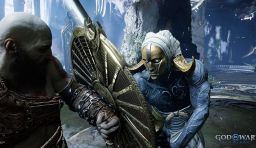
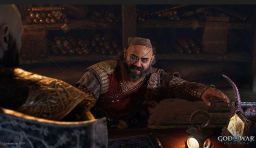
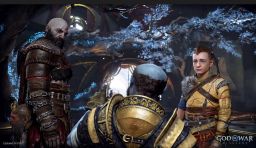
God of War Ragnarök feels like a storm that has been waiting politely outside the door since the end of the previous game. Kratos and Atreus already know the future is closing in, but knowing a prophecy is not the same as surviving it. This sequel takes the intimate father-and-son tension of God of War 2018 and expands it into a larger, louder, more emotionally complicated mythic journey. There are gods to confront, realms to cross, monsters to fight, secrets to untangle, and one very tired father trying to become better at feelings while still being extremely good at breaking things.
The Story Works Because It Is About Choice, Not Just Prophecy
Steam describes God of War Ragnarök as the story of Kratos and Atreus embarking on a mythic journey for answers before Ragnarök arrives, and that phrase captures the pressure behind the whole game. The characters are not simply traveling because adventure sounds fun. They are moving through a world where fate feels written, enemies are preparing, and every decision may push them closer to disaster.
I like that Ragnarök treats prophecy as an emotional problem, not only a plot device. Kratos knows what it means to be trapped by violence and expectation. Atreus wants answers about who he is and who he could become. Their conflict is not just about gods and giants. It is about whether people can change when the world keeps telling them what role they are supposed to play.
-
The story expands the emotional tension from the 2018 game into a larger mythic conflict;
-
Kratos and Atreus both struggle with identity, fate, and trust;
-
Prophecy gives the journey urgency without removing character choice;
-
The best dramatic moments come from family conflict as much as divine conflict;
Kratos Is Still Powerful, but More Interesting Because He Is Trying
Kratos in Ragnarök is not the same man he was in the Greek saga. He is still frighteningly capable, but the more compelling part is how hard he works to not be ruled by the old version of himself. The game understands that growth is not a clean personality update. It is uncomfortable, repetitive, and often tested at exactly the worst possible moment.
I enjoy this version of Kratos because his silence carries weight. When he speaks carefully, it matters. When he shows restraint, it feels earned. When he fails emotionally, it hurts because the player knows he is trying. Ragnarök keeps the fantasy of being a powerful warrior, but it makes that power feel morally heavy.
Atreus Gets More Agency, and That Changes the Rhythm
Atreus is no longer just the boy beside Kratos. Ragnarök gives him more choices, more curiosity, more mistakes, and more emotional independence. That shift is essential because the story is partly about a child becoming his own person while a parent learns that protection and control are not the same thing.
I like that Atreus can be frustrating. He should be. A perfect, obedient, emotionally convenient teenager would feel fake. Atreus wants truth, identity, and freedom, sometimes before he is ready for the consequences. That makes the father-son dynamic sharper. Kratos may fear the future, but Atreus fears being trapped by someone else’s fear.
-
Atreus becomes more active in the plot and more complicated emotionally;
-
His search for identity gives the story strong coming-of-age energy;
-
His mistakes make the relationship with Kratos feel more believable;
-
The game uses Atreus to challenge Kratos’ instinct to control danger through force;
The Combat Feels Familiar, but Fuller
God of War Ragnarök keeps the heavy, close-camera combat foundation of the 2018 game, but it adds more options, enemies, movement tools, companion attacks, shields, elemental interactions, and build variety. The Leviathan Axe and Blades of Chaos remain the emotional and mechanical center of the combat, while new systems make encounters feel broader.
I like how the weapons feel different without making one obsolete. The axe is precise, cold, and satisfying, especially when recalled. The blades are faster, wider, and more aggressive. Switching between them is not only practical. It feels like shifting between parts of Kratos’ history. The combat has enough weight that even routine encounters can feel physical.
The Draupnir Spear Adds a Strong New Combat Identity
The Draupnir Spear is one of Ragnarök’s best additions because it gives Kratos a new tool that feels distinct from both the axe and blades. It supports ranged pressure, explosive setups, quick strikes, and tactical control. More importantly, it feels narratively meaningful instead of just being a new button set.
I appreciate when a sequel adds a weapon that changes habits. The spear pushes me to think differently about spacing and enemy control. It does not erase the older weapons. It completes the combat language. By the late game, Kratos feels like a full arsenal with a beard.
-
The Leviathan Axe remains excellent for precision, freezing, and heavy impact;
-
The Blades of Chaos support speed, crowd control, and aggressive pressure;
-
The Draupnir Spear adds fresh ranged and tactical options;
-
Weapon switching gives combat more rhythm and build flexibility;
Companions Make Encounters Feel More Dynamic
Companion characters are a major part of Ragnarök’s combat and storytelling. They are not only dialogue machines walking beside Kratos. They assist in fights, trigger abilities, react to environments, and help different chapters feel distinct. The companion system also supports the game’s emotional structure because relationships are constantly expressed during travel and combat.
I like this because Ragnarök is not a lonely game in the way some action adventures are. Characters talk, argue, joke, advise, and interrupt each other. Sometimes that makes the world feel warmer. Sometimes it makes a puzzle hint arrive before I have finished blinking at the puzzle, but the overall effect is still strong: the journey feels shared.
The Realms Are More Varied and More Confident
Ragnarök expands the Nine Realms with more environmental variety, more side areas, and more visual identity. Snowy landscapes, dwarven machinery, lush spaces, fiery danger, ruined temples, and mythic architecture give the game a larger sense of place than the 2018 entry. It feels like a world heading toward collapse, but still full of texture and local history.
I enjoy the realm design because it balances spectacle and route-building. The game is not open world in the same way as ELDEN RING, but it gives enough exploration to make optional paths feel rewarding. Chests, favors, bosses, lore markers, puzzles, and hidden areas encourage curiosity without losing narrative momentum.
-
The realms feel more visually distinct than in the previous game;
-
Optional areas reward players with gear, lore, bosses, and resources;
-
The level design keeps a balance between guided story and exploration;
-
Each realm adds a different mood to the journey toward Ragnarök;
The Side Quests Are Surprisingly Emotional
Ragnarök’s side quests, often framed as favors, are one of the game’s strongest improvements. They are not only checklists. Many of them reveal character history, deepen relationships, explore moral consequences, or make the realms feel more lived-in. Some of the best writing is optional.
I like side content that feels emotionally connected to the main story. Ragnarök often uses optional quests to show how Kratos has changed. He helps not because a menu says “reward available,” but because he is learning what responsibility can look like beyond survival and revenge. That makes even detours feel thematically relevant.
The Boss Fights Are Bigger, But the Personal Ones Hit Hardest
Ragnarök has large boss encounters, mythical creatures, gods, monsters, and optional endgame challenges. The spectacle is strong, but the fights that stay with me most are the personal ones. When a battle is tied to grief, trust, pride, or old damage, the mechanics gain emotional weight.
I enjoy the way the game mixes cinematic scale with readable combat. The best fights look enormous but still ask me to dodge, block, parry, switch weapons, manage cooldowns, and use companion abilities intelligently. The game wants drama, but it does not forget that I am still playing.
-
Major boss fights deliver cinematic scale and strong visual drama;
-
Personal conflicts often create the most memorable battles;
-
Optional bosses give skilled players tougher combat tests;
-
The best encounters combine spectacle with clear mechanical pressure;
The Writing Gives Mythology a Human Center
Ragnarök uses Norse mythology as a stage, but the emotional center is very human. Parents and children misunderstand each other. Friends carry guilt. Leaders manipulate fear. People make choices they cannot fully repair. Gods are powerful, but many of them are also petty, wounded, arrogant, lonely, or terrified.
I like that the game does not treat mythology as a museum exhibit. It uses gods and prophecies to talk about family, abuse, control, forgiveness, and change. The result is a story that feels grand without losing intimacy. Even when the world is ending, the most important question may still be whether a father can listen.
Odin Is a Different Kind of Threat
Ragnarök’s Odin is effective because he is not only physically dangerous. He is manipulative, conversational, strategic, and emotionally invasive. He knows how to turn curiosity into leverage and insecurity into a doorway. That makes him feel different from a simple final boss waiting at the end of a dungeon.
I like villains who understand people. Odin’s power is not only in magic or authority. It is in how he reads others and tells them exactly the kind of lie they are already tempted to believe. That makes him thematically perfect for a game about fate, trust, and self-definition.
-
Odin works as a manipulator as much as a mythic antagonist;
-
His threat is psychological, political, and magical at once;
-
He challenges Atreus through curiosity and identity;
-
He challenges Kratos by exploiting fear of repeating the past;
Thor Brings Tragedy Into the Violence
Thor could have been only a huge hammer-wielding obstacle, but Ragnarök gives him more damage than that. He is terrifying, but also trapped in cycles of obedience, anger, shame, and expectation. His presence adds weight to the game’s themes about fathers, sons, and inherited violence.
I think Thor is one of the sequel’s strongest characters because he mirrors Kratos in uncomfortable ways. He shows what power looks like when it remains chained to abuse and self-hatred. That makes his scenes tense beyond combat. He is not just a wall to break. He is a warning.
The Presentation Is Still Technically Impressive
God of War Ragnarök remains a visually rich and carefully staged action adventure. The camera style, character animation, facial performances, realm transitions, combat effects, and environmental detail all support the feeling of a premium narrative game. The PC version adds platform-specific enhancements, with Steam noting PC features and a September 19, 2024 PC release.
I like that the presentation rarely feels separated from the storytelling. The way Kratos moves, the way Atreus looks at him, the way companions fill silence, and the way realms open into mythic spaces all support the emotional tone. The game is expensive-looking, yes, but it also uses that polish for character work.
-
Character animation and voice performances carry much of the drama;
-
Realm design gives the journey strong visual variety;
-
Combat effects make weapons feel heavy and distinct;
-
The PC version expands access beyond PlayStation hardware;
The PC Version Makes the Epic Easier to Revisit
Steam lists God of War Ragnarök on PC as released on September 19, 2024, developed by Santa Monica Studio and Jetpack Interactive, and published by PlayStation Publishing LLC. PlayStation’s PC requirements post also confirmed the September 19 PC launch and provided system requirements ahead of release.
I think the PC release matters because Ragnarök is the kind of game that benefits from strong performance and display options. Combat timing, cinematic scale, and realm detail all feel better when the platform handles them smoothly. PC players should still check requirements, but the port gives a new audience access to one of PlayStation’s biggest narrative action games.
Valhalla Is a Generous and Smart Add-On
God of War Ragnarök: Valhalla is a free add-on for owners of the base game, and PlayStation recommends completing the main story first to avoid spoilers, although players can begin Valhalla whenever they choose. That makes it more than a small bonus. It is a meaningful post-game experience that adds a different structure to Kratos’ journey.
I like Valhalla because it understands that combat and character reflection can work together. Its repeat-run structure gives players a reason to keep fighting, but the emotional layer matters too. Kratos is not only testing weapons. He is confronting memory, guilt, and identity. That is exactly the kind of DLC that fits this version of God of War.
-
Valhalla is free for players who own God of War Ragnarök;
-
PlayStation recommends finishing the main story first to avoid spoilers;
-
The add-on gives combat-focused players more post-game structure;
-
It also deepens Kratos’ emotional arc after the main campaign;
The Accessibility Work Deserves Credit
Ragnarök includes a broad set of accessibility options, continuing PlayStation Studios’ recent push toward more customizable game experiences. This matters because a cinematic action game with fast combat, puzzles, navigation, and visual effects can create many different barriers for players.
I appreciate when big games treat accessibility as part of design rather than a small afterthought. Options around controls, subtitles, visual assistance, navigation, combat support, and readability can help more players experience the story. A game about changing fate should probably not lock people out through rigid settings.
The Puzzles Can Be Over-Explained
One common frustration in Ragnarök is how quickly companions sometimes offer puzzle hints. The dialogue is well-written overall, but puzzle guidance can arrive before I have had enough time to think. It is like being in an escape room with a very helpful friend who panics after six seconds of silence.
I understand why the developers made this choice. They want to avoid frustration and keep pacing smooth. Still, for players who enjoy solving environmental puzzles independently, the hint timing can feel intrusive. It is one of the few places where the game’s companion chatter works against discovery.
-
Companion hints can reduce puzzle frustration for some players;
-
The same hints can feel too fast for players who want more thinking time;
-
Environmental puzzles are often fun but sometimes over-guided;
-
The issue stands out because the writing is otherwise a major strength;
The Game Is Large, Sometimes Almost Too Large
Ragnarök expands nearly everything: more characters, more realms, more combat options, more side quests, more bosses, more emotional threads, and more mythic stakes. Most of that expansion works. But the game can occasionally feel crowded compared with the cleaner, more intimate structure of God of War 2018.
I do not think bigger is automatically worse. Ragnarök earns much of its scale because it is concluding a saga. Still, there are moments when the story’s many moving parts compete for attention. The previous game felt like a focused journey up a mountain. Ragnarök feels like several storms crossing at once.
It Helps to Play God of War 2018 First
God of War Ragnarök can be understood on its own at a basic level, but the emotional payoff is much stronger after playing the 2018 game. The relationship between Kratos and Atreus, the history with Freya, the role of the giants, and the weight of certain choices all depend on earlier context.
I would strongly recommend starting with God of War 2018 if possible. Ragnarök is not only a sequel in plot. It is a sequel in emotional development. Skipping the first Norse game is like walking into the final act of a family argument and asking why everyone seems tense.
-
The 2018 game establishes Kratos and Atreus’ relationship;
-
Freya’s arc is much stronger with earlier context;
-
The mythic stakes make more sense after the previous journey;
-
Ragnarök works best as the second half of the Norse saga;
The Best Audience Is Story-Driven Action Fans
God of War Ragnarök is easiest to recommend to players who enjoy cinematic action, strong character drama, mythological settings, heavy melee combat, exploration, optional bosses, and emotionally driven storytelling. It is especially rewarding for players who already connected with Kratos and Atreus in the previous game.
It may be less ideal for players who want full open-world freedom, minimal cutscenes, silent exploration, or a pure combat challenge without narrative weight. Ragnarök is a story-heavy action epic. It wants players to care about conversations as much as boss health bars.
Where God of War Ragnarök Feels Most Effective
God of War Ragnarök feels most effective when combat, myth, and family drama collide in the same moment. A fight is not only a fight. It can be a parenting crisis, a moral test, a prophecy coming closer, or a reminder of who Kratos used to be. That layering is what makes the game more than a beautiful action sequel.
The game also succeeds because it gives Atreus and Kratos different emotional needs. One wants answers and identity. The other wants safety and redemption. Ragnarök becomes powerful when neither of them is entirely wrong, and neither can move forward without changing.
Where God of War Ragnarök Feels Less Strong
Ragnarök feels less strong when its size works against its focus. Some story threads, side characters, and pacing choices can make the experience feel busier than the previous game. The scale is impressive, but not every added piece lands with equal force.
It also occasionally over-guides the player, especially in puzzle sequences where companion hints arrive too quickly. The game trusts players deeply with emotional complexity, but sometimes trusts them less with a crank, a rune, and a suspiciously placed chain.
Pros
- Powerful continuation of Kratos and Atreus’ story, with strong themes of fate, parenthood, identity, and change
- Combat feels weighty and varied thanks to the Leviathan Axe, Blades of Chaos, Draupnir Spear, companions, shields, and build options
- The Nine Realms offer strong visual variety, optional exploration, side quests, bosses, lore, and emotional worldbuilding
- God of War Ragnarök: Valhalla is a free add-on for owners of the base game and adds meaningful post-story combat and reflection
- PC release expands access beyond PlayStation and brings platform-specific features for players with capable hardware
Cons
- Players should ideally play God of War 2018 first to get the full emotional impact
- The cinematic, story-heavy style may not suit players who prefer minimal dialogue or pure open-ended exploration
- PC players should check system requirements and regional/store access details before buying