















Gardenscapes feels like a cozy renovation project that keeps hiding another puzzle behind every flowerbed. I went into it expecting a simple match-3 game, but what I found was closer to a soft domestic drama wrapped around colorful puzzle boards, garden repairs, and a surprisingly persistent butler named Austin. The game is easy to understand from the first few minutes, yet it has enough structure, goals, and visual rewards to keep me moving from one task to the next.
What makes Gardenscapes work for me is the sense of visible progress. I am not only clearing tiles for the sake of clearing tiles. Each completed level gives me stars, and those stars become benches, fountains, trimmed bushes, repaired paths, restored statues, and new corners of the estate. That connection between puzzle success and garden transformation gives the game a pleasant rhythm. I solve a board, earn progress, improve the space, and then want to see what the next neglected area can become.
A Garden That Slowly Turns Into a Personal Project
The strongest part of Gardenscapes is its setting. The garden starts as an overgrown estate full of broken details, messy corners, and forgotten charm. I like that the game does not reveal everything at once. It gives me one area at a time, letting each section become a small project with its own repairs, decorations, and story moments.
The aesthetic is bright, warm, and polished. Flowers, fountains, trees, patios, ponds, and decorative objects all have a friendly animated style. Nothing looks harsh or overly realistic. Instead, the world feels like an illustrated garden from a cheerful lifestyle magazine. It is tidy, soft, and designed to make progress feel satisfying.
I also enjoy choosing between decorative options. Even when the choices are not extremely deep, they make the renovation feel more personal. Picking a bench style, fountain design, or flower arrangement gives me a small sense of ownership. The garden becomes less like a fixed background and more like a place I am gradually shaping.
Austin Gives the Game Its Friendly Personality
Austin is the central character in Gardenscapes, and his presence gives the game much of its personality. He is cheerful, dramatic, talkative, and always ready to turn a simple garden task into a tiny event. I did not expect a butler character to matter much in a match-3 game, but he helps connect the puzzle levels to the estate’s story.
What I find charming about Austin is his theatrical sincerity. He reacts to repairs, celebrates progress, worries about problems, and often treats the garden like a beloved family member. His personality can be a little exaggerated, but that fits the game’s cozy tone. He makes the estate feel inhabited rather than empty.
The supporting characters also add variety. Neighbors, friends, relatives, guests, and occasional troublemakers appear throughout the story, giving each garden area a reason to exist beyond decoration. The writing is light and simple, but it gives the game enough social warmth to keep the renovation from feeling mechanical.
The Match-3 Boards Are Simple to Learn and Harder to Master
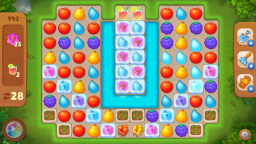
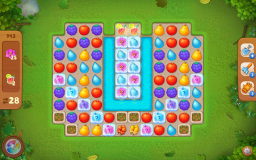
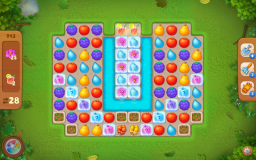
The puzzle gameplay is built around familiar match-3 rules. I swap pieces, create matches, collect specific items, clear obstacles, and try to complete the goal before running out of moves. It is easy to begin because the basic actions are instantly understandable. The challenge comes from limited moves, layered obstacles, and boards that require careful planning.
I like that the game gradually introduces new mechanics. Boxes, chains, grass, acorns, honey, water, and other obstacles change how I approach each board. Some levels reward direct clearing, while others require me to build power-ups and plan several moves ahead. The best puzzles make me pause for a second before acting, which is exactly what I want from a match-3 game.
Power-ups add most of the excitement. Rockets, bombs, paper planes, and rainbow blasts can completely change a board when used well. Combining power-ups is especially satisfying because it creates big chain reactions and turns a crowded level into a burst of movement. Those moments are the puzzle equivalent of watching a messy room suddenly clean itself.
Difficulty Can Be Rewarding, But Sometimes Pushy
Gardenscapes is relaxing in presentation, but not always gentle in difficulty. Some levels can be surprisingly tough, especially when the move limit is tight or the board layout depends heavily on the right pieces appearing at the right time. I enjoy a challenge, but I noticed that certain stages can interrupt the cozy flow of the game.
When the difficulty feels fair, it is genuinely rewarding. Beating a level after several attempts gives me a real sense of relief, especially when the final move completes the objective. The game is good at creating those last-second victories where one power-up saves the entire board.
When the difficulty feels less fair, frustration appears quickly. A board can sometimes feel more dependent on luck than planning, and that is where the free-to-play structure becomes more noticeable. Extra moves, boosters, and lives can help, but relying on them too often changes the mood from relaxing garden restoration to resource management.
The Renovation Loop Keeps Me Coming Back
The main reason I keep playing Gardenscapes is the renovation loop. Each puzzle level gives me stars, and stars move the story forward. This structure makes even ordinary levels feel connected to a larger goal. I am not only winning a board; I am earning the next repair, conversation, or decorative change.
I like how small tasks build toward bigger transformations. Cleaning a path, fixing a fountain, planting flowers, and placing furniture may seem minor on their own, but together they make each area feel renewed. The game understands the pleasure of before-and-after progress. It gives me a messy space, lets me improve it step by step, and then shows the result clearly.
This loop is especially effective because it mixes short-term and long-term motivation. A single level gives me a quick goal, while the full garden gives me something larger to work toward. That balance makes the game easy to play in short sessions while still creating a feeling of ongoing investment.
The Story Is Light, Cozy, and Sometimes Surprisingly Busy
Gardenscapes uses story as a soft frame around the puzzles. The plot is not heavy or complicated, but it gives context to the estate and the people around it. I see Austin organizing repairs, welcoming visitors, solving small problems, and reacting to the latest garden situation with his usual energy.
I enjoy the story most when it adds charm to the setting. A new guest, a family memory, or a small event can make a restored area feel more meaningful. The writing is simple, but it gives the game a warm personality that separates it from plain puzzle apps.
At times, the story can feel busy because there are many small tasks between major visual changes. Some actions require stars for things that feel less exciting than renovation, such as conversations or tiny errands. I do not mind this when the scene is entertaining, but I prefer when my stars go toward visible improvements in the garden.
Visual Rewards Make Every Area Feel Worth Restoring
The visual feedback in Gardenscapes is one of its best strengths. The game understands that restoration needs to feel rewarding. When an old area becomes clean, bright, and decorated, I get an immediate sense of satisfaction. The garden changes in a way I can clearly see.
I also like how each area has its own personality. One section may focus on fountains and flowerbeds, while another might introduce a more playful or elegant design. This variety helps the estate feel larger and keeps the renovation from becoming repetitive too quickly.
The animations add to the charm. Austin walks around, objects appear with a little flourish, plants brighten the scene, and decorations settle into place. These small touches make the garden feel alive. The game turns decoration into a tiny performance, which makes every completed task feel more enjoyable.
Events, Rewards, and Side Activities Add Extra Motion
Gardenscapes includes many events and limited-time activities, and they help break up the standard puzzle-renovation cycle. Some events offer extra rewards, while others introduce temporary goals or side stories. I like having these options because they give me more reasons to play beyond the main garden tasks.
The reward system is generous in presentation. There are coins, boosters, timed bonuses, event prizes, and daily gifts. The game often makes me feel like I am receiving something, even if the rewards vary in usefulness. That constant motion keeps the experience lively.
However, the number of pop-ups and event prompts can sometimes feel like too much. Gardenscapes is at its best when it lets the garden atmosphere breathe. When too many offers or limited-time screens appear, the cozy feeling becomes slightly crowded. I enjoy events, but I prefer them when they support the main experience rather than interrupt it.
Sound and Animation Support the Comfortable Mood
The audio design in Gardenscapes is gentle and cheerful. The music creates a relaxed background without demanding too much attention, while the sound effects make puzzle moves feel clear and satisfying. Matching pieces, activating power-ups, completing goals, and finishing repairs all have pleasant feedback.
I especially like the sound of power-up combinations. A successful chain reaction feels more exciting because the audio gives every movement a little sparkle. It makes the board feel responsive and lively, even during difficult levels.
The animations also help maintain the soft tone. Characters move with cartoon-like expressiveness, objects appear smoothly, and the garden slowly becomes more animated as it improves. The presentation is not dramatic, but it is consistently charming, which fits the game perfectly.
Pros
- Austin adds personality and humor to the experience
- Match-3 gameplay is easy to learn but can become strategically interesting
- Power-up combinations create satisfying chain reactions
- Visible before-and-after progress makes renovation rewarding
- Decorative choices add a small sense of personal style
- Events and daily rewards provide extra reasons to return
Cons
- Lives and boosters can make the free-to-play structure very noticeable
- Some story tasks feel less rewarding than actual garden repairs
- Frequent pop-ups and event prompts can make the menus feel crowded
- Progress may slow down when several hard levels appear close together
- Players who dislike match-3 puzzles may not enjoy the core loop for long