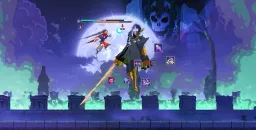
Dead Cells is the kind of game that makes failure feel less like a wall and more like a lesson written in fire. One run ends badly, another begins immediately, and somehow the next attempt already feels sharper. The island changes, the weapons change, the route changes, but the player’s understanding keeps growing. That is the secret. Dead Cells does not simply ask me to be faster. It asks me to become more observant: read enemy patterns, respect traps, use weapons properly, stop panicking near ledges, and understand when aggression is confidence and when it is just impatience wearing a cool jacket.
The Core Loop Is Brutal, Clean, and Extremely Addictive
Dead Cells is officially described as a rogue-lite, Castlevania-inspired action-platformer set in a sprawling, ever-changing castle, with 2D souls-lite combat and permadeath always hanging over the run. That description is accurate, but it does not fully explain how quickly the loop gets under the skin. The game begins again and again, yet it rarely feels like starting from nothing.
Every run gives me something useful. Maybe I discover a better weapon combination. Maybe I learn a boss pattern. Maybe I unlock a blueprint. Maybe I realize that rushing through a biome just because I feel strong is a very efficient way to become a stain on the floor. Dead Cells turns repetition into improvement, and that makes its difficulty easier to accept.
-
Runs are randomized enough to feel fresh without becoming unreadable;
-
Permanent unlocks give long-term progress between failed attempts;
-
Enemy patterns reward observation and patience;
-
The restart speed keeps frustration from sitting too long;
The Combat Feels Fast Without Becoming Loose
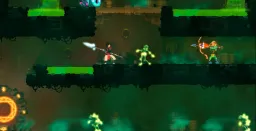
The best thing about Dead Cells is the feel of movement and combat. The character moves quickly, rolls cleanly, climbs smoothly, attacks immediately, and responds with the kind of precision that makes risky play tempting. The Steam page describes the game around fast action, a changing castle, and combat where there are no checkpoints. That no-checkpoint pressure matters because every movement decision carries weight.
I like that combat is aggressive but not mindless. A strong weapon can make me feel unstoppable for a few rooms, but the game is happy to punish overconfidence. A shield parry, a well-timed roll, a trap placed at the right moment, or a ranged attack used from safety can completely change a fight. Dead Cells rewards speed, but it respects control more.
Weapons Give Every Run a Different Personality
Dead Cells has a huge part of its identity in weapons and tools. Swords, whips, bows, crossbows, grenades, traps, turrets, shields, powers, and status-based builds can all change how a run feels. The game is not only asking whether I can survive. It is asking what kind of survivor I want to be this time.
I enjoy runs where the loadout develops a personality almost by accident. A fire-based setup turns the floor into a danger zone. A trap-heavy setup makes me fight like a nervous engineer. A fast melee build encourages bold movement. A shield build makes me calmer and more technical. The variety keeps the game from feeling like one long repeated corridor.
-
Melee weapons reward close-range confidence and timing;
-
Ranged weapons give safer options but still require positioning;
-
Traps and turrets let players control space more carefully;
-
Shields add a technical defensive layer for players who enjoy parrying;
The Biomes Make Route Choice Feel Meaningful
Dead Cells is not a single straight hallway. The island branches through different biomes, each with its own enemies, layouts, hazards, atmosphere, and rewards. The official site emphasizes an ever-changing castle, and that changing structure is one of the reasons the game remains replayable.
I like that choosing a route can feel like choosing a mood. Some areas feel cramped and dangerous. Others feel open but full of traps. Some routes are attractive because of rewards, while others are avoided because I know exactly how often they have humiliated me. The map structure makes progress feel flexible without losing direction.
The Metroidvania Influence Gives Exploration a Sense of Growth
Dead Cells is often called a roguelite with metroidvania inspiration, and that combination is important. Steam directly describes it as roguelite and metroidvania-inspired. The game uses permanent movement upgrades and route access to create a sense that the island opens up over time.
This is one of the smartest ways Dead Cells softens permadeath. I may lose a run, but the larger world does not feel completely reset. New paths, new tools, and new possibilities gradually appear. The game keeps the tension of roguelite failure while still giving the satisfaction of a world becoming more understandable.
-
Permanent abilities make new routes accessible over time;
-
Exploration gives runs more purpose than simple survival;
-
Hidden areas and alternate paths reward curiosity;
-
The metroidvania influence gives structure to the roguelite loop;
The Bosses Are Skill Checks With Attitude
Bosses in Dead Cells are not only bigger health bars. They are rhythm tests. Each one asks whether I have learned how to move, dodge, attack, heal, and remain calm when the screen becomes hostile. The strongest boss fights are readable but demanding, which is the right balance for this kind of game.
I enjoy how bosses expose bad habits. If I rely too much on panic rolling, a boss will notice. If I save healing too long, the mistake becomes obvious. If I enter with a messy build, the fight becomes longer and more dangerous. Dead Cells makes bosses feel like exams, but at least the teacher lets me retake them after I get flattened.
Mutations Add Strategy Between Biomes
Mutations are one of the systems that make Dead Cells feel more strategic between fights. They can support healing, damage, survival, cooldowns, ranged play, melee aggression, or specific build ideas. A good mutation choice can make a run feel coherent. A careless one can leave power on the table.
I like that mutations ask me to think about the run I actually have, not the run I wish I had. If my weapons apply poison, I should support that. If I am relying on turrets, I should lean into that rhythm. If I am playing recklessly, maybe a survival option is not cowardice but wisdom. Dead Cells quietly teaches flexibility.
-
Mutations help shape a run around the current weapons;
-
Survival-focused choices can keep risky builds alive longer;
-
Damage-focused choices reward confident players;
-
Cooldown and utility choices support trap, power, and ranged strategies;
The Scroll System Makes Power Feel Dangerous
Scrolls are simple on the surface: increase stats, make the build stronger, and survive longer. But they also create decisions around scaling. Building around Brutality, Tactics, or Survival encourages specialization, and specialization makes the run feel sharper. Splitting too carelessly can leave a build feeling weak.
I like this because Dead Cells makes power growth feel intentional. It is not enough to grab every upgrade and hope. The player needs to understand what the build is becoming. A focused run feels wonderful when weapons, mutations, stats, and skills all point in the same direction.
The Pixel Art Is Readable and Full of Motion
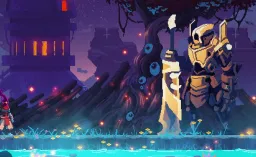
Dead Cells has beautiful pixel art, but the more important point is that the art is readable at speed. Enemies have clear silhouettes, attacks have visible tells, traps stand out, and movement effects communicate momentum. This matters because the game is fast. If the screen were messy in the wrong way, the difficulty would feel unfair.
I enjoy how the visual style balances grime, color, humor, and danger. The island feels cursed, but it is not visually dull. Biomes have strong identities, enemy designs are expressive, and the player character has a strange, animated swagger. Dead Cells looks sharp because it understands that style must support play.
-
Enemy silhouettes stay readable during fast combat;
-
Biome art gives each route a distinct atmosphere;
-
Animations make weapons and movement feel responsive;
-
The pixel style keeps the game expressive without visual clutter;
The Sound Design Makes Hits Feel Heavy
Dead Cells sounds as sharp as it moves. Weapon impacts, enemy reactions, trap triggers, dodges, parries, and boss attacks all have enough force to make combat feel physical. Good sound matters in an action game because it confirms timing. When a parry lands or a heavy hit connects, the audio makes the moment satisfying.
The music also helps each biome feel like a stage in a larger journey. Some areas feel tense and lonely. Others feel faster and more hostile. The soundtrack rarely gets in the way, but it gives the island energy. It makes each run feel less like a spreadsheet of damage numbers and more like a dangerous expedition.
The Difficulty Is Demanding but Usually Fair
Dead Cells is hard, but most of the time it feels fair because the controls are strong and enemy behavior can be learned. The official description’s promise of permadeath and “No checkpoints” is not a marketing decoration; it defines the emotional contract. The game says the run can end, and then it proves it repeatedly.
What keeps the challenge enjoyable is that mistakes are usually traceable. I know when I got greedy. I know when I ignored a ranged enemy. I know when I entered a cursed chest situation and immediately regretted my confidence. Dead Cells is difficult, but it gives me enough information to improve.
-
Fast controls make deaths feel tied to decisions rather than input delay;
-
Enemy patterns become easier to read with experience;
-
Risk-reward choices create meaningful tension;
-
The game is punishing, but improvement feels visible over time;
The Risk-Reward Design Is Excellent
Dead Cells constantly asks how much danger I am willing to accept for better rewards. Cursed chests, harder routes, optional enemies, timed doors, special rooms, and aggressive play can all improve a run, but they can also end it quickly. This is where the game becomes psychologically interesting.
I like how the game tempts me when I am feeling strong. A safe player can progress steadily, but a greedy player may become powerful faster. The problem is that greed and skill are not the same thing. Dead Cells is very good at letting me discover that distinction in painful, memorable ways.
The DLC Expanded the Game Without Diluting It
Dead Cells received multiple major expansions over its life, and Return to Castlevania became the most recognizable crossover. Steam describes Return to Castlevania as an expansion where players battle through Dracula’s Castle and unlock 14 iconic weapons such as the Vampire Killer, Throwing Axe, and Holy Water. That kind of DLC fits Dead Cells almost too well because Castlevania is already part of the game’s spiritual DNA.
I think the DLC approach worked because expansions added routes, weapons, bosses, enemies, and atmosphere without making the core loop feel bloated. The best additions feel like new reasons to return rather than distractions from what made the base game strong.
-
Paid DLC expanded biomes, bosses, weapons, and routes;
-
Return to Castlevania connected naturally with Dead Cells’ Castlevania-inspired roots;
-
New weapons gave returning players fresh build ideas;
-
Extra content made the game feel larger without weakening the main loop;
Return to Castlevania Is a Celebration, Not Just a Reference
Return to Castlevania could have been a shallow nostalgia pack, but it feels more substantial than that. Dracula’s Castle, Castlevania weapons, familiar enemies, and themed bosses give the expansion a strong identity. It works because Dead Cells already has the speed and structure to reinterpret classic gothic action through its own combat language.
I like that the weapons are not only name-drops. The Steam page notes that each item was translated into Dead Cells’ fast-paced combat while keeping its original essence. That is exactly what good crossover DLC should do. It should respect the source while still feeling native to the host game.
The Final Major Update Gives the Game a Clear Endpoint
Dead Cells eventually reached its final major update. Version 3.5, known as The End is Near, is documented by the official wiki as a major update released on August 19, 2024. Reports around the update described it as the final patch, adding new curse-related content, new weapons, new mobs, new mutations, biome effects, many head skins, legendary affixes, routing changes, and accessibility options.
I think this matters for a review because Dead Cells now feels like a mature, content-rich game rather than an endlessly shifting live-service project. That can be good for new players. The game has a huge amount of material, but its creative journey has a clearer shape. There is something satisfying about playing a game that has been expanded, refined, and finally allowed to stand as a complete thing.
-
The End is Near update added curse-focused content and extra customization;
-
The final update status gives the game a more complete long-term shape;
-
Accessibility and quality-of-life changes help late players enter more comfortably;
-
Players should not expect endless new major content going forward;
The Accessibility Options Help More Players Learn
Dead Cells is demanding, but later updates added more ways to tune the experience. The final update coverage mentions extra accessibility options, and the broader update history includes quality-of-life changes. This is important because a hard game does not need to be hostile to every type of player.
I like accessibility in games like this because it lets more people experience the combat, routes, and progression without pretending the original challenge disappeared. Dead Cells can still be hard. It can also be more adaptable. Those two ideas are not enemies.
The Mobile and Platform Reach Make the Game Easy to Recommend
Dead Cells is available across many platforms, and its legacy includes PC, consoles, and mobile versions. The official and Steam pages focus on the core PC/console identity, while wider coverage notes the game’s long multi-platform life. This broad availability matters because Dead Cells is one of those games that fits both long sessions and short attempts.
I personally prefer it with a controller because the movement and combat deserve precision. Still, the fact that the game reached so many platforms shows how strong the core design is. A good Dead Cells run has the kind of rhythm that can work in different contexts as long as the controls feel responsive.
The Game Is Best When You Stop Blaming the Game
Dead Cells can absolutely be frustrating. A run can collapse in seconds. A perfect build can be lost to one careless room. A boss can erase thirty minutes of confidence. But the game becomes much better when I stop treating every loss as unfair and start asking what I did wrong.
This is where Dead Cells becomes almost educational in a harsh way. It teaches positioning, patience, route planning, build focus, and risk management. It also teaches humility. Feeling powerful is not the same as being safe. The island always has time to remind me.
-
Losses often reveal bad habits;
-
Better route knowledge makes later runs smoother;
-
Build planning becomes more important as difficulty increases;
-
The best improvement comes from reading mistakes honestly;
The Humor Keeps the World From Becoming Too Grim
Dead Cells has a dark setting, but it also has a strange sense of humor. The player character’s body-stealing existence, odd NPC moments, weird descriptions, exaggerated enemies, and occasional absurdity keep the world from becoming one-note. The game can be harsh without being joyless.
I appreciate that tone. Some difficult games become heavy because they treat every moment like a sacred test of suffering. Dead Cells is more playful than that. It can punish me, then give me a ridiculous weapon or a strange room and move on. That little wink makes the challenge easier to return to.
The Learning Curve Can Be Steep for New Players
Dead Cells is approachable in controls, but not necessarily gentle in structure. New players may struggle with routes, scroll scaling, weapon synergy, shields, mutations, blueprint unlocks, and boss patterns. The game explains enough to begin, but mastery comes from repeated failure.
I think that is both a strength and a weakness. The sense of discovery is excellent, but some players may bounce off before the systems click. Dead Cells is best for people who enjoy games that become clearer through play rather than through long tutorials. It trusts the player to learn by doing, falling, and trying again.
The Best Audience Is Action Players Who Enjoy Repetition With Growth
Dead Cells is ideal for players who enjoy precise 2D action, roguelite structure, weapon variety, and metroidvania-flavored exploration. It is especially good for people who like short-term run tension combined with long-term unlock progress. A player who enjoys experimenting with builds will find a lot to love here.
It may be less appealing to players who need a traditional story campaign, fixed levels, frequent checkpoints, or gentle difficulty. Dead Cells is not built around comfort. It is built around momentum, danger, and improvement. The satisfaction comes from realizing that the run is going better because the player is getting better.
Where Dead Cells Feels Most Effective
Dead Cells feels most effective when a run starts messy and slowly becomes a build. A random weapon becomes the center of a strategy. A mutation supports it. A scroll choice strengthens it. A route gives it the right rewards. Suddenly, the run has an identity, and every fight becomes a chance to prove that identity can survive.
The game also succeeds because it keeps failure quick, readable, and useful. I do not always like losing, but I usually understand why it happened. That is the difference between difficulty that feels cheap and difficulty that becomes addictive. Dead Cells makes the next attempt feel like a correction, not just a repeat.
Where Dead Cells Feels Less Strong
The biggest weakness is that repetition can become tiring if the player does not enjoy roguelite structure. Even with different weapons, routes, biomes, and DLC, the core loop remains run-based. Players who want permanent story progress every session may find the structure discouraging.
The second weakness is how harsh the game can feel when a strong run ends suddenly. Losing late in a run is part of the design, but it can still sting. Dead Cells asks for patience, and not every player wants a game that keeps testing the same emotional muscle.
Pros
- Fast, responsive 2D combat makes every dodge, attack, parry, and movement choice feel precise
- Roguelite structure, permanent unlocks, branching routes, and metroidvania-inspired exploration create strong replay value
- Large weapon, skill, shield, mutation, and build variety makes runs feel meaningfully different
- Biomes, bosses, DLC, Return to Castlevania content, and final updates give the game a huge amount of mature content
- Failure usually feels educational because enemy patterns, route choices, and build mistakes can be understood and improved
Cons
- The difficulty and permadeath structure can frustrate players who prefer frequent checkpoints or softer progression
- Run repetition may feel tiring for players who dislike roguelite loops
- Late-run losses can feel painful because a strong build can disappear very quickly
- New players may need time to understand scroll scaling, mutations, route choices, shields, and weapon synergy
- With the final major update already released, players should expect a complete game rather than ongoing major content expansion