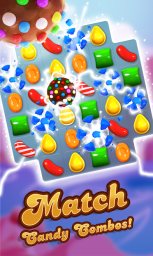
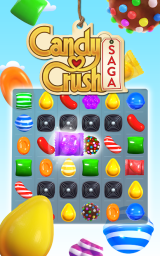
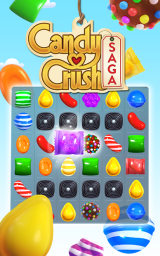
I opened Candy Crush Saga expecting a familiar match-3 puzzle game, and that is exactly what it is, but the interesting part is how well it still understands casual mobile play. Candy Crush Saga is not complicated at first glance. I swap candies, match three or more, trigger cascades, clear objectives, and move to the next level. Yet the game has lasted for years because it turns that simple loop into a steady habit. Each level gives me a small problem to solve. Each move feels easy to make. Each combo gives a tiny burst of satisfaction. The game does not need a dramatic story or complex controls. It wins by making one more attempt feel harmless, quick, and strangely tempting.
The Match-3 Formula Is Still the Whole Foundation
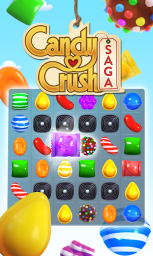
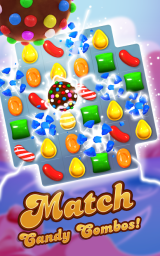
Candy Crush Saga works because the main action is instantly understandable. Swap two candies, create a match, clear the board, and watch the pieces fall into place. It is the kind of mechanic that almost anyone can learn in seconds, which is why the game remains so accessible. The official Candy Crush site describes the game around switching and matching through thousands of levels in a puzzle adventure, and that simple promise is still accurate.
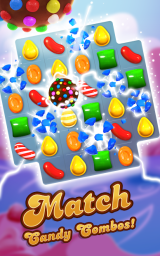
What I like is that the game does not make the basic move feel boring. A single match can lead to a cascade. A cascade can create a special candy. A special candy can save a level that looked impossible one move earlier. That small chance of a lucky chain reaction keeps the board exciting, even when I know the rules very well.
The Game Feels Easy Until It Quietly Becomes Strategic
At first, Candy Crush Saga feels like pure relaxation. I match candies, enjoy the colors, and move forward. Then the game starts asking for more careful thinking. Limited moves, blockers, jelly, ingredients, orders, and awkward board shapes force me to plan instead of only reacting. The App Store listing mentions game modes such as Target Score, Clear the Jelly, Collect the Ingredients, and Order Mode, which shows how the game keeps reshaping the same match-3 base.
I enjoy that shift because it happens gradually. The game never suddenly becomes a hardcore puzzle title, but it does become more tactical. I start looking for combinations before making a move. I think about whether to clear blockers first or chase the objective. I delay a good move because a better combo may appear. That is where Candy Crush Saga becomes more interesting than its sugary surface suggests.
-
Matching candies is simple enough for almost any casual player;
-
Limited moves make each decision feel more important;
-
Different objectives prevent every level from feeling identical;
-
Cascades add surprise and make the board feel alive;
Special Candies Make the Smallest Win Feel Big
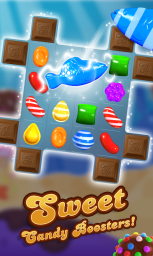
The best feeling in Candy Crush Saga comes from creating special candies. A striped candy, wrapped candy, Color Bomb, or strong combo can turn a stuck board into a fireworks show. These moments are important because they make the player feel clever, lucky, or both. A regular match clears a few spaces. A special combo can change the whole level.
I like how the game teaches special candies through repetition. It does not need a long manual. After a while, I naturally understand that four candies create one type of effect, five create another, and combining specials can produce bigger clears. This makes the game satisfying for casual players while still giving experienced players something to aim for on every board.
Boosters Are Helpful, but They Change the Psychology
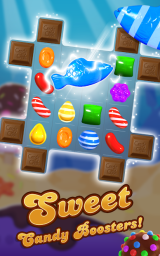
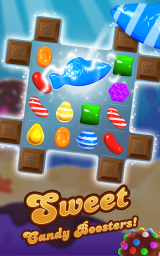
Boosters are a major part of Candy Crush Saga’s design. Google Play mentions boosters such as Color Bomb, Lollipop Hammer, and Jelly Fish, while the App Store describes using boosters wisely to overcome extra sticky puzzles. These tools can be genuinely useful when a level becomes frustrating.
I have mixed feelings about boosters, though. On one hand, they can turn a near-loss into a satisfying victory. On the other hand, they change how I think about difficulty. If I fail a level several times, I start wondering whether I should keep trying, wait for rewards, or use a booster. That tension is part of the free-to-play structure. Boosters are fun when they feel like earned help. They are less fun when a level seems designed to make me want one.
-
Color Bombs can clear large parts of the board when used well;
-
Lollipop Hammers give direct control in difficult moments;
-
Jelly Fish and other helpers can make stubborn objectives easier;
-
Boosters are most satisfying when they feel optional rather than required;
The Level Design Is the Real Long-Term Engine
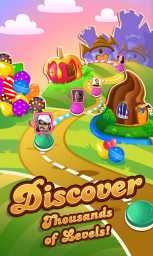
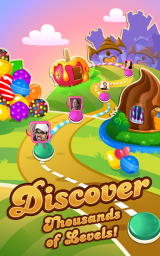
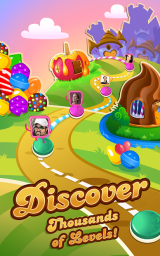
Candy Crush Saga has survived because it keeps producing levels. The App Store description says the game has thousands of levels and puzzles in the Candy Kingdom, with more added every two weeks. That constant supply is one of the main reasons the game feels endless in practice.
I think level design is what separates Candy Crush Saga from weaker match-3 copies. A good level creates a clear goal, a visible obstacle, and just enough hope to keep me trying. It should feel difficult but not impossible. It should make me blame my last move rather than the whole game. Candy Crush often hits that balance, which is why replaying a level can feel motivating instead of pointless.
The Difficulty Curve Can Be Clever and Annoying
Candy Crush Saga is very good at creating friction. Some levels let me glide through quickly, while others stop me for multiple attempts. That rhythm is not accidental. Easy levels create momentum. Hard levels create tension. A victory after several failures feels better because I had to earn it.
Still, this difficulty curve can also be frustrating. A level may depend heavily on candy drops, cascades, or a lucky board opening. When that happens, the puzzle can feel less like planning and more like waiting for the game to cooperate. I do not mind some randomness in a casual puzzle game, but I notice it most when I lose with only one jelly or one ingredient left.
The Visual Style Is Sweet, Clear, and Extremely Recognizable
Candy Crush Saga has one of the most recognizable visual identities in mobile gaming. The candies are bright, glossy, colorful, and easy to distinguish. The board looks cheerful even when the puzzle is difficult. That matters because the player spends most of the time staring at a grid. If the pieces were hard to read, the whole experience would collapse.
I like how the candy theme makes failure feel softer. Losing a level full of chocolate, jelly, and colorful sweets feels less harsh than losing in a darker competitive game. The visual softness helps the game remain approachable, especially for players who want relaxation more than intensity.
-
Bright candy colors make matches easy to identify;
-
Glossy effects make combos feel rewarding;
-
The sweet theme keeps the tone light even during hard levels;
-
Clear board design supports quick mobile play;
Daily Rewards Turn the Game Into a Habit
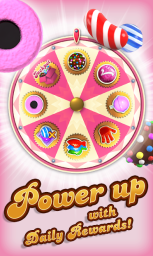
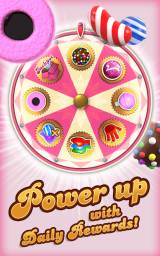
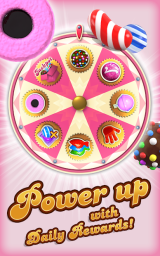
Candy Crush Saga understands habit formation very well. Daily rewards, the Daily Booster Wheel, and time-limited challenges give players small reasons to open the app regularly. The App Store description specifically mentions checking back daily, spinning the Daily Booster Wheel, and joining time-limited challenges to earn boosters.
I can see why this works. Even when I do not plan to play for long, the game gives me a reason to check in. Maybe I collect a reward. Maybe I try one level. Maybe I use a free booster. Suddenly, a tiny visit becomes a short session. The design is simple, but very effective.
Events Keep the Familiar Formula From Feeling Frozen
Events help Candy Crush Saga feel active rather than static. Google Play editorial content explains that events often remix gameplay with themed candies or special collection goals, giving the normal Candy Crush loop a temporary twist. That matters because the basic match-3 structure is old enough that it needs fresh framing.
I like events when they add variety without making the game feel too crowded. A themed challenge can make a normal session feel more special. Leaderboard-style events can add motivation. Limited rewards can give players a reason to push further. The risk is that too many events can make the game feel noisy, especially for someone who only wants a quiet puzzle break.
The Social Layer Is Light but Useful
Candy Crush Saga includes friends, leaderboards, and competitive event elements. The App Store listing mentions getting to the top of leaderboard events and comparing scores with friends and competitors. This social layer is not as intense as a multiplayer game, but it adds just enough comparison to make progress feel visible.
I think the social features work best when they stay optional. Candy Crush is strongest as a personal puzzle habit. Seeing a friend’s progress or event ranking can be motivating, but I do not need the game to become a full social platform. The lightness is part of the appeal.
-
Leaderboards add friendly competitive motivation;
-
Friend comparisons make progress feel more visible;
-
Events give solo play a shared community feeling;
-
The social layer works best when it does not interrupt relaxed play;
Offline and Online Play Make It Easy to Fit Into Real Life
One useful detail is that Candy Crush Saga is designed for flexible play. The App Store description notes that levels are accessible on the go, offline and online. That makes the game very practical as a mobile habit. It can fit into travel, waiting rooms, short breaks, or quiet evenings.
I appreciate this because casual mobile games need to respect unpredictable schedules. If a game only works well under perfect conditions, it loses part of its mobile advantage. Candy Crush Saga is easy to start, pause, close, and return to later. That convenience is one of its quiet strengths.
The Game’s Longevity Is Not an Accident
Candy Crush Saga has remained popular because it keeps updating, testing, and refining the experience. AP reported that King uses AI behind the scenes to help create and update boards, analyze player feedback, and improve large numbers of levels while keeping puzzles balanced for different players. That kind of ongoing support helps explain why the game can maintain such a huge level library.
This behind-the-scenes work matters because a match-3 game lives or dies on feel. If levels become too easy, players drift. If they become too punishing, players quit. Candy Crush Saga constantly tries to keep players in that middle zone where frustration and satisfaction feed each other. That balancing act is one of the reasons the game still feels professionally tuned.
The Monetization Is Gentle Until It Is Not
Candy Crush Saga is free to play, and that accessibility is a major reason it reached such a wide audience. But monetization is still part of the experience. Boosters, extra moves, lives, bundles, and timed offers can appear when the player is stuck or close to winning. The game often feels generous, but it also knows exactly when a player might be tempted.
I do not think spending is necessary for everyone. Patient players can progress without treating purchases as the solution to every difficult level. But the pressure exists. When I lose a level by one move and the game offers extra help, the temptation is obvious. Candy Crush Saga is most enjoyable when I treat purchases as optional and accept that some levels may take several attempts.
The Game Is Best in Short Sessions
Candy Crush Saga works beautifully in short sessions. A few levels during a break can feel relaxing and satisfying. The problem is that long sessions can make the repetition more noticeable, especially when I hit a frustrating level and keep replaying it. The same board can shift from fun to irritating if I stay too long.
I think the best way to play is casually. Let the game be a small puzzle snack, not a full meal every time. When I approach it that way, the colors, combos, and rewards feel pleasant. When I try to force progress for too long, the free-to-play friction becomes more obvious.
-
Short levels make the game easy to play during breaks;
-
Quick retries create strong “one more try” momentum;
-
Long sessions can make hard levels feel more frustrating;
-
The game works best as a casual habit rather than a marathon challenge;
The Puzzle Design Has More Complexity Than People Admit
Candy Crush Saga is often treated like a simple casual game, but match-3 puzzles can be surprisingly complex. Academic research has even studied Candy Crush-style match-three games as computationally difficult, showing that beneath the friendly look, this kind of puzzle structure can involve serious planning complexity.
That does not mean every Candy Crush level feels like a math problem, of course. The player experience is much softer. But I do think the game’s reputation as “just matching candy” undersells how much board reading, probability, and move planning can matter. The best levels make me scan the board like a tiny tactical map.
Where Candy Crush Saga Feels Most Effective
Candy Crush Saga feels most effective when a level gives me a clear objective, a messy board, and just enough moves to believe I can solve it. The best moments happen when I create a special candy at exactly the right time or when an unexpected cascade clears the last obstacle. Those tiny victories are the fuel of the whole game.
The game also succeeds because it respects casual play. It does not require complicated controls, long matches, or constant attention to a story. It is easy to understand, easy to return to, and easy to play almost anywhere. That simplicity is not a weakness. It is the reason Candy Crush Saga became one of the most durable mobile puzzle games.
Where Candy Crush Saga Feels Less Strong
The biggest weakness is repetition. The game adds obstacles, modes, events, and boosters, but the core action remains matching candies on a board. For players who need constant mechanical novelty, Candy Crush Saga may feel too familiar after a while. It is polished, but it is still built around one loop.
The other issue is frustration around difficult levels and monetization prompts. When a level feels too dependent on luck, and the game offers boosters or extra moves at the exact painful moment, the design can feel manipulative. I enjoy Candy Crush Saga most when I step away before that frustration becomes the whole session.
Pros
- Classic match-3 gameplay is instantly understandable and easy to start
- Thousands of levels, regular updates, and varied objectives create long-term content
- Special candies, cascades, and boosters make small wins feel satisfying
- Daily rewards, events, and leaderboards give players reasons to return
- Works well for short mobile sessions, with offline and online accessibility
Cons
- The core match-3 loop can become repetitive during long play sessions
- Some difficult levels may feel dependent on lucky board drops or cascades
- Boosters, extra moves, and purchase prompts can create spending temptation
- Events and rewards may feel noisy for players who want a very simple puzzle experience
- Progress can slow sharply when the difficulty curve becomes more aggressive