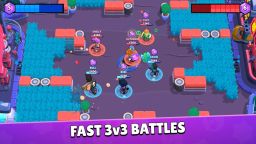
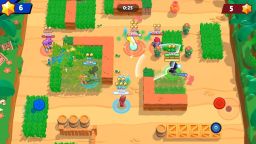
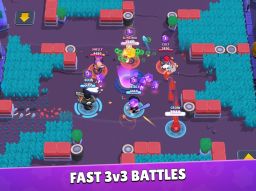
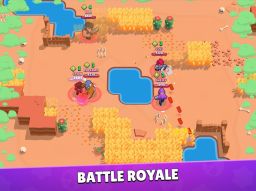
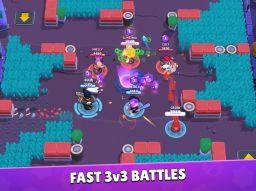
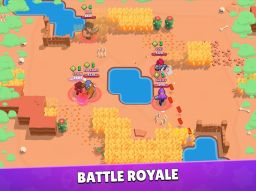
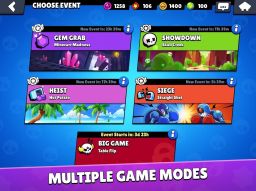
I opened Brawl Stars expecting a quick mobile action game, but it immediately reminded me why Supercell is so good at compressing big competitive ideas into tiny sessions. Brawl Stars does not ask for a long match, a complicated keyboard layout, or a huge time commitment. It gives me short battles, bright characters, clean objectives, and just enough chaos to make every round feel alive. The official description presents it as fast-paced 3v3 multiplayer and battle royale made for mobile, playable solo or with friends in modes that usually last under three minutes. That short-match structure is the secret. Brawl Stars feels easy to start, but it becomes much deeper once I begin caring about positioning, team composition, timing, map control, gadgets, supers, and how each Brawler changes the rhythm of a fight.
The First Hook Is Speed
Brawl Stars understands mobile attention better than many competitive games. A match begins quickly, the objective is clear, and the action starts almost immediately. I do not have to spend ten minutes preparing before the fun begins. That makes the game very easy to play during short breaks, but it also creates the dangerous feeling of “just one more round.”
The short match length matters because losing does not feel catastrophic. A bad round is over quickly, and the next one is already waiting. That pace makes the game forgiving for casual players while still giving competitive players enough room to improve. I like that balance. Brawl Stars can feel light and serious at the same time, depending on how much attention I bring to it.
Brawlers Give the Game Its Real Personality
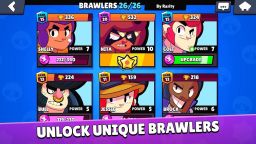
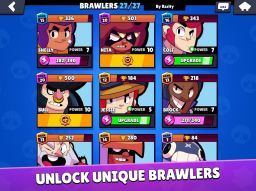
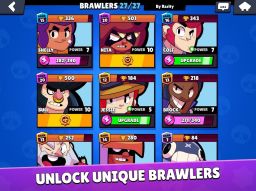
The Brawlers are the heart of the experience. Each character has a distinct attack style, Super ability, personality, range, movement rhythm, and role in a match. App Store and Google Play descriptions highlight unlocking and upgrading Brawlers with Super abilities, Star Powers, Gadgets, and skins. That variety is what keeps the game from becoming a simple top-down shooter.
I enjoy how quickly a new Brawler can change my habits. A long-range character asks me to stay safe and control lanes. A close-range bruiser makes bushes and corners feel important. A thrower changes how walls matter. A support-style Brawler can turn the whole team into something more stable. The controls remain simple, but the character variety gives the game a lot of tactical texture.
-
Different Brawlers create different match roles and playstyles;
-
Super abilities give each character a memorable power moment;
-
Star Powers and Gadgets add extra strategic layers;
-
Skins make favorite Brawlers feel more personal without changing the core idea;
The Controls Are Simple, but the Decisions Are Not
Brawl Stars works because it feels approachable without being empty. Moving, aiming, attacking, and using a Super are easy to understand. The challenge comes from when to push, when to retreat, when to hold an area, when to save a Super, and when to risk everything for the objective. That is where the game becomes interesting.
I like that the control scheme does not get in the way. On mobile, complicated controls can ruin fast action. Brawl Stars keeps the interface clean enough for quick reactions, but the matches still reward patience and awareness. A player who only rushes forward will usually get punished. A player who reads the map and waits for the right timing can completely change a round.
3v3 Modes Make Teamwork Matter Immediately
The 3v3 structure is one of the game’s strongest formats. With only three players per side, every mistake feels visible and every good play matters. There is no hiding inside a huge team. If I overextend, my teammates feel it. If I control a lane well, the whole team benefits. That small-team format gives Brawl Stars a very direct competitive rhythm.
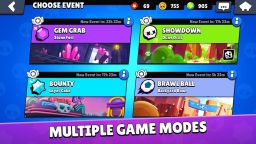
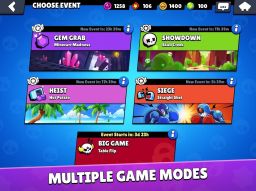
Supercell and the app store listings emphasize a variety of PvP arena modes, including team-based formats. I think this variety is important because Brawl Stars is not only about eliminating opponents. Different modes ask for different priorities. Sometimes survival matters most. Sometimes holding territory matters. Sometimes collecting, defending, scoring, or controlling space becomes more important than chasing damage.
-
Small teams make each player’s choices feel important;
-
Different objectives keep matches from feeling identical;
-
Good positioning can matter more than raw aggression;
-
Team composition changes how each mode should be played;
Gem Grab Shows the Game’s Smartest Tension
Gem Grab is one of the clearest examples of why Brawl Stars works. The idea is simple: collect and hold enough gems to win. But the tension comes from the fact that gems can be lost if a player gets taken out. That creates a constant risk-reward question. Should I play safely with the gems I have, or push forward to pressure the enemy?
I like modes where the objective changes player behavior, and Gem Grab does exactly that. A strong team needs control, patience, and awareness. Someone has to carry responsibility. Someone has to apply pressure. Someone has to stop the enemy from making a last-second comeback. It looks simple, but the best rounds become surprisingly strategic.
Showdown Turns the Game Into Compact Battle Royale
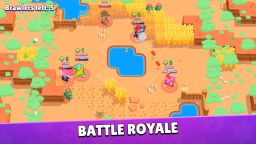
Showdown gives Brawl Stars a different flavor. Instead of focusing only on team objectives, it becomes a survival battle where power-ups, positioning, and timing decide the result. Google Play describes Showdown as a battle royale-style fight for survival where players collect power-ups and try to be the last Brawler standing.
I enjoy Showdown because it changes the emotional pace. In team modes, I think about coordination. In Showdown, I think about risk, third-party fights, escape routes, bushes, and whether an enemy is worth challenging. The mode is shorter and more personal. Winning feels satisfying because there is nowhere to hide behind team excuses.
Brawl Ball Is Silly, Competitive, and Brilliantly Readable
Brawl Ball is one of the modes that best captures Brawl Stars’ personality. It takes the combat system and turns it into a tiny sports match, where scoring can matter more than damage. The result is funny, tense, and often chaotic. I like that it rewards both mechanical skill and game sense.
A good Brawl Ball round can swing quickly. One Super breaks open the defense. One bad pass ruins a perfect push. One player holds the ball too long and gives the enemy time to regroup. The mode works because the objective is instantly understandable, but the tactics keep changing based on the map and Brawlers involved.
The Maps Are Small, but They Change Everything
Brawl Stars maps may look compact, but their layouts matter enormously. Walls, bushes, open lanes, choke points, and objective placement all shape the match. A Brawler who feels powerful on one map may feel awkward on another. That keeps the game from being only about picking a favorite character and repeating the same plan forever.
I appreciate how maps create little tactical problems. Should I control the center or pressure the side? Is the enemy hiding in a bush? Can my Brawler attack around walls? Is this an open map where long-range characters dominate? These questions make matches feel more thoughtful than the bright visuals might suggest.
-
Bushes create ambush opportunities and uncertainty;
-
Walls protect some Brawlers while limiting others;
-
Open lanes reward accurate long-range play;
-
Objective placement changes how teams should move;
The Visual Style Is Colorful Without Losing Clarity
Brawl Stars looks bright, bold, and exaggerated, but the best thing about its style is readability. Characters are easy to recognize, attacks are visually clear, and arenas are colorful without becoming impossible to read. In a game this fast, that clarity is essential.
I like how the art direction gives each Brawler a strong silhouette and personality. The cast feels like a toy-box mix of gunslingers, robots, creatures, performers, athletes, weirdos, and cartoon troublemakers. That variety makes the game feel playful even when the match is intense. The style is not realistic, but realism would not help this game. It needs readable chaos, and it gets that right.
Progression Feels Rewarding, but It Can Also Feel Like a Grind
Brawl Stars has a strong progression loop. Unlocking new Brawlers, upgrading favorites, trying Star Powers and Gadgets, collecting skins, and working through seasonal rewards all give players reasons to return. The game is free to download and play, but app store descriptions note that some items can be purchased for real money.
I have mixed feelings about this layer. On one hand, progression gives long-term motivation. On the other hand, any free-to-play game with upgrades and purchases has to manage balance carefully. Brawl Stars is most fun when skill, teamwork, and smart play feel more important than account progress. When upgrades or unlock speed feel too central, the experience can become more frustrating.
Events and Updates Keep the Game Moving
Brawl Stars has stayed relevant partly because it keeps changing. Google Play editorial coverage notes that regular updates add new game modes, Brawlers, and events, helping the game remain popular years after release. Supercell’s own release notes also show ongoing seasonal modes and balance changes, including April 2026 updates.
This live-service rhythm gives the game energy. A player can leave for a while and return to new Brawlers, event formats, balance adjustments, cosmetics, and seasonal themes. That freshness is a major advantage, but it also means the game can feel different over time. The meta changes, favorite characters rise or fall, and players need to adapt.
-
Regular updates help keep the game from feeling frozen;
-
New modes and events create reasons to return;
-
Balance changes can refresh the competitive meta;
-
Live-service design may also make the game feel harder to fully “finish”;
Playing With Friends Is the Best Version
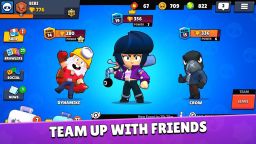
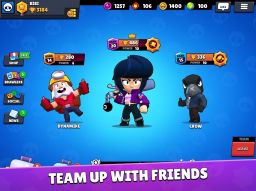
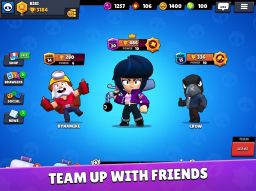
Brawl Stars is playable solo, but I think it becomes much better with friends. Communication changes everything. Even simple coordination, like choosing complementary Brawlers or deciding who controls which lane, makes matches feel more strategic. Random teammates can be fun, but they can also make objective modes feel unpredictable in the wrong way.
With friends, losses are easier to laugh off and wins feel more earned. The game’s short sessions also make it easy to play casually together. You do not need to schedule an entire evening. A few quick matches can still feel satisfying. That makes Brawl Stars one of the more social mobile action games when the group chemistry is right.
The Sound and Feedback Make Hits Feel Satisfying
Brawl Stars uses sound effects, impact cues, countdowns, announcer-style energy, and character sounds to make matches feel active. The feedback matters because the game is fast. I need to know when I hit, when I am in danger, when a Super is ready, and when the match is turning.
The audio style matches the visuals: playful, energetic, and slightly exaggerated. It makes the battles feel more like animated arena chaos than serious military combat. That tone helps Brawl Stars stand apart from darker mobile shooters. It is competitive, but it still feels like a cartoon brawl.
The Competitive Layer Is Deeper Than It First Looks
At first, Brawl Stars can look like a simple casual game. After playing more, I started noticing how many small decisions matter. Lane control, matchup knowledge, ability timing, map awareness, reload management, Super cycling, and team synergy all influence the result. The game’s simplicity is partly a disguise.
I like that the depth emerges naturally. A new player can enjoy tapping into battles and learning favorite characters. A serious player can study maps, modes, counters, and meta shifts. That wide skill range is one reason Brawl Stars works for many different audiences. It has an easy door and a surprisingly long hallway behind it.
The Monetization Is the Part to Watch Carefully
Because Brawl Stars is free-to-play, monetization is part of the experience. The app store listings mention optional purchases, including random items. I do not think that automatically ruins the game, but it is something players and parents should notice. The game is polished and generous enough to enjoy without treating every purchase as necessary, but the shop and progression systems are designed to tempt attention.
For younger players especially, it is worth setting expectations. Skins, passes, offers, and unlocks can become very appealing. The best way to enjoy Brawl Stars is to treat purchases as optional extras, not as the reason to play. The real fun should come from matches, learning Brawlers, and improving with friends.
Where Brawl Stars Feels Most Effective
Brawl Stars is strongest when a match is short, close, and objective-driven. A last-second gem recovery, a perfect Brawl Ball goal, a clutch Showdown survival moment, or a coordinated team push can make a three-minute match feel bigger than expected. The game understands how to create quick emotional spikes.
I also think Brawl Stars succeeds because it respects mobile play. It does not try to copy a PC shooter exactly. It builds around the strengths of phones: short sessions, simple input, colorful readability, instant matchmaking, and frequent rewards. That makes it feel native to mobile rather than compromised by it.
Where Brawl Stars Feels Less Strong
The biggest weakness is that frustration can arrive quickly when matchmaking, teammates, or progression feel uneven. Short matches reduce the pain, but they do not remove it. A poor team composition or a teammate ignoring the objective can make certain modes feel annoying.
The other issue is live-service pressure. There is always another event, another reward track, another Brawler, another skin, or another balance shift. That can be exciting, but it can also become tiring for players who prefer a finished game with a clear endpoint. Brawl Stars is built to be returned to, not completed once and closed forever.
Pros
- Fast mobile matches make the game easy to start and hard to put down
- Distinct Brawlers create strong variety in playstyle, strategy, and team roles
- Multiple modes, including 3v3, 5v5, and battle royale-style play, keep sessions fresh
- Colorful visuals and clear controls make the action readable on mobile screens
- Regular updates, events, balance changes, skins, and new content support long-term replay value
Cons
- Random teammates can make objective modes frustrating
- Free-to-play progression and optional purchases may feel grindy or tempting
- Balance changes can make favorite Brawlers feel stronger or weaker over time
- The fast pace may feel chaotic for players who prefer slower strategy games
- Live-service design can create pressure to keep checking events, passes, and rewards