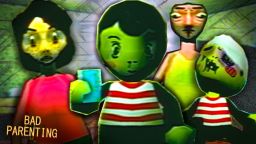

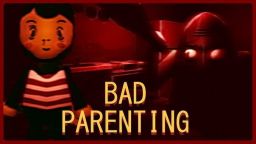
I started Bad Parenting expecting a short indie horror experience built around a creepy childhood myth, but the game quickly felt more emotional than I expected. It is not frightening only because Mr. Red Face looks strange or because the apartment feels unsafe at night. It is frightening because the story is rooted in a child’s confusion, loneliness, and trust. The game uses a simple setup: adults tell children about Mr. Red Face, a figure who supposedly appears late at night to reward well-behaved kids. But inside Ron’s small world, that bedtime myth becomes something much more painful. I liked how the game keeps its scale small. It does not need a giant map or complicated mechanics. It only needs a room, a child’s perspective, and the slow feeling that something is very wrong.
A Short Horror Game That Uses Time Carefully
Bad Parenting is brief, and that is one of its biggest strengths. The itch.io page lists the duration at around 20 minutes, which means the game has very little room for filler. It moves quickly from ordinary family discomfort into something more surreal and disturbing, without stretching the premise beyond its natural shape.
I liked that compactness because the story feels like a nightmare remembered in pieces. A longer version might have weakened the effect. The game works because it arrives, creates unease, reveals its emotional wound, and leaves the player sitting with what happened. Its short length makes it feel sharper rather than smaller.
Ron’s Perspective Makes the Horror Feel Vulnerable
Ron is the reason the game affected me more than a typical jump-scare horror title. The story is seen through a child’s limited understanding, and that makes every adult action feel larger, stranger, and more confusing. He does not have the power to fully explain what is happening around him. He can only experience it.
This child-level perspective changes the emotional texture of the game. A room feels bigger. A parent’s absence feels heavier. A bedtime story feels more believable. A strange figure can become terrifying because the child has no real way to judge what is true, what is pretend, and what is being hidden from him.
-
Ron’s point of view makes ordinary spaces feel more intimidating;
-
The childlike perspective turns confusion into part of the horror;
-
The story feels personal because the danger is tied to family trust;
-
The limited runtime helps keep Ron’s experience concentrated and intense;
Mr. Red Face Works Because the Myth Sounds Almost Innocent
The best idea in Bad Parenting is Mr. Red Face himself. Steam describes him as a fictional character created by adults to teach children, said to appear late at night with gifts for well-behaved kids. That sounds almost like a twisted holiday figure or bedtime cautionary tale, which makes the darker turn more unsettling.
I liked how the game uses that contrast. Mr. Red Face begins as something adults can explain away, a story told to manage a child’s behavior. But horror often works best when the harmless explanation starts to collapse. The question is not only whether Mr. Red Face is real. The stronger question is why adults would create such a story in the first place, and what it allows them to ignore.
The Apartment Setting Feels Small in the Right Way
Bad Parenting does not need a sprawling haunted mansion. Its small domestic environment is enough. The apartment setting gives the game an intimate discomfort because it should be a safe place. A child’s home should feel familiar, protected, and warm. Here, it feels tense, lonely, and emotionally unstable.
I appreciated how the game uses ordinary rooms rather than overdesigned horror spaces. A hallway, a bedroom, a door, a dim corner, or a quiet living area can feel more disturbing than an obvious monster arena. The game understands that fear becomes sharper when it enters a place associated with family routine.
The Retro Visual Style Adds Distance and Unease
Bad Parenting’s visual style has a rough, retro quality that works well for its subject. It does not look glossy or expensive, but that is part of its effect. The simple models, limited spaces, and slightly unreal presentation make the game feel like a distorted memory rather than a clean modern horror production.
I found this style effective because it creates emotional distance. The game looks artificial, but the situation feels painfully human. That contrast gives the story a dreamlike quality. It is not realism that makes Bad Parenting uncomfortable. It is the feeling that a child’s memory has turned trauma into a strange playable space.
-
The retro look makes the game feel like a damaged memory;
-
Simple environments keep attention on story and atmosphere;
-
The rough visual style fits the short indie horror format;
-
Unpolished textures can make familiar rooms feel more unnatural;
The Horror Is More Emotional Than Mechanical
Bad Parenting is not a mechanically complex horror game. It is closer to a short narrative experience with exploration, atmosphere, and psychological discomfort. That means players looking for deep puzzles, advanced survival systems, or long-form progression may find it too simple. But I do not think that simplicity is accidental.
The game is more interested in emotional pressure than mechanical challenge. It wants the player to feel trapped in a child’s version of fear. The tension comes from story, implication, tone, and the slow realization that the bedtime myth is connected to something far more painful than a normal scary tale.
The Story Feels Like a Dark Fairy Tale With No Comfort
Bad Parenting uses the structure of a children’s warning story, but removes the comfort those stories usually provide. In a traditional fairy tale, a frightening figure may teach a lesson, punish misbehavior, or restore order. Here, the myth feels less like guidance and more like a cover for damage already happening inside the family.
That is what made the game stay with me. It is not simply asking whether Mr. Red Face is frightening. It is asking what happens when adults use stories to silence children, distract them, or make them accept things they should not have to accept. That gives the horror a sadder edge.
The Sound Design Keeps the Player Nervous
The sound design does a lot of quiet work. In a short horror game, audio is essential because there is not enough time to build a huge world. Small sounds, pauses, room tone, and sudden changes can make the apartment feel unstable. I found myself paying attention to what I could not see.
The game’s audio works best when it does not overexplain itself. Silence can feel accusatory. A small noise can make the player hesitate. A shift in sound can make a familiar room feel wrong. Bad Parenting does not need constant loud moments because the emotional setting is already tense.
-
Quiet moments make the apartment feel more oppressive;
-
Small audio cues guide attention without overexplaining the fear;
-
The short runtime keeps sound tension concentrated;
-
Audio helps turn a simple environment into a psychological space;
The Steam Version Adds Small Presentation Extras
The Steam page notes that the Steam version added a Fanart Exhibition, a 3D environment decorated with fan art, along with four graphic filters and a brightness setting. These additions do not change the core story, but they show how the game’s audience became part of its identity.
I like the fanart exhibition idea because Bad Parenting is the kind of short horror game that invites reaction. Players finish it, then want to interpret it, draw it, explain it, or discuss what they think happened. The extra gallery turns that community response into something visible inside the Steam release.
The Game’s Viral Appeal Makes Sense
Bad Parenting has the kind of structure that works well for video creators and horror audiences. It is short, visually distinct, easy to understand, and emotionally intense. A viewer can quickly grasp the setup: a child, a family myth, a strange figure, and a hidden truth. That clarity makes the game easy to recommend or watch in one sitting.
At the same time, the game is not only clip-friendly. Its impact comes from the way it reframes the horror after the player understands more of the story. A simple monster premise becomes something sadder and more disturbing. That shift is why the game feels more memorable than many short horror titles built only around a visual gimmick.
Where Bad Parenting Feels Most Effective
Bad Parenting works best when it stays focused on Ron’s limited world. The child’s perspective, the apartment, the myth of Mr. Red Face, and the emotional discomfort all support one another. The game does not wander away from its strongest ideas. It keeps the player close to the source of fear.
I also think it succeeds because it understands the value of restraint. It is disturbing, but not because it constantly tries to shock the player with bigger and louder events. Its strongest moments are built around implication, memory, and the terrible feeling that a child is trying to understand something no child should have to process.
Where Bad Parenting Feels Less Strong
The biggest limitation is that Bad Parenting is very short and mechanically simple. Some players may finish it and wish there had been more interaction, deeper exploration, or a longer build-up. If someone expects a full horror campaign, this will feel more like a compact story experience than a complete adventure.
The visual roughness may also divide players. I think it supports the tone, but not everyone enjoys indie horror with a deliberately simple or retro presentation. Bad Parenting works best for players who value atmosphere and story over polished systems or long playtime.
Pros
- Strong emotional horror built around childhood fear and family tension
- Mr. Red Face is a memorable central figure with a disturbing bedtime-myth quality
- Short runtime keeps the story focused and intense
- Retro visual style makes the game feel like a distorted memory
- The Steam version adds fanart exhibition, graphic filters, and brightness settings
Cons
- The experience is very short, around 20 minutes according to the itch.io page
- Gameplay is simple and may feel limited for players wanting deeper mechanics
- The emotional subject matter may be uncomfortable for some players
- The rough indie presentation will not appeal to everyone
- Players expecting a long survival horror game may find it too compact