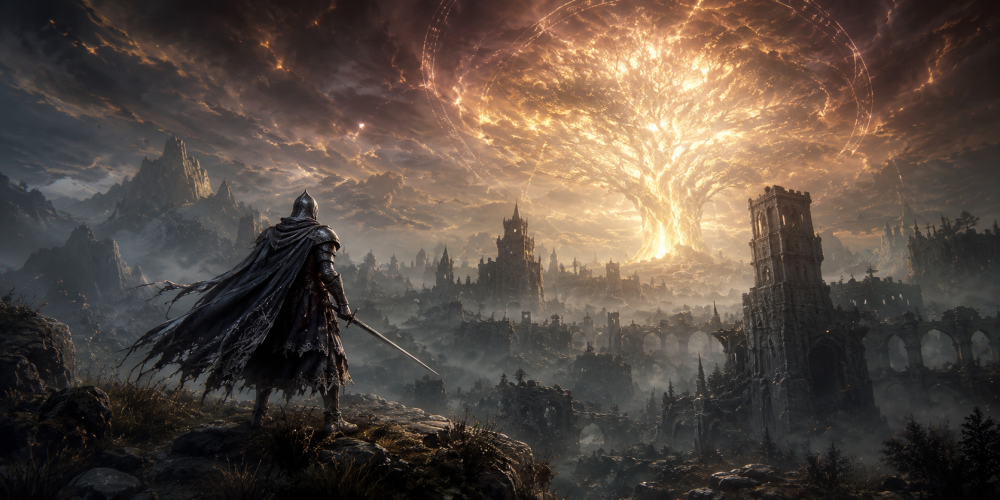
Elden Ring director Hidetaka Miyazaki is widely seen as one of the most influential game creators of the modern era. As president of FromSoftware and the creative force behind titles that helped redefine action RPG design, Miyazaki has built a reputation for mysterious worlds, demanding combat, strange beauty, and player-driven discovery.
Yet according to Tekken creator Katsuhiro Harada, Miyazaki does not seem to view himself as a master of the medium. In a recent post on X, Harada shared that the Elden Ring director genuinely believes his understanding of games is still limited compared with other developers.
For many FromSoftware fans, that statement may sound almost impossible. After all, the impact of Demon’s Souls, Dark Souls, Bloodborne, Sekiro, and Elden Ring can be felt across countless modern action games. But Harada’s comments suggest that Miyazaki’s humility is not a public performance. It appears to be part of how he thinks, studies, and creates.
Harada described Miyazaki as a unique and extremely serious creator. One reason is his unusual path into the industry. Unlike many developers who started working in games during the early rise of 3D polygon graphics, Miyazaki did not begin his career in game development until he was close to 30.
That late start makes his influence even more striking. Miyazaki did not follow a typical route through the biggest Japanese game companies of that earlier generation. Instead, he entered the industry later, joined FromSoftware, and gradually helped shape a design philosophy that would become internationally recognized.
Harada also pushed back against the idea that success should be measured only by financial results. He noted that Dark Souls did not become an overnight phenomenon. Its success grew from years of work, experimentation, and accumulated creative effort inside FromSoftware.
That point matters because Miyazaki’s games are often discussed as if they suddenly arrived fully formed. In reality, their identity came from risk, iteration, and a willingness to trust players more than many mainstream games do.
Harada shared one story that has stayed with him for years. Around the time he was developing Summer Lesson for virtual reality, Miyazaki visited to try an early version of the project alongside people from several other game companies.
While others played the demo casually, laughed, talked, and enjoyed the novelty of the experience, Miyazaki reacted very differently. Harada recalled that the FromSoftware director played with unusual seriousness. After the session ended and everyone began discussing their impressions, Miyazaki remained silent, staring at the preview monitor and thinking deeply.
When the group finally asked what he was thinking about, Miyazaki smiled and explained that he had become absorbed in imagining what he would do if he were making that kind of game himself. He was not merely testing the demo as a visitor. He was mentally rebuilding the idea, exploring possibilities, and asking what kind of experience he might create from the same starting point.
For Harada, that moment showed what he described as Miyazaki’s “mad scientist” side: a deeply focused, almost obsessive creative mindset. It was not loud or theatrical. It was quiet, intense, and completely locked into the act of design.
Harada also said that Miyazaki generally dislikes appearing in video interviews or livestreams. The reason, according to Harada, is not simple shyness or dislike of promotion. Miyazaki apparently believes that many people in the game industry understand games far better than he does.
When Miyazaki listens to veteran creators talk about the medium, he reportedly feels that his own understanding is still shallow. Because of that, he does not see himself as someone who should speak publicly about games with great authority.
Harada responded with the kind of disbelief many players would share. If Miyazaki still feels unqualified to talk about games after reshaping action RPG design, then almost everyone else might feel they have no right to speak at all.
That contrast is part of what makes Miyazaki such a compelling figure. He has enormous influence, but he does not appear comfortable treating himself like an unquestioned expert. His confidence seems to come through the work, not through public declarations.