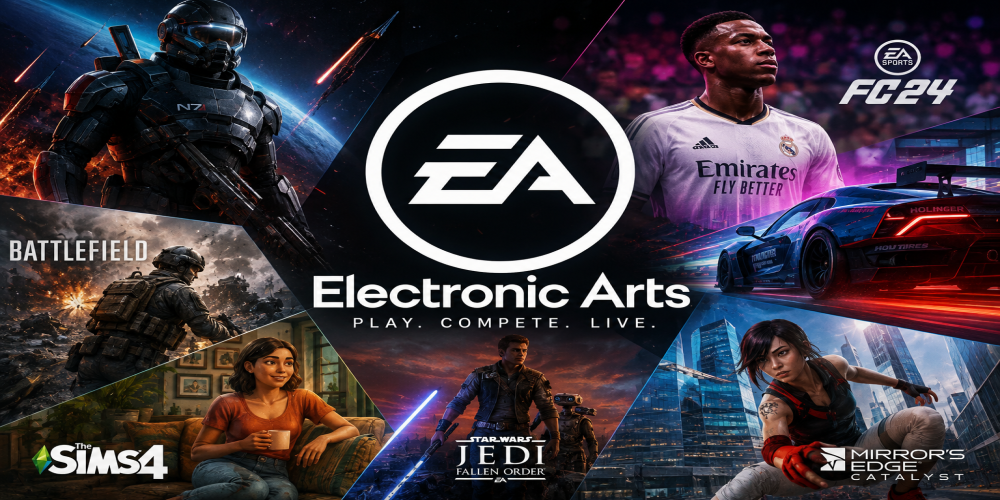
Electronic Arts has officially become a privately owned company following the completion of a $55 billion leveraged acquisition led by Saudi Arabia’s Public Investment Fund, Silver Lake, and Affinity Partners.
The deal closed on August 4 after an extended regulatory process. Andrew Wilson will remain chief executive, while shareholders are set to receive $210 for each share they own.
EA will no longer publish the same quarterly financial reports required of a publicly traded company. This could give its development teams more freedom from short-term market reactions, but it will also reduce the amount of financial information available to players, employees, and industry observers.
Private ownership may allow EA to tolerate delays and give studios additional time to complete ambitious projects. Former Criterion executive Fiona Sperry has suggested that this structure could reduce pressure to build development schedules around fixed financial deadlines.
That possibility would benefit teams working on games whose value cannot be measured through immediate sales or recurring spending. EA has previously supported successful creative projects through EA Originals, including It Takes Two and Split Fiction.
However, the acquisition does not remove investor expectations. It replaces a large group of public shareholders with a smaller group of private owners seeking returns from one of the most expensive deals in gaming history.
The leveraged structure reportedly places approximately $20 billion in debt on the business. While this does not confirm immediate studio closures or workforce reductions, it may increase pressure to lower costs and prioritize franchises with reliable revenue.
EA Sports FC, Madden, Apex Legends, Battlefield, and The Sims are likely to remain central to the publisher’s strategy. These established properties already have large audiences and can generate money through annual releases, expansions, premium bundles, subscriptions, and in-game purchases.
The greater uncertainty surrounds smaller studios, experimental projects, and inactive franchises that cannot promise predictable growth. Games requiring long development cycles or targeting narrower audiences may find it harder to justify their budgets under the new ownership structure.
Analysts have raised the possibility of team consolidation, reduced staffing, and greater adoption of AI-assisted production tools. None of these measures has been officially announced, but they are common concerns when a major company takes on substantial debt after a leveraged acquisition.
EA’s final public financial results showed why its largest ongoing games are so valuable. Spending connected to Apex Legends, Battlefield sales, and additional purchases helped strengthen bookings, demonstrating the financial advantage of franchises with committed communities.
The most likely changes may not arrive as dramatic price increases. Instead, monetization could gradually become more aggressive through slower progression, increasingly expensive bundles, and desirable rewards moving into paid systems.
Such adjustments are easier to normalize because each individual change may appear small. Over time, however, players may be encouraged to spend more without receiving a noticeably larger experience.
EA’s biggest franchises may therefore be safer than ever under private ownership. The more serious concern is whether their design will increasingly prioritize recurring revenue over experimentation and player satisfaction.
The buyout could still create a more stable environment for developers if the new owners support longer production schedules and creative independence. Until EA reveals its post-acquisition strategy, however, the future of its less predictable studios and franchises remains uncertain.