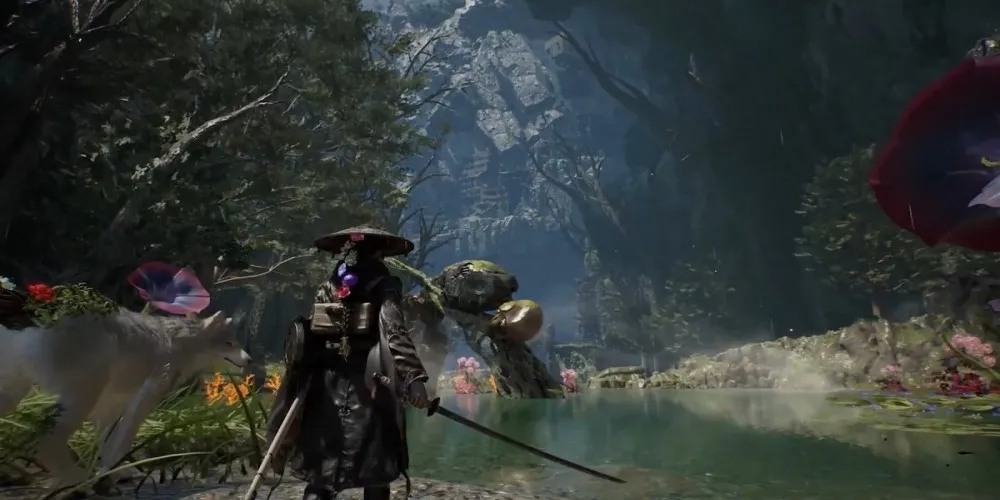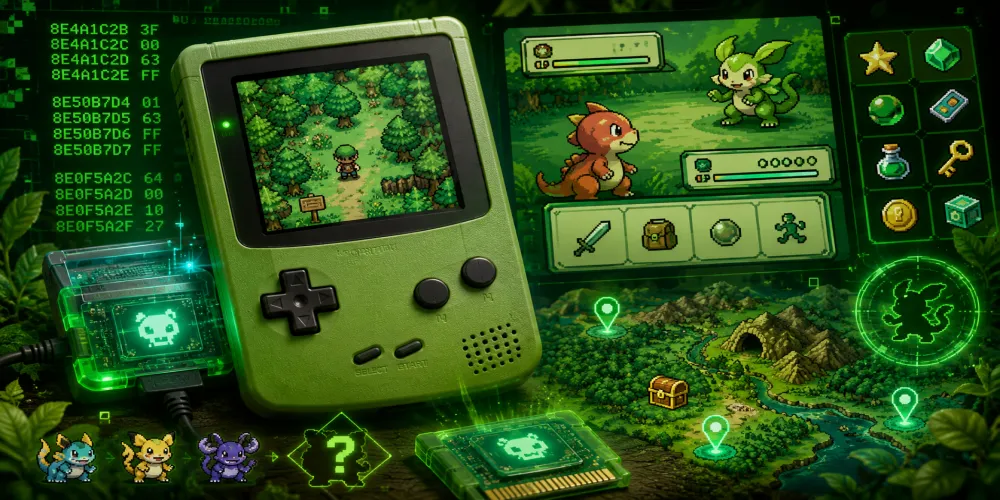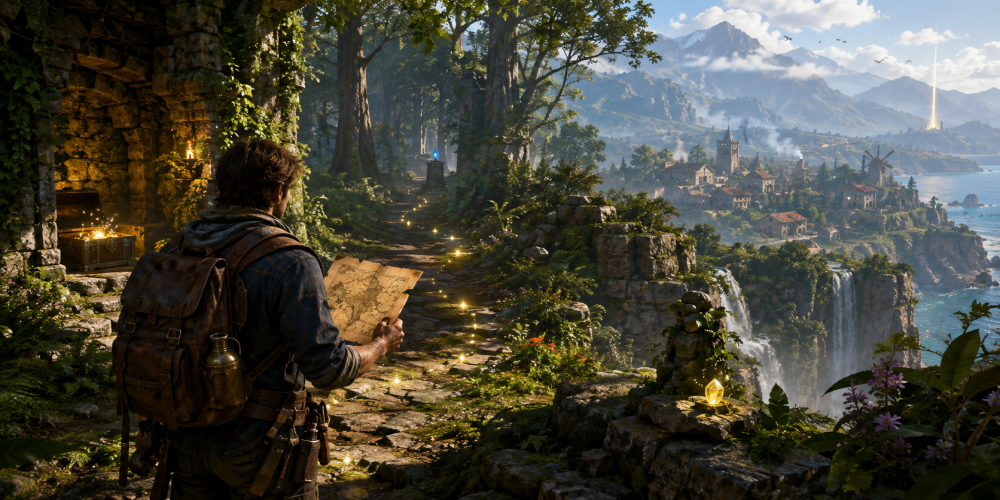
Open-world games are designed to make players curious. A distant tower appears beyond the trees, a suspicious path disappears behind a waterfall, and an ordinary building contains one locked room that suddenly becomes more interesting than the main quest.
Finding secrets and collectibles can turn a large virtual world into a personal expedition. Hidden items often reveal additional lore, unlock equipment, improve abilities, provide cosmetic rewards, or simply recognize players who took the time to explore beyond the obvious route.
The challenge is searching efficiently without transforming every journey into a slow inspection of every rock, rooftop, and decorative barrel. A successful explorer learns how developers guide attention, where collectibles are commonly placed, and when it is better to return later with new abilities.
This guide explains how to discover more secrets naturally, organize collectible hunting, read environmental clues, and decide when outside assistance is actually useful.
Understand How Open-World Secrets Are Designed
Most hidden content is not placed randomly. Developers usually provide visual, audio, mechanical, or narrative clues that suggest an area deserves attention.
A secret may be located behind an unusual wall, above the normal route, beneath a bridge, inside a partially collapsed building, or near a landmark visible from a long distance. Collectibles are often positioned where they encourage players to appreciate scenery, learn movement mechanics, or visit a location that would otherwise be ignored.
Once you begin recognizing these patterns, exploration becomes less about checking everything and more about identifying intentional details.
Common Types of Hidden Content
- Documents, recordings, journals, or environmental stories;
- Upgrade materials and rare equipment;
- Cosmetic items and character customization rewards;
- Hidden missions or optional characters;
- Treasure maps and puzzle locations;
- Secret rooms, caves, and underground passages;
- Achievements connected to unusual actions;
- References to other games, films, or developers;
Each category may follow different placement rules. Lore items are commonly found near meaningful locations, while upgrade materials may reward difficult climbing or dangerous encounters.
Explore With a Purpose
Walking in random directions can produce discoveries, but it is not the most efficient way to search a large map. Select one region and decide what you want to accomplish there.
You might clear visible activities, inspect major landmarks, complete local missions, or search specifically for one collectible category. A focused objective prevents the map from becoming an endless collection of unfinished distractions.
Finish one manageable area before moving to the next. This creates a sense of progress and makes missing items easier to identify later.
Use High Ground to Study the Environment
Elevated positions reveal paths, structures, smoke, lights, unusual terrain, and other details hidden from ground level. Towers, mountains, rooftops, cliffs, and large machines often function as natural observation points.
When reaching high ground, pause before immediately jumping or fast travelling away. Rotate the camera slowly and look for features that interrupt the landscape.
A lone structure, isolated tree, unusual rock formation, or patch of artificial lighting may indicate a hidden activity. Developers often use contrast to draw attention without placing a map marker.
High ground also helps you plan an efficient route through several points of interest rather than travelling back and forth across the same region.
Follow Roads, Then Leave Them
Roads connect important settlements and missions, making them useful for learning the shape of the world. However, many secrets are placed just far enough away to reward players who step off the main route.
Watch for smaller paths, broken fences, footprints, abandoned vehicles, ropes, ladders, and changes in vegetation. These details frequently lead toward caves, camps, viewpoints, or hidden buildings.
After following a road through a region, return along a different route. Travelling beside the road rather than directly on it can reveal entrances and objects that were hidden by terrain.
Investigate Anything That Looks Deliberately Unusual
Open-world environments contain repeated assets, so unique objects are often meaningful. A single colored door among several ordinary ones or one damaged statue in an otherwise symmetrical courtyard may indicate interaction.
Look for visual details that appear intentionally placed:
- Fresh paint or markings on old walls;
- Light coming from an isolated window;
- Objects arranged in a clear pattern;
- One climbable surface in a flat structure;
- Unusual cables, pipes, or tracks;
- Environmental damage pointing in one direction;
- A group of items suggesting someone recently visited;
Not every unusual object leads to a reward, but examining these details develops the visual awareness required for natural exploration.
Look Above and Below the Main Route
Players tend to search at eye level. Developers take advantage of this by placing collectibles on rooftops, under platforms, inside drainage systems, or beneath bridges.
When entering a large room or outdoor landmark, inspect its vertical structure. Check balconies, beams, scaffolding, towers, cliffs, basements, wells, and underwater sections.
If a location appears too simple for its size, it may contain an upper or lower route that is not immediately visible. Search for ladders, ledges, pipes, movable objects, damaged floors, or nearby terrain that provides access.
Vertical exploration is especially important in games with climbing, gliding, grappling, or advanced movement systems.
Search Behind Waterfalls Carefully
The hidden cave behind a waterfall has become one of gaming’s oldest exploration traditions. Developers know players expect it, which means some waterfalls contain rewards while others exist only to encourage hopeful swimming.
Approach from several angles and check the surrounding rock rather than aiming only for the center. The entrance may sit beside the falling water, below the surface, or on a ledge above it.
Even when no cave exists, waterfalls often mark elevation changes that hide paths, tunnels, or treasure nearby.
Listen for Audio Clues
Collectibles may produce humming, ringing, whispering, music, or another distinctive sound. Environmental audio can also reveal hidden rooms through machinery, voices, running water, or wind passing through an opening.
Use headphones when possible and reduce unrelated music if it covers important effects. When a sound becomes noticeable, move slowly and rotate the camera to determine its direction.
Some games increase the volume as the player approaches a collectible. Others use controller vibration or visual indicators alongside sound.
Audio search is particularly valuable inside dense buildings where the map cannot clearly represent multiple floors.
Learn the Game’s Visual Language
Open-world games often use consistent colors and materials to indicate climbable surfaces, breakable barriers, interactive objects, and hidden passages.
One game may mark climbing routes with yellow paint, while another uses white fabric, scratched surfaces, or carefully positioned lights. Breakable walls may share cracks, textures, or surrounding debris.
Pay attention during tutorials and early missions. Developers usually introduce their visual language in controlled situations before expecting players to recognize it independently.
Once a pattern is understood, apply it throughout the world. A familiar marking in an unexpected location often signals a secret route.
Check the Opposite Direction of the Objective
Story missions naturally guide players toward a destination. Hidden items are frequently placed in the opposite direction to reward those who resist immediate progress.
When entering a new area, briefly inspect the space behind the starting point. Before activating an objective, check side rooms and alternate paths that may become inaccessible after the scene changes.
During linear sections inside an open-world game, the more polished and obvious route usually leads forward. The smaller, darker, or inconvenient route may lead to a collectible.
This habit should not become obsessive. A quick inspection is enough unless the environment clearly suggests additional exploration.
Inspect Dead Ends
A path that appears useless may contain a reward precisely because players have no practical reason to visit it. Small beaches, cliff edges, ruined rooms, isolated rooftops, and narrow caves are common collectible locations.
When a route reaches a dead end, search the immediate area before turning back. Look behind objects, examine the walls, and check whether another path continues vertically.
Developers often compensate players for travel that does not support a mission. The reward may be small, but the placement confirms that curiosity was intentional.
Read Notes, Maps, and Environmental Stories
Documents and conversations may contain practical clues rather than only background information. A note mentioning a hidden supply near an old bridge or a character describing strange lights in the hills may point toward optional content.
Names of locations, directions, landmarks, and repeated symbols deserve attention. Compare them with the world map and nearby signs.
Environmental storytelling can also reveal where to search. A trail of abandoned equipment, damaged furniture, or scattered supplies may lead toward a hidden room or event.
Following these clues is often more satisfying than using a direct marker because the discovery feels connected to the world.
Use the Map as an Investigation Tool
The map is more than a navigation screen. It can reveal unexplored roads, unusual terrain shapes, isolated structures, bodies of water, and suspicious gaps between discovered locations.
Zoom in and look for details that do not have markers. A circular clearing, small island, mountain path, or building outside a settlement may contain hidden content.
Compare the map with the physical environment. Some entrances sit far from the location they eventually reach, particularly when caves and underground systems are involved.
Map Features Worth Investigating
- Small islands and isolated peninsulas;
- Roads that end without a named destination;
- Large empty spaces between activities;
- Unmarked buildings;
- Circular or symmetrical terrain formations;
- Waterways that disappear beneath mountains;
- Paths leading to the edge of the playable area;
Map analysis becomes more effective after you understand the scale of ordinary locations. Areas that are unusually detailed without an obvious purpose often deserve a visit.
Mark Suspicious Locations Immediately
When you notice a locked door, unreachable platform, unusual puzzle, or area requiring different equipment, place a custom marker on the map.
Do not assume you will remember it later. Large open worlds contain enough distractions to make even a fascinating discovery disappear from memory after three side missions and an unexpected animal encounter.
Use different marker types or colors when the game allows it. One symbol can represent locked areas, another can identify movement challenges, and a third can mark resources or puzzles.
Remove markers after completing the location so the map remains useful rather than becoming another mystery.
Recognize When You Need a Future Ability
Many open-world games use progression to control exploration. A blocked passage may require a stronger tool, diving equipment, a grappling device, special ammunition, magical power, or a companion ability.
If an obstacle looks deliberately designed but cannot be passed with current mechanics, mark it and continue playing. Spending twenty minutes attempting an impossible jump usually does not convince the game to award advanced equipment early.
Pay attention when new abilities are unlocked. Consider which previously discovered obstacles they might solve, then revisit those locations.
This creates a useful exploration cycle: discover, mark, progress, and return.
Revisit Early Areas After Major Upgrades
Starting regions frequently contain secrets that are inaccessible during the opening hours. Returning later can reveal hidden paths, stronger enemies, new conversations, or altered environments.
New movement tools are particularly important. Double jumps, climbing upgrades, gliders, underwater equipment, and stronger vehicles can transform familiar locations.
Story progress may also change settlements and landscapes. Characters move, doors open, weather shifts, and previously ordinary locations become relevant.
Revisiting early areas is usually more efficient after collecting several new abilities rather than returning after every small upgrade.
Use Collectible Menus to Identify Patterns
Many games include a menu listing collectible categories, regional totals, or missing entries. Study how the information is organized.
If collectibles are numbered, missing entries may suggest which story chapter or region contains them. Images and descriptions can reveal environmental themes or nearby landmarks.
Regional counters are particularly helpful. Knowing that one item remains in a small district is more manageable than searching the entire map.
Some menus update only after reaching specific viewpoints or completing activities. Unlock local map information before beginning a detailed search.
Clear Map-Revealing Activities Early
Towers, scanners, observation points, information terminals, and regional missions often reveal nearby landmarks or collectible categories.
Completing these activities early can reduce unnecessary exploration. They may uncover fast-travel points, outline roads, or show which sections remain undiscovered.
Do not rely completely on revealed icons. Some of the most interesting secrets remain intentionally unmarked.
Use map-revealing activities to create structure, then search the spaces between their markers.
Divide Large Regions Into Search Zones
A large region becomes easier to explore when divided into smaller areas. Use roads, rivers, cliffs, district boundaries, or natural landmarks as borders.
Search one section thoroughly before moving to the next. Travel in a simple pattern rather than repeatedly crossing the same terrain.
A useful method is to follow the outer boundary first, then work inward. This reveals entrances, elevation changes, and connections to neighboring regions.
In cities, search one block or building cluster at a time. Check street level, rooftops, interiors, and underground areas before continuing.
Follow the Edge of the Playable Area
Map boundaries often contain hidden viewpoints, caves, unusual scenes, and collectibles because ordinary missions rarely send players there.
Travel along coastlines, mountain walls, fences, and cliffs while watching for openings. Boundary terrain may also conceal routes around locked gates or guarded locations.
Do not assume every edge contains content. The method is most effective when combined with map clues, visible landmarks, or gaps in regional progress.
Search Settlements in a Consistent Order
Towns and cities contain multiple floors, alleys, rooftops, interiors, and underground routes. Searching randomly makes it easy to repeat areas while missing others.
Use a consistent process:
- Walk around the outer boundary;
- Inspect streets and ground-level entrances;
- Enter accessible buildings;
- Check rear alleys and courtyards;
- Move to rooftops and elevated walkways;
- Search basements, tunnels, and drainage systems;
This method creates a mental map of the settlement and reduces unnecessary backtracking.
Check Important Story Locations After Missions
Some locations remain accessible after a mission and may contain items that were difficult to notice during action or dialogue.
Return after the area becomes calm. Search side rooms, upper floors, enemy positions, and spaces behind the main objective.
However, certain games permanently close mission areas. Explore carefully before leaving when the interface or dialogue suggests there may be no return.
Create a manual save before major missions when possible. It provides another opportunity if a collectible becomes inaccessible.
Watch How Non-Player Characters Behave
Characters may look toward important objects, walk along hidden routes, gather near unusual locations, or discuss local secrets.
Follow characters who leave a settlement unexpectedly or appear to perform a unique routine. They may lead toward merchants, hidden missions, events, or restricted buildings.
Guards can also reveal valuable locations. A heavily protected door or isolated patrol route usually indicates that something important exists nearby.
Listening to ambient conversations may provide more useful clues than immediately opening the next quest marker.
Use Photo Mode for Observation
Photo mode can help inspect rooftops, cliffs, hidden ledges, and environmental details from angles unavailable during normal movement.
It should not be treated as a replacement for exploration, but it can confirm whether a route or object exists before you spend time reaching it.
Camera movement is often restricted near secret areas, so absence of visibility does not prove that nothing is there. Use photo mode as an observation tool rather than a method for passing through walls or revealing every puzzle solution.
Adjust Visual Settings When Necessary
Darkness, motion blur, excessive effects, and low object detail can make collectibles difficult to see. Adjust brightness and accessibility options when the image becomes unclear.
Some games provide high-contrast modes, collectible highlighting, directional audio indicators, or reduced visual clutter. Using these tools does not make exploration less legitimate.
Keep settings comfortable enough that important details remain visible without completely removing the intended atmosphere.
Use Detection Abilities Methodically
Scanning modes, enhanced senses, drones, companion abilities, and special vision can reveal nearby objects. Use them in a consistent pattern rather than activating them constantly while running.
Stop at intersections, large rooms, rooftops, caves, and major landmarks. Scan from several positions because walls, elevation, and distance may limit detection.
Watch for objects at the edge of the scanning range. A brief indicator may point toward another floor or an entrance outside the current structure.
Detection abilities are helpful, but they can make players ignore ordinary environmental clues. Combine mechanical scanning with visual observation.
Look for Repeated Symbols and Patterns
Collectible sets often use consistent symbols, colors, architecture, or environmental decorations. After finding the first few items, study their surroundings.
A particular symbol may appear near every hidden shrine, while one type of plant or lighting may mark puzzle entrances. Recognizing the shared pattern makes later discoveries faster.
Take screenshots or notes when the design is subtle. A visual reference can help distinguish intentional clues from ordinary decoration.
Think Like a Level Designer
Ask why a particular path, platform, building, or object exists. If an area required significant design work but serves no visible mission purpose, it may support hidden content.
Look for spaces that complete a movement challenge. A series of ledges, ropes, or rooftops usually leads somewhere, even when the destination is not visible from the beginning.
Also consider where a developer might place a reward after a difficult climb or long detour. The highest point, final room, or distant edge is often worth checking.
This does not mean every decorative space contains an item. It means intentional routes deserve more attention than random corners.
Check Behind and Under Large Objects
Vehicles, statues, staircases, machinery, containers, and furniture can conceal small collectibles. Search beneath stairs, behind shelves, and around the rear side of large environmental objects.
Developers often place items where players must move beyond the most natural camera angle. Enter a room, identify its largest objects, and briefly inspect the areas they hide.
Do not spend several minutes circling every chair. Prioritize objects positioned near landmarks, puzzles, or routes that already appear significant.
Complete Side Missions
Optional missions may unlock collectible maps, reveal hidden locations, provide movement abilities, or introduce characters connected to secret content.
Some collectibles cannot be completed until a regional storyline has progressed. Finishing side activities before conducting a final search can prevent wasted effort.
Mission rewards may also include tools that simplify exploration, such as scanners, maps, keys, vehicles, or environmental protection.
Talk to Merchants and Unusual Characters
Merchants may sell maps, rumors, keys, or information about local treasures. Characters without obvious quest markers can also provide clues after repeated conversations.
Return to important characters after major story events. Their dialogue and available inventory may change.
Inspect unusual trade categories carefully. A cheap map or mysterious key may be more valuable than another piece of ordinary equipment.
Search at Different Times and in Different Weather
Certain events, characters, paths, and collectibles appear only at night, during storms, or under specific environmental conditions.
Lighting changes can also reveal details that were invisible during another time of day. Reflections, shadows, glowing symbols, and distant lights become easier to notice in different conditions.
When a location feels incomplete, return later rather than assuming nothing is there. Notes and conversations may mention the required time or weather.
Track What You Have Already Collected
Large collectible sets become frustrating when only one item remains. Keep records before reaching that stage.
Use the game’s regional counters, screenshots, custom markers, or a simple written checklist. Record items that require future abilities and remove completed locations from the list.
For collections with numbered entries, note the missing numbers. This may help identify the relevant region or sequence without consulting a complete solution.
Good tracking allows you to search intelligently instead of revisiting every location from the beginning.
Do Not Collect Everything During the Main Story
Trying to complete every region before progressing can interrupt pacing and create unnecessary frustration. Many games introduce tools later that make exploration faster.
Collect items naturally while completing missions, but save detailed regional clearing for a later stage unless the rewards provide immediate value.
A balanced approach keeps the story moving while preserving opportunities for exploration. It also reduces the chance of spending too long on an obstacle that requires future progression.
Know When to Use an Online Guide
Using a guide does not remove the value of exploration. It can prevent frustration when one missing collectible is hidden behind unclear conditions, technical problems, or a route you have already searched repeatedly.
Begin with the least revealing assistance. Search for a regional hint rather than a precise location, or use a map without reading the complete solution.
More direct help becomes reasonable when:
- Only one or two items remain;
- The game provides no regional tracking;
- A collectible can be permanently missed;
- The location depends on a hidden condition;
- A technical issue may prevent access;
- You have already searched the area thoroughly;
The purpose of a guide is to protect enjoyment, not to transform exploration into a list of coordinates followed without attention to the world.
Avoid Spoilers While Searching for Help
Collectible guides may reveal characters, locations, abilities, and endings. Include your current chapter or region when searching so results remain relevant.
Text guides are often easier to scan selectively than videos. Use page searches to locate the specific item name instead of reading the entire article.
Community discussions can provide small hints without revealing every step, although their accuracy should be checked when several answers disagree.
Common Collectible-Hunting Mistakes
- Searching the entire map without dividing it into regions;
- Ignoring vertical spaces;
- Forgetting to mark inaccessible locations;
- Attempting to collect everything before unlocking movement tools;
- Relying only on visible map icons;
- Ignoring audio and environmental clues;
- Revisiting the same routes without tracking progress;
- Searching at only one time of day;
- Using a complete guide before learning the game’s visual language;
- Assuming every missing item is available immediately;
Efficient exploration is not about moving faster. It is about reducing repeated searches and recognizing when the game is asking you to return later.
A Practical Exploration Routine
Use a repeatable process whenever you enter a new region:
- Unlock the local map and fast-travel points;
- Study major landmarks from high ground;
- Follow main roads and complete regional missions;
- Mark locked or unreachable locations;
- Search the outer boundary of the region;
- Inspect settlements and vertical spaces;
- Review the collectible counter;
- Return after gaining new abilities;
- Use a focused hint only for the final missing items;
This approach preserves discovery while preventing the search from becoming disorganized.
How to Find Secrets Without a Guide
Pay attention to visual contrast, environmental storytelling, unusual paths, audio signals, and repeated design patterns. Use high ground to examine the region and investigate spaces that appear intentionally constructed.
Read documents, listen to characters, and study the map for roads or structures without obvious destinations. Mark anything that requires an ability you do not yet possess.
Most importantly, slow down at meaningful locations. Secrets are rarely discovered while moving at maximum speed directly between objective markers.
How to Find the Final Missing Collectible
Begin by checking the game’s menu for regional totals, missing numbers, images, or descriptions. Review your custom markers and identify locations that were inaccessible earlier.
Revisit mission areas, underground spaces, rooftops, small islands, and map boundaries. Change the time of day and use available scanning abilities.
When the search stops being enjoyable, consult a regional map or targeted hint. Finding the final item should feel satisfying, not like performing an archaeological survey with no funding.
Should You Collect Everything in an Open-World Game?
Completion is optional. Collectibles are worthwhile when they support curiosity, provide useful rewards, reveal interesting stories, or create enjoyable exploration challenges.
They become less valuable when the process feels repetitive and the reward no longer matters. Finishing the story with an incomplete collection is not a failed playthrough.
Choose categories that interest you. You may enjoy hidden missions and environmental stories while ignoring cosmetic objects scattered across hundreds of locations.
What Makes a Good Open-World Secret?
A strong secret feels hidden but discoverable. The environment provides enough information for an attentive player to locate it without making the solution completely obvious.
The reward should also match the effort. A difficult puzzle may provide unique equipment or a memorable scene, while a short detour can reasonably offer a small resource or lore entry.
The best secrets deepen the world. They reveal forgotten events, unusual characters, alternative routes, or details that change how a familiar location is understood.
Final Collectible-Hunting Checklist
- Study the environment from high ground;
- Leave main roads and follow smaller paths;
- Search above and below ordinary routes;
- Listen for distinctive sounds;
- Learn the game’s visual language;
- Mark inaccessible locations;
- Revisit regions after unlocking new abilities;
- Track collectibles by category and region;
- Complete side missions before the final search;
- Use targeted hints when exploration becomes frustrating;
Finding More Secrets in Open-World Games
The most effective explorers are not the players who inspect every object. They are the ones who recognize patterns, notice deliberate details, and understand how the world directs attention.
Use landmarks to organize your route, search vertical spaces, study unusual environmental design, and record locations that require future abilities. Let the main story introduce the world before attempting to complete every region.
Collectibles should provide a reason to look more closely, not an obligation to clear hundreds of icons. Follow the categories that interest you and use assistance only when the search stops being rewarding.
Eventually, you will begin noticing the small signals developers leave behind: a light where no light should be, a path that seems slightly too deliberate, or a suspicious waterfall that clearly believes nobody knows what is behind it. That is when open-world exploration becomes more than travelling across a map. It becomes a conversation between the player and the people who built it.